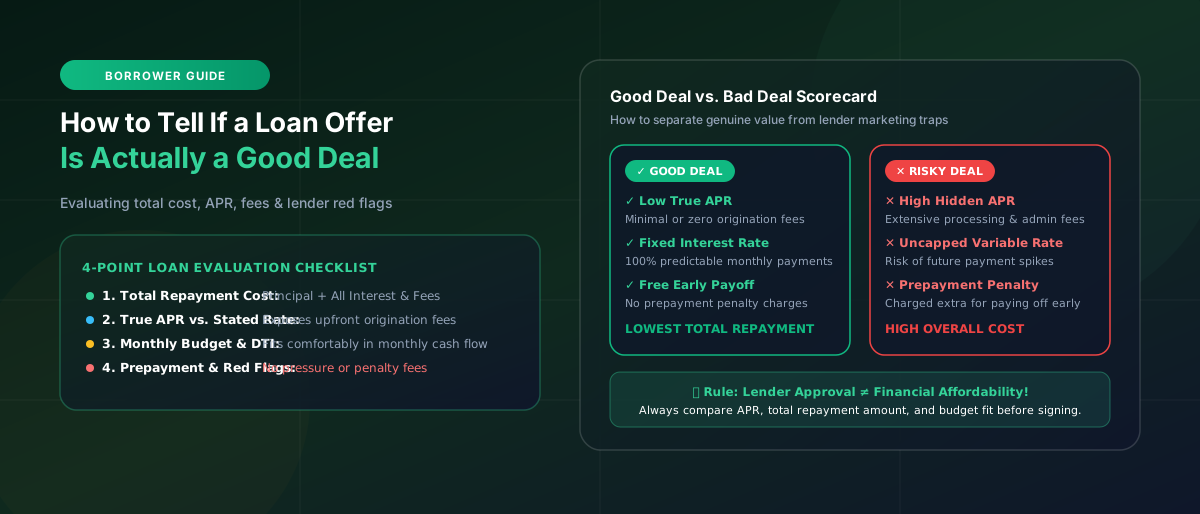
Lender approval does not mean a loan is a good deal. A loan with low monthly payments can still cost thousands in interest and hidden fees. Always evaluate total repayment cost, APR, loan term, and prepayment terms before signing.
Getting approved for a loan can feel like a financial win. You apply, the lender says yes, and suddenly you have access to the money you need.
But approval doesn't automatically mean you've received a good deal.
A loan can have an attractive monthly payment while still costing you thousands in interest and fees. That's why it's important to slow down and look beyond the number a lender puts in front of you.
Before accepting any loan, you want to understand what you're borrowing, what it will cost, and whether the repayment fits comfortably into your budget.
Start With the Total Cost
The first question shouldn't be, “How much is the monthly payment?”
Instead, ask: “How much will I pay altogether?”
For example, a $20,000 loan might have a monthly payment of around $400. That may sound affordable, but if you make 60 payments, you'll pay approximately $24,000 or more depending on the interest rate and fees (see how much interest you really pay on a 5-year loan).
The difference between the amount borrowed and the amount repaid represents a major part of the cost of borrowing.
Always check the total repayment amount before deciding whether an offer is actually affordable.
Look at the Interest Rate
The interest rate is one of the most important numbers in a loan offer.
A higher interest rate generally means you'll pay more for the money you borrow. Even a small difference in rates can become significant when you're borrowing a large amount or making payments for several years.
Don't simply accept the first rate you're offered. If possible, compare offers from multiple lenders.
Your credit profile (see what is a good credit score), income, debt levels, loan amount, loan term, and other factors can influence the rate you qualify for.
Don't Ignore the APR
The interest rate isn't always enough to compare loans.
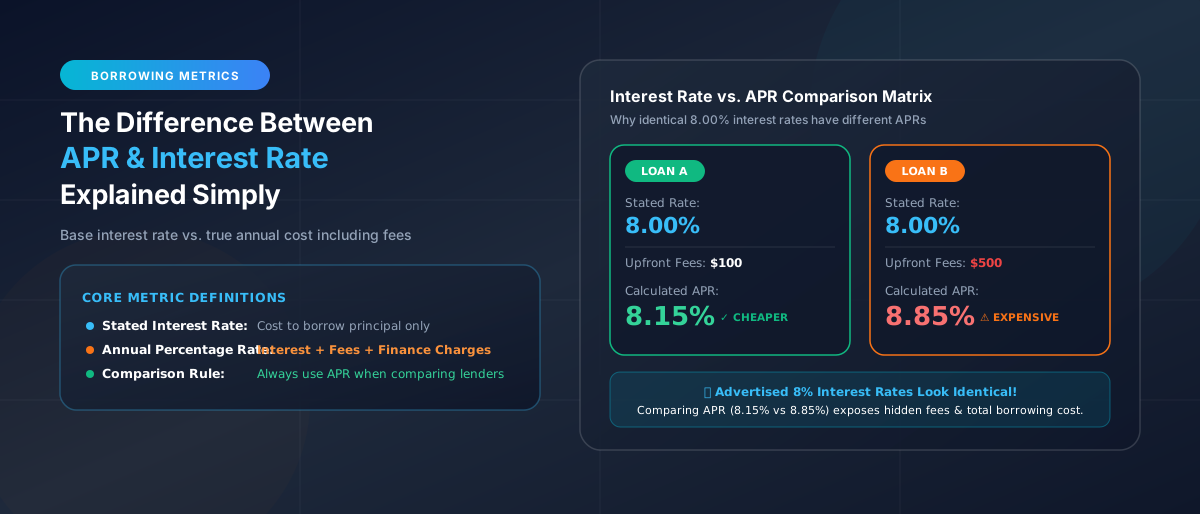
APR, or annual percentage rate, is designed to provide a broader measure of borrowing costs by incorporating the interest rate and certain applicable fees or finance charges (see the difference between APR and interest rate explained simply).
This can be particularly useful when two lenders advertise similar interest rates but charge different fees.
A loan with a slightly lower interest rate isn't automatically cheaper if it comes with significantly higher applicable costs.
| Evaluation Factor | Competitive Deal Indicator | Risky Deal Warning (Red Flag) |
|---|---|---|
| APR vs. Stated Rate | APR is close to stated interest rate (Low fees) | APR is much higher than stated rate (High origination fees) |
| Interest Rate Type | Fixed rate with 100% payment predictability | Uncapped variable rate subject to market spikes |
| Prepayment Penalty | Zero fee for early payoff or extra principal payments | Prepayment penalty charged for early payoff |
| Lender Communication | Clear disclosure of total repayment amount | Heavy pressure tactics focusing strictly on monthly payment |
Check the Loan Term
The loan term tells you how long you'll be making payments.
A longer term usually lowers the required monthly payment because the debt is spread across more months. However, you may pay more interest over the life of the loan.
For example, you might have a choice between a three-year and five-year loan. The five-year option could have a more comfortable monthly payment, while the three-year option could cost less overall.
Neither option is automatically better. The right choice depends on what you can realistically afford without putting your monthly finances under pressure.
Watch Out for Fees
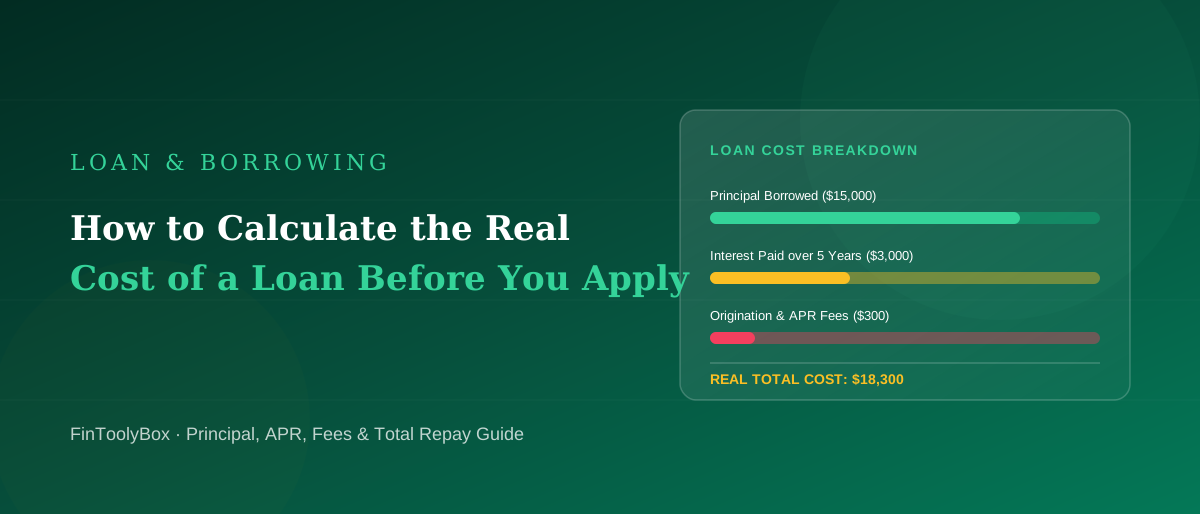
Fees can make a loan more expensive than it initially appears (see how to calculate real loan cost).
Depending on the lender and loan type, you may encounter costs such as:
- Origination fees
- Application fees
- Processing fees
- Late-payment fees
- Prepayment charges
- Other administrative costs
Don't assume that a loan advertised with a low interest rate has no additional costs.
Read the loan disclosure and ask the lender to explain anything you don't understand.
Calculate the Monthly Payment Yourself
If you're only relying on a lender's advertisement, you may not see how different loan terms affect your finances.
Use a loan calculator to test different scenarios.
Enter the amount you want to borrow, the interest rate, and the repayment period. Then change the numbers and see what happens.
Try comparing:
- A higher interest rate versus a lower rate
- A three-year term versus a five-year term
- A larger down payment versus a smaller one
- Different loan amounts
This can help you see the relationship between your monthly payment and the total cost of borrowing.
Ask Yourself Why You Need the Loan
Even a good loan can be a bad decision if you're borrowing money for something that isn't necessary or doesn't fit your financial situation.
Before taking the loan, ask yourself why you need it.
Is it for a home, education, transportation, an important purchase, or an unexpected expense? Or are you borrowing simply because the lender says you qualify?
Being approved for $30,000 doesn't mean you need to borrow $30,000.
Borrowing less can reduce both your monthly payment and the amount of interest you pay.
Make Sure the Payment Fits Your Budget
A loan payment shouldn't leave you struggling every month (see how to build a monthly budget you can stick to).
Before accepting an offer, add the proposed payment to your existing expenses. Include rent or mortgage payments, utilities, food, transportation, insurance, subscriptions, debt payments, savings, and other regular costs.
Then consider irregular expenses too. Car repairs, medical bills, annual insurance payments, school expenses, or home maintenance can all affect your available cash.
If the loan payment only works when everything goes perfectly, the loan may be too expensive for your current situation.
Consider Your Debt-to-Income Ratio
Your debt-to-income ratio, or DTI, compares your monthly debt payments with your gross monthly income (see what your debt-to-income ratio says about your finances).
A high DTI can indicate that a large portion of your income is already committed to debt payments.
Even if a lender approves the loan, you should consider whether adding another payment will leave you with enough financial breathing room.
A loan should fit into your broader financial plan, not just meet the lender's approval requirements.
Check Whether the Rate Is Fixed or Variable
Another important detail is whether your interest rate can change (see fixed vs variable interest rates).
With a fixed-rate loan, the interest rate generally stays the same according to the loan agreement. This can make payments easier to plan for.
A variable-rate loan can change based on the terms of the agreement and relevant market conditions. A lower starting rate may look attractive, but you should understand how and when the rate could change.
Don't choose a loan based solely on the initial payment if that payment could increase later.
Look at the Early Repayment Rules
If you expect to pay the loan off early, find out whether the lender allows extra payments without penalties.
Making additional principal payments can potentially reduce the interest you pay because the outstanding balance is reduced faster.
However, rules vary by lender and loan type. Read the agreement carefully before assuming that early repayment will be free or that every extra payment will be applied directly to principal.
12-Point Pre-Signing Loan Inspection Checklist
- What is the exact principal loan amount?
- What is the stated interest rate?
- What is the APR (including mandatory fees)?
- What is the exact monthly payment?
- How many total monthly payments will I make?
- What is the total repayment cost from beginning to end?
- What is the total interest dollar amount?
- Are there origination, processing, or admin fees?
- Is the interest rate fixed or variable?
- Is there a prepayment penalty for early payoff?
- Does the payment leave sufficient emergency fund cushion?
- Am I borrowing out of genuine necessity or lender marketing?
Red Flags to Watch For
Be especially cautious if a lender pressures you to accept immediately, refuses to clearly explain the costs, or focuses heavily on the monthly payment while avoiding discussion of the total repayment amount.
You should also be careful with any offer that seems dramatically better than everything else without a clear explanation of why.
Never feel pressured to sign a financial agreement you don't understand.
The Bottom Line
A good loan isn't simply the one with the lowest monthly payment or the lowest advertised interest rate.
A good loan is one where the total cost, repayment terms, fees, and monthly payment all make sense for your financial situation.
Before accepting an offer, calculate the total amount you'll repay, compare the APR and interest rate, check the fees, and make sure the payment fits comfortably within your budget.
Taking a little extra time before signing can help you avoid years of unnecessary financial pressure.
Disclaimer: This article is for general educational purposes only and does not constitute financial advice. Loan rates, fees, eligibility requirements, and terms vary by lender and borrower. Always review the complete loan agreement and disclosures before accepting a loan.