A credit score is a numerical estimate of your borrowing risk based on your credit history. While higher scores grant access to lower interest rates and better terms, your credit score is a decision-making tool—not a reason to take on unnecessary debt.
Your credit score is one of those numbers that can quietly affect many parts of your financial life. You might not think about it every day, but when you apply for a loan, credit card, mortgage, or another form of credit, that number can suddenly become very important.
The good news is that you don't need to be a financial expert to understand your credit score. Once you know what it means, what affects it, and how lenders may use it, it becomes much easier to manage.
What Is a Credit Score?
A credit score is a number designed to help lenders estimate how likely you are to repay borrowed money based on information in your credit history.
Different countries use different credit-reporting systems, scoring models, and score ranges. In many places, a higher score generally suggests a stronger credit history, while a lower score can indicate a higher level of lending risk.
Your score isn't a complete picture of your financial life. Someone can have a good income and plenty of savings but still have a limited or poor credit history. Likewise, someone with a strong credit score may not necessarily have a large income.
Think of your credit score as one financial signal—not a complete financial report card.
So, What Counts as a Good Credit Score?
There isn't one universal number that qualifies as “good” everywhere.
Credit-score ranges depend on the country, credit bureau, and scoring model being used. That's why you should always check which scoring system applies to you rather than assuming that a particular number means the same thing everywhere.
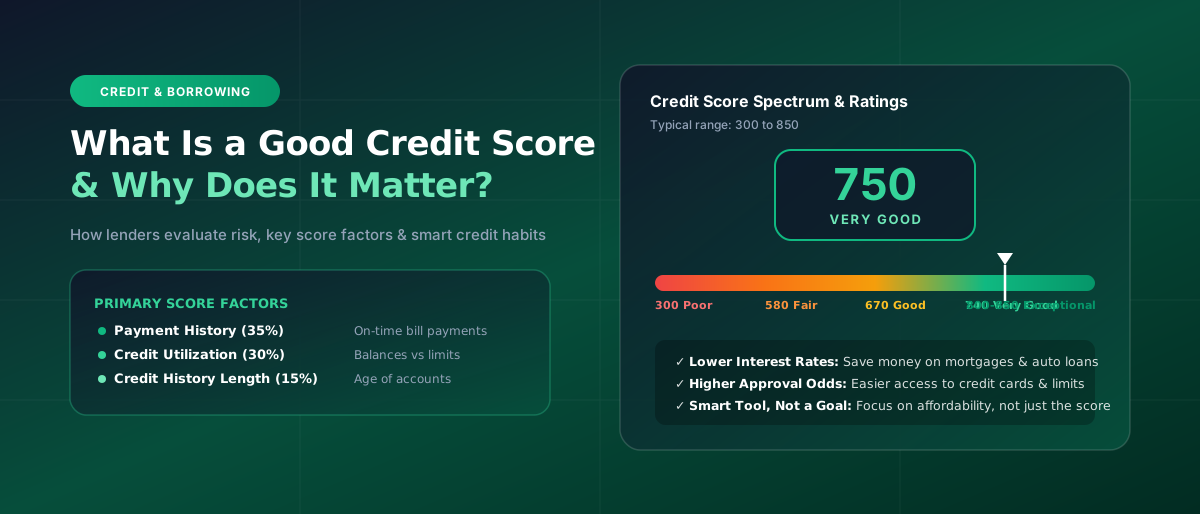
| Score Rating Range | Typical Score Range (FICO Model) | Lender Risk Perception & Impact |
|---|---|---|
| Poor | 300 – 579 | High risk. Approval difficult; requires collateral or high rates. |
| Fair | 580 – 669 | Moderate risk. Standard qualification; higher interest rates. |
| Good | 670 – 739 | Acceptable risk. Strong approval odds with competitive rates. |
| Very Good | 740 – 799 | Low risk. Access to premium borrowing terms & rate discounts. |
| Exceptional | 800 – 850 | Lowest risk. Lowest available interest rates & instant approvals. |
In general, the goal is to build a credit history that shows responsible borrowing and repayment. A stronger credit profile can make it easier to qualify for certain financial products and may give you access to more competitive borrowing terms (see fixed vs variable interest rates).
Why Does Your Credit Score Matter?
Your credit score can matter because lenders use credit information when evaluating applications. A lender may consider your score alongside your income, existing debts, employment situation, collateral, and other factors (see what your debt-to-income ratio says about your finances).
A stronger credit profile may help you:
- Qualify for certain loans or credit cards
- Receive more favorable interest rates in some situations
- Access higher credit limits
- Reduce the cost of borrowing (see how to calculate the real cost of a loan)
- Have more financial options when you need credit
However, having a good score doesn't guarantee approval. Every lender has its own requirements, and your complete financial situation can matter just as much as the score itself.
What Affects Your Credit Score?
The exact factors depend on the scoring model, but several parts of your credit history commonly matter.
1. Payment History
Whether you make your credit payments on time can be an important part of your credit profile.
Repeated late payments can hurt your credit history, while consistently paying on time can demonstrate responsible borrowing behavior.
This is one reason it's useful to organize your bills so you don't accidentally miss a payment.
2. How Much Credit You're Using
For revolving credit such as credit cards, the amount of available credit you're using can matter in some scoring systems.
For example, if you have a credit limit of $5,000 and a balance of $4,500, you're using a large portion of your available credit. A lower balance relative to your limit can generally present a healthier credit profile.
Of course, credit limits and utilization rules vary by scoring model, so don't assume that one percentage automatically guarantees a particular score.
3. Length of Your Credit History
A longer history can give lenders and scoring models more information about how you've handled credit over time.
This doesn't mean you should keep unnecessary accounts open forever. It simply means that building a positive credit history generally takes time.
4. New Credit Applications
Applying for several new credit accounts within a short period can affect your credit profile, depending on the type of application and scoring system.
That's why it can be helpful to apply for new credit intentionally rather than opening multiple accounts simply because they're available.
5. Your Overall Credit Mix
Some scoring models consider the different types of credit you have used. This can include revolving accounts and installment loans.
However, you shouldn't take out a loan you don't need simply to create a particular “mix” of credit. Borrowing money unnecessarily can cost you far more than any potential scoring benefit.
A Good Credit Score Doesn't Mean You Should Borrow More
This is an important distinction.
A strong credit score can give you access to credit, but access to credit isn't the same thing as affordability.
Imagine a lender approves you for a $30,000 loan. That doesn't necessarily mean a $30,000 loan is a good idea for your budget (see why loan payments can be higher than expected).
Before borrowing, look at the monthly payment, interest rate, fees, total repayment amount, and how the debt fits into your existing expenses.
Your credit score should help you make better financial decisions—not encourage you to take on debt simply because you qualify.
5 Actionable Steps to Build & Maintain Strong Credit
- Pay bills on time: Set reminders or automatic payments where appropriate.
- Keep credit balances manageable: Avoid regularly relying on credit for expenses you can't comfortably afford (see how to lower monthly expenses).
- Check your credit reports: Look for errors or unfamiliar activity and dispute inaccuracies through the appropriate credit-reporting process.
- Limit unnecessary applications: Only apply for credit when you actually need it.
- Give it time: A positive credit history is generally built through repeated responsible behavior.
What If Your Credit Score Is Low?
A low credit score doesn't mean you're permanently stuck.
Credit histories can change. If you've missed payments, accumulated large balances, or experienced financial difficulties, focus on what you can control now.
Start by understanding what's affecting your credit profile. Then create a realistic plan to make payments on time, reduce expensive debt (see pay off debt vs investing guide), correct inaccurate information, and avoid taking on additional debt you can't manage.
Progress may take time, so don't expect your score to transform overnight.
Use a Credit Score as a Tool, Not a Goal
It's easy to become obsessed with watching a credit score move up and down. But the number itself shouldn't become your only financial goal.
A healthy financial life also includes manageable debt, emergency savings, affordable spending, and progress toward your long-term goals.
In fact, you can have an excellent credit score while still struggling financially if you have little savings and too much debt.
The best approach is to treat your credit score as one part of a larger financial picture.
Final Thoughts
A good credit score can make borrowing easier and, depending on your situation and the lender, may help you qualify for better terms. But the exact definition of “good” depends on the scoring system and country you're in.
The most useful thing you can do is focus on the habits behind a healthy credit history: pay your bills on time, manage your balances, avoid unnecessary debt, review your credit information, and give your financial progress time.
And remember: a good credit score is useful because it can create opportunities. It isn't a reason to borrow more than you can comfortably afford.
Disclaimer: This article is for general educational purposes only and does not constitute financial, credit, legal, or investment advice. Credit-scoring systems, ranges, reporting practices, and lending requirements vary by country, lender, and scoring model.