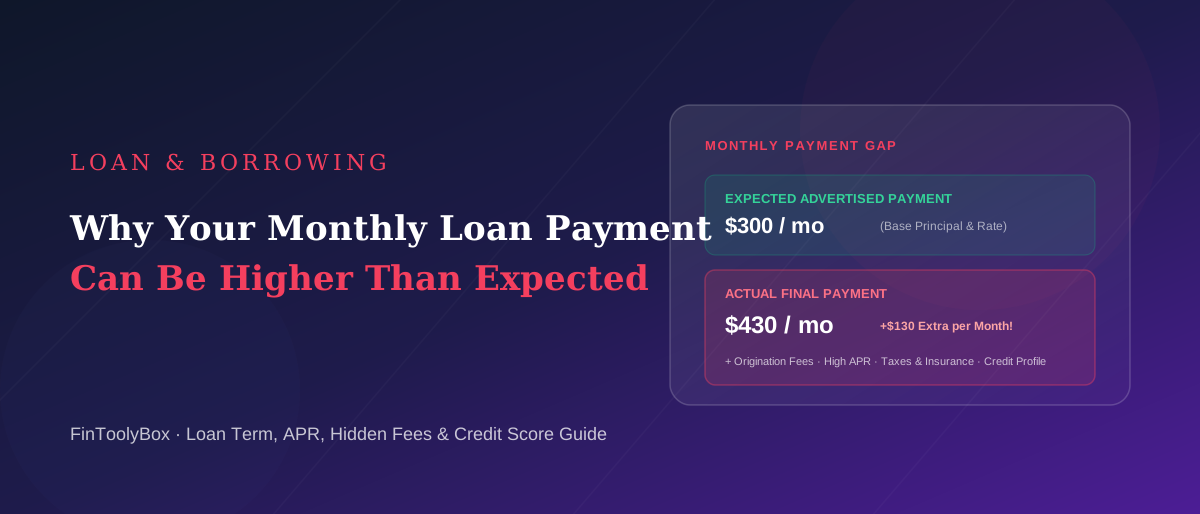
A monthly loan payment is influenced by far more than the principal amount. Origination fees, interest rate adjustments, loan term length, APR, credit score tiers, and escrow taxes/insurance can significantly inflate your actual payment above initial estimates.
You find a loan that looks affordable. The amount you want to borrow seems reasonable, and the advertised interest rate doesn't look too bad. Then you calculate the monthly payment and suddenly wonder: Why is it higher than I expected?
This happens more often than you might think. A loan payment is influenced by several factors, not just the amount you borrow. The interest rate, loan term, fees, insurance, and even the type of loan can change what you actually pay each month.
Understanding these factors before signing a loan agreement can help you avoid unpleasant surprises.
The Loan Amount Makes a Big Difference
The most obvious factor is how much money you borrow.
If you borrow $10,000, your payment will generally be lower than if you borrow $20,000, assuming the interest rate and loan term are otherwise similar.
It can be easy to focus on the amount you want to receive without thinking about the total amount you will eventually have to repay.
Before applying, ask yourself whether you actually need the full amount. Borrowing less can reduce your monthly payment and the total interest paid over the life of the loan.
Your Interest Rate Matters
Interest is one of the biggest reasons your payment can be higher than expected.
When you borrow money, the lender typically charges interest for providing the funds. A higher interest rate means a larger portion of your payment goes toward the cost of borrowing (see how EMI is calculated).
For example, two people could borrow the same amount for the same number of years but have different monthly payments because one receives a higher interest rate.
This is why you should never judge a loan based only on the amount you are borrowing. The interest rate can significantly change the final cost.
The Loan Term Can Change Your Payment
The length of your loan also plays an important role.
A shorter loan term usually means higher monthly payments because you are paying the balance back over fewer months. However, you may pay less total interest over the life of the loan.
A longer term can make the monthly payment look more affordable because the repayment is spread over more months. The trade-off is that you may pay more interest overall (as detailed in our real cost of a loan guide).
For example, a five-year loan may have a higher monthly payment than a seven-year loan, but the shorter loan could cost less in total interest.
Fees Can Increase the Amount You Pay
Sometimes the interest rate isn't the only cost involved.
Depending on the lender and type of loan, you may encounter fees such as:
- Origination fees
- Application fees
- Processing fees
- Late payment fees
- Documentation fees
- Prepayment-related charges, where applicable
Some fees are paid upfront, while others may be rolled into the financed balance, increasing your monthly payment.
That means a loan advertised at a particular rate may still cost more than you initially assumed once all charges are considered.
APR Gives You More Information
If you are comparing loans, pay attention to the annual percentage rate (APR) as well as the stated interest rate.
The interest rate tells you the cost of borrowing expressed as interest. APR can provide a broader picture by incorporating certain fees and costs associated with the loan, depending on the product and applicable rules.
Comparing APRs can therefore help you evaluate different loan offers more effectively, although you should still read the full loan terms.
Taxes and Insurance Can Matter for Some Loans
For certain types of borrowing, especially home loans, your total monthly housing payment can include expenses beyond principal and interest.
Property taxes, homeowners insurance, mortgage insurance, and other costs may be collected alongside your mortgage payment in an escrow account.
This can make the amount you actually pay each month noticeably higher than the principal-and-interest figure you first saw.
When estimating affordability, always look at the total monthly payment, not just the basic loan payment.
Your Credit Profile Can Affect the Rate
Your financial history can influence the terms a lender offers you.
Depending on the loan, lenders may consider factors such as your credit history, income, existing debts, and other information when deciding whether to approve an application and what rate or terms to offer.
If your final interest rate is higher than the advertised rate, your monthly payment may also be higher than the estimate you originally saw.
Small Differences Can Add Up
The Hidden Impact of a $50 Payment Difference
- Monthly Difference: +$50
- Annual Extra Cost: $50 × 12 = +$600 / year
- 5-Year Extra Cost: $600 × 5 = +$3,000 extra!
A payment that is only $50 higher than expected may not sound like a huge difference, but over several years that difference becomes significant.
This is why it is important to calculate the complete cost before agreeing to a loan. Don't assume that a small change in the monthly payment is unimportant.
Use a Loan Calculator Before Applying
One of the simplest ways to avoid surprises is to calculate your estimated payment before you apply.
A loan calculator can help you experiment with different amounts, interest rates, and repayment periods. For example, you could compare:
- A $15,000 loan over three years
- A $15,000 loan over five years
- A $20,000 loan over five years
Seeing the numbers side by side can make it much easier to understand how the loan amount and term affect your monthly budget.
Don't Borrow Based on the Maximum You Qualify For
Just because a lender says you qualify for a certain amount doesn't mean you should borrow that much.
You still need money for groceries, transportation, savings, emergencies, entertainment, and other financial goals.
A loan payment that technically fits within a lender's requirements could still leave you feeling financially stretched every month.
Instead, decide what payment comfortably fits your own budget first, then work backward to determine how much you should borrow.
Questions to Ask Before Taking a Loan
Before accepting an offer, make sure you understand:
- How much will I receive net of fees?
- What is the interest rate?
- What is the APR?
- How much will my monthly payment be?
- How long will I make payments?
- How much will I repay in total?
- Are there additional fees?
- Can the payment change over time?
- Are there penalties or charges for early repayment?
If you cannot clearly answer these questions, take some time to review the loan agreement before committing.
Final Thoughts
Your monthly loan payment can be higher than expected for many reasons. The amount borrowed, interest rate, loan term, fees, insurance, taxes, and other costs can all affect what comes out of your bank account each month.
The best way to avoid surprises is to look beyond the advertised payment. Calculate the total cost of the loan, compare different terms, and make sure the payment fits comfortably into your budget.
Remember, a loan should help you achieve a financial goal without creating unnecessary financial stress. Taking a few minutes to understand the numbers before borrowing can save you much more time and money later.
Sources & References
This borrowing guide relies on regulatory standards and consumer disclosure laws. For official resources, visit:
- Consumer Financial Protection Bureau (CFPB) Loan Disclosures
- Federal Trade Commission (FTC) Understanding APR & Credit
- FINRA Personal Lending Education
Frequently asked questions
Why is my actual loan payment higher than the initial quote?
Initial quotes often exclude lender fees (origination or documentation fees), escrow items (property taxes and insurance), or assume a top-tier credit score rate that differs from your final approved terms.
How does loan term length change the monthly payment vs total interest?
Shorter terms increase your monthly payment but significantly reduce total interest paid. Longer terms lower the monthly payment but increase the overall cost of borrowing over time.
Why is APR a better indicator of loan cost than interest rate?
APR incorporates both the base interest rate and mandatory lender fees, giving you the true annual cost of borrowing.
Helpful resources
Internal resources
- How to Calculate Real Cost of a Loan
- How EMI Is Calculated
- Personal Loan vs Credit Card
- Car Loan Interest Rates Guide
- Browse all articles