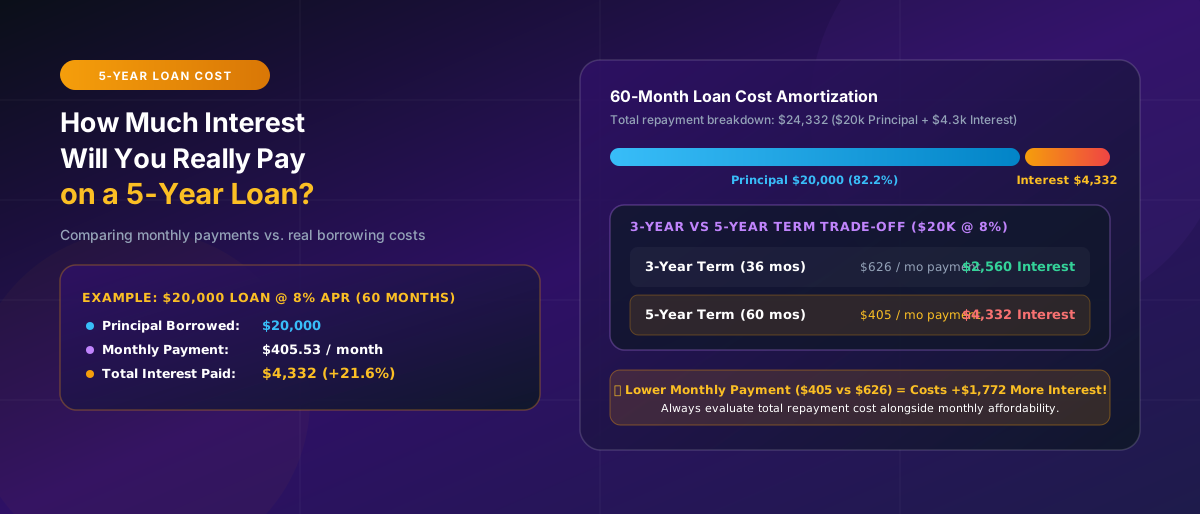
A lower monthly payment doesn't automatically mean a cheaper loan. Extending repayment over 5 years (60 months) lowers your monthly bill but increases the total interest paid over time. Always evaluate total borrowing cost alongside monthly affordability.
When you take out a loan, the monthly payment is usually the number that gets your attention first. A lender might tell you, “Your payment will be around $400 a month,” and that can sound manageable.
But there is another number that can be much more important: how much you will pay in total.
A five-year loan can look affordable because the payment is spread across 60 months. However, every payment usually includes both principal and interest. By the time the loan is completely paid off, you may have paid thousands of dollars more than the amount you originally borrowed.
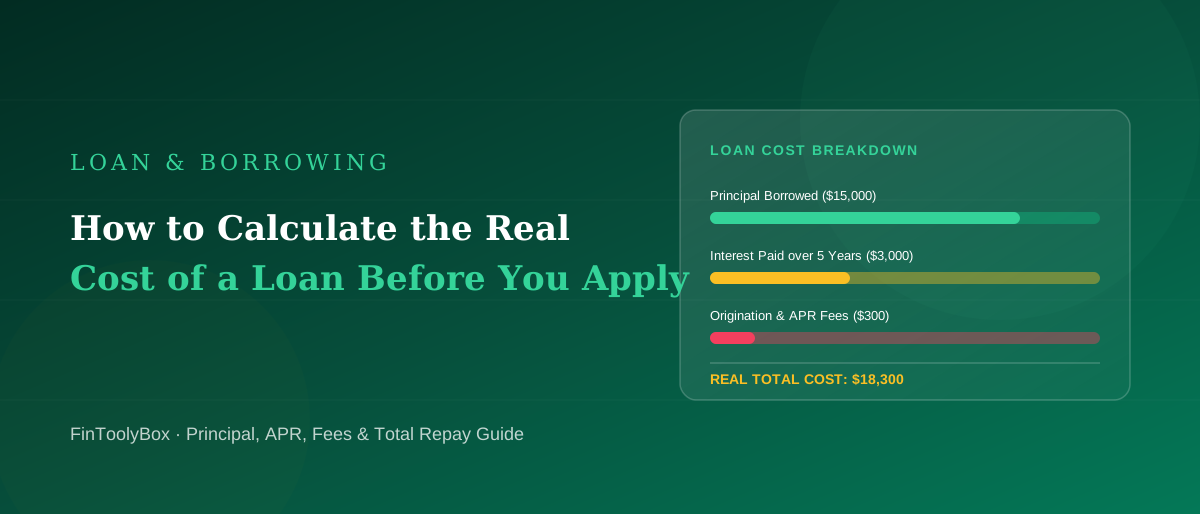
Understanding the total interest before you sign a loan agreement can help you decide whether the loan actually fits your finances (see how to calculate the real cost of a loan).
Why the Monthly Payment Doesn't Tell the Whole Story
Suppose you borrow $20,000. If someone only tells you that your payment is about $405 per month, you might think, “That doesn't sound too bad.”
But $405 paid every month for 60 months adds up to more than $24,000.
The difference between what you borrowed and what you repay is largely the cost of borrowing, including interest. This is why you should look beyond the monthly payment and examine the loan's total cost.
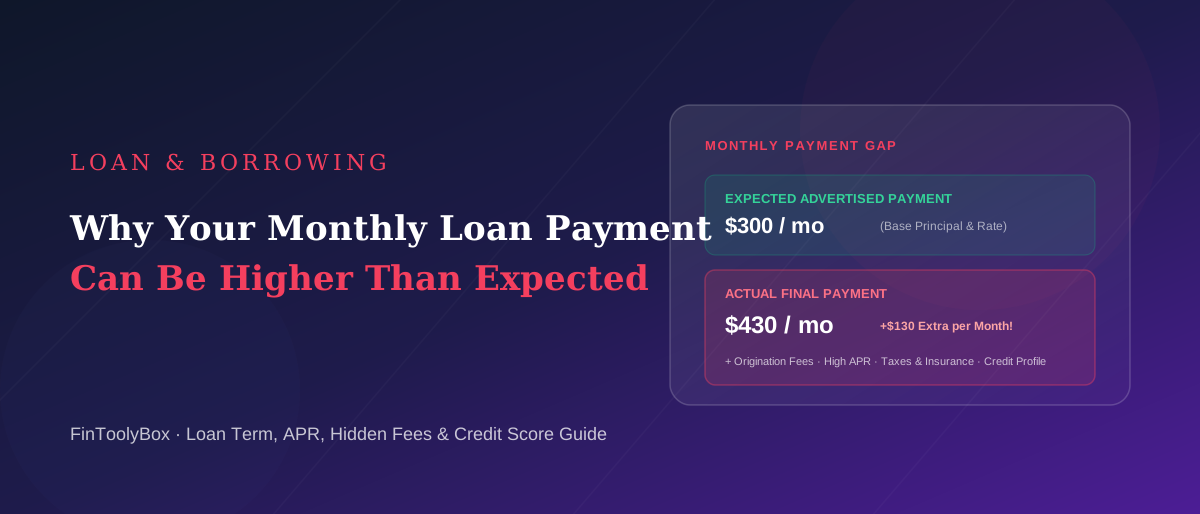
A lower monthly payment isn't automatically a cheaper loan. A longer repayment period can reduce the monthly payment while increasing the amount of interest you pay over time (see why loan payments can be higher than expected).
An Example: A $20,000 Loan Over Five Years
Let's use a simple hypothetical example.
Imagine you borrow $20,000 at an annual interest rate of 8% and repay it over five years, with monthly payments.
5-Year Loan Breakdown Example ($20,000 @ 8% APR)
- Loan Amount (Principal): $20,000
- Interest Rate: 8% annually
- Loan Term: 5 years (60 months)
- Approximate Monthly Payment: $405.53
- Total Payments (60 × $405.53): ~$24,332
- Total Interest Paid: ~$4,332 (+21.6%)
Result: You borrowed $20,000 but repay roughly $24,332 over the life of the loan. The $4,332 difference represents the true interest cost.
The exact amount can change depending on the lender, fees, payment schedule, and other loan terms. That's why calculating the actual numbers for your specific offer matters.
What Determines How Much Interest You Pay?
Several factors work together to determine the total cost of a loan.
1. The Amount You Borrow
The larger the loan, the more interest you can potentially pay. Borrowing $30,000 will generally cost more in interest than borrowing $10,000 when the rate and repayment period are otherwise similar.
This is one reason it can be useful to borrow only what you genuinely need rather than automatically taking the maximum amount a lender offers.
2. Your Interest Rate
Your interest rate has a major impact on the cost of borrowing. A lower rate generally means less interest over the life of the loan, while a higher rate can make the same loan significantly more expensive.
Your credit history (see what is a good credit score), income, debt levels (see debt-to-income ratio), loan type, lender, and market conditions can all influence the rate you receive.
3. The Loan Term
The term is how long you have to repay the loan. A five-year loan has 60 monthly payments.
If you stretch the same debt over a longer period, your monthly payment may fall, but you could pay more interest overall because the balance remains outstanding for longer.
Shorter Loan vs. Longer Loan
Imagine you are choosing between a three-year loan and a five-year loan for the same amount of money ($20,000 at 8% APR).
| Loan Term | Monthly Payment | Total Repayment | Total Interest Paid | Trade-off Summary |
|---|---|---|---|---|
| 3-Year Loan (36 months) | $626.73 | $22,562 | $2,562 | Higher monthly payment, but saves $1,770 in interest. |
| 5-Year Loan (60 months) | $405.53 | $24,332 | $4,332 | Lower monthly payment, but costs +$1,770 more in interest. |
The three-year loan will normally have a higher monthly payment because you are paying the balance off faster. However, you may pay substantially less interest overall.
The five-year loan may feel easier each month because the payments are smaller. The trade-off is that you keep the debt for an additional two years and may pay more interest.
This creates an important question: Would you rather have a lower monthly payment or a lower total borrowing cost?
Neither choice is automatically right for everyone. A higher payment that leaves you struggling to cover basic expenses isn't necessarily a good financial decision simply because it saves interest.
What Is Amortization?
Most installment loans use an amortization schedule. This schedule shows how each payment is divided between principal and interest.
Early in the loan, a larger portion of your payment can go toward interest because the outstanding balance is still relatively high.
As you gradually reduce the principal, the amount of interest charged can decrease. More of your payment can then go toward reducing the remaining balance.
This is why making extra principal payments early in a loan can sometimes reduce the total interest you pay. However, you should check your specific loan agreement before making additional payments.
Don't Forget About Fees
Interest isn't always the only cost of borrowing money.
Depending on the type of loan and lender, you could encounter origination fees, application fees, processing charges, late-payment fees, or other costs.
This is where the APR, or annual percentage rate, can be useful. APR is designed to give borrowers a broader view of borrowing costs than the stated interest rate alone because it can incorporate certain fees.
When comparing loan offers, don't automatically choose the one with the lowest advertised interest rate. Look at the complete cost of the loan (see fixed vs variable interest rates).
Can Extra Payments Save You Money?
Sometimes, yes.
If your lender allows additional payments toward principal without a penalty, paying extra can reduce the outstanding balance faster. A smaller balance generally means less interest accumulates over time.
For example, instead of paying only the required monthly amount, you might make occasional extra payments when you receive a bonus, tax refund, or other unexpected income.
However, don't drain your emergency savings (see should you keep your emergency fund in a savings account) just to pay off a loan faster. Keeping enough cash available for unexpected expenses can be just as important.
Use a Loan Calculator Before You Borrow
One of the easiest ways to understand a loan is to calculate it before accepting the offer.
Enter the loan amount, interest rate, and repayment period into a loan calculator. Then compare the monthly payment, total payments, and total interest.
Try changing the loan term and interest rate to see how much the numbers move. You may discover that paying slightly more each month could save a significant amount of interest over time.
10 Critical Questions to Ask Before Taking a 5-Year Loan
- What is the exact interest rate?
- What is the APR (including fees)?
- How much will I pay every month?
- How much will I repay in total?
- How much of the total cost is interest?
- Are there upfront or ongoing fees?
- Can I make extra principal payments without a penalty?
- Is the interest rate fixed or variable?
- Would a shorter loan term (e.g., 3 years) be affordable for my budget?
- Would this payment still fit my budget if my expenses increased?
The Bottom Line
A five-year loan isn't expensive or cheap simply because the monthly payment looks affordable. The real cost depends on the amount borrowed, interest rate, loan term, fees, and how the loan is repaid.
Before signing, look at the numbers from beginning to end. A loan that appears comfortable at $400 per month could ultimately cost several thousand dollars in interest.
The goal isn't necessarily to choose the loan with the smallest payment. It's to choose a loan whose monthly payment and total cost both make sense for your financial situation.
Taking a few minutes to calculate the total interest can make a big difference. Instead of simply asking, “Can I afford this payment?” ask, “How much will this loan really cost me?”
Disclaimer: This article is for general educational purposes only. Loan costs, interest rates, fees, and repayment terms vary by lender and borrower. Always review the full loan agreement and calculate the actual cost of your specific loan before making a financial decision.