A successful budget isn't about perfection or extreme restriction—it's about consistency. Base your budget on net take-home pay, separate needs from wants, account for irregular annual costs by dividing them by 12, and automate your savings.
Creating a budget sounds simple: add up your income, list your expenses, and make sure the numbers work. In reality, sticking to a budget can be much harder.
Maybe you've tried budgeting before and lasted a few weeks before giving up. Or perhaps your budget looked perfect on paper but didn't leave enough room for unexpected expenses, social plans, or the occasional purchase you simply wanted to make.
The problem may not be that you're bad with money. Your budget may simply be too complicated or unrealistic.
A good monthly budget shouldn't make you feel trapped. It should help you understand where your money is going and give you a clear plan for what you want it to accomplish.
Start With Your Real Monthly Income
The first step is figuring out how much money you actually have available each month.
If you receive a regular salary, this can be relatively straightforward. Use your take-home pay rather than your gross salary when building a spending budget, because your take-home pay is what actually reaches your account.
If your income changes from month to month, budgeting requires a little more flexibility. You can use an average from previous months or build your basic budget around a conservative estimate of what you expect to earn.
The goal is to avoid creating a spending plan based on income you aren't certain you'll receive.
Separate Needs From Wants
Once you know your income, list your regular expenses. One of the easiest ways to organize them is by separating needs from wants.
Needs are expenses that are generally necessary for your household or financial commitments. These might include:
- Rent or mortgage payments
- Utilities (electricity, water, internet)
- Groceries
- Transportation & fuel
- Insurance premiums
- Minimum debt payments
- Essential healthcare costs
Wants are expenses that make life more enjoyable but aren't necessarily essential. They could include restaurant meals, entertainment, subscriptions, hobbies, shopping, or expensive upgrades.
This doesn't mean wants are bad. A budget that completely removes everything enjoyable is unlikely to be sustainable (see how to lower expenses without feeling broke).
| Expense Category | Description & Purpose | Examples |
|---|---|---|
| Essential Needs | Non-negotiable costs required for basic living & legal commitments. | Housing, utilities, groceries, health insurance, loan minimums. |
| Lifestyle Wants | Discretionary spending that adds enjoyment to everyday life. | Dining out, streaming services, hobbies, vacations, shopping. |
| Savings & Sinking Funds | Money set aside for future goals & non-monthly obligations. | Emergency fund, annual insurance, home deposit, retirement. |
Don't Forget Irregular Expenses
This is where many budgets go wrong.
You might successfully account for rent, groceries, transportation, and your monthly bills, only to be surprised when an annual insurance payment, school expense, vehicle repair, birthday, or holiday arrives.
These expenses aren't necessarily emergencies. They're simply expenses that don't happen every month.
The Irregular Expense Buffer Calculation (Sinking Fund)
Estimate all non-monthly expenses for the full year and divide by 12:
- Car Insurance & Registration: $600 / yr
- Annual Subscriptions & Tech: $240 / yr
- Holidays & Birthdays: $360 / yr
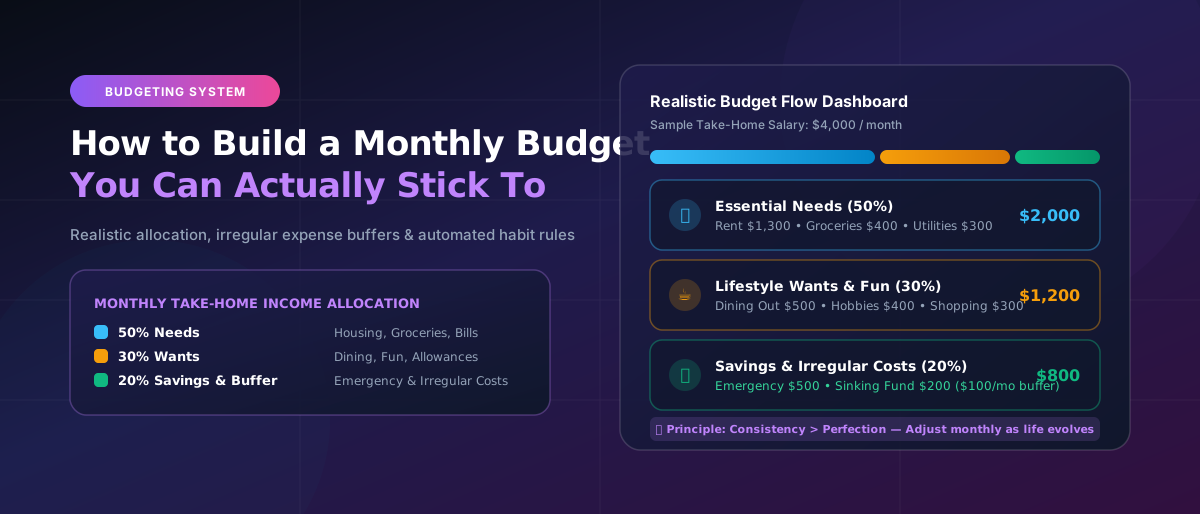
Total Annual Irregular Costs: $1,200 ÷ 12 months = $100 / month buffer.
By setting aside $100 every month into a dedicated buffer account, you eliminate surprise financial spikes when annual bills arrive.
Give Your Savings a Job
Saving money becomes easier when you know what you're saving for.
Instead of simply writing “save money” in your budget, create specific categories such as:
- Emergency fund (see how to build an emergency fund step by step)
- Home deposit
- Vacation fund
- Car repairs & maintenance
- Education savings
- Retirement (see how much to save for retirement by age)
- Other long-term goals
Specific goals make your progress easier to see. Saving $200 toward “something someday” can feel meaningless. Saving $200 toward a $2,000 emergency fund gives the money a clear purpose.
Try the 50/30/20 Rule—But Don't Treat It Like a Law
The 50/30/20 budget rule is a popular starting point (see our deep-dive 50/30/20 budgeting guide). It suggests dividing your after-tax income roughly like this:
- 50% for needs
- 30% for wants
- 20% for savings and debt repayment
It can be useful as a framework, but your situation may not fit those percentages.
If housing costs are high, you may need to spend more than 50% on needs. If you're aggressively paying off debt (see pay off debt vs investing guide), you may want to direct more than 20% toward debt repayment.
The important thing isn't hitting a perfect percentage. It's creating a spending plan that matches your actual circumstances.
Make Your Budget Realistic
A budget becomes much easier to abandon when it assumes you'll never spend money on anything fun.
If you normally spend money on coffee, entertainment, eating out, or hobbies, don't pretend those expenses don't exist. Instead, decide how much you're comfortable spending and include it in the budget.
For example, giving yourself a monthly entertainment allowance can prevent the feeling that you're constantly saying “no” to yourself.
A realistic budget you follow most months is usually more useful than a perfect budget you abandon after two weeks.
Watch Your Small Expenses
Small purchases can be easy to ignore because each individual transaction doesn't seem significant.
A $5 purchase doesn't feel like a major financial decision. But if you make several similar purchases throughout the week, the monthly total can become surprisingly large.
This doesn't mean you need to eliminate every small expense. Instead, review your spending regularly and identify patterns.
You may discover that you're spending far more on delivery fees, unused subscriptions, convenience purchases, or impulse shopping than you realized.
Automate What You Can
One of the easiest ways to make budgeting easier is to automate important financial actions.
If possible, arrange for money to move automatically toward savings or investments after you receive your income. Automatic bill payments can also help reduce the risk of forgetting regular payments.
The idea is simple: make good financial habits happen automatically instead of relying on willpower every month.
Review Your Budget Before the Month Ends
You don't have to wait until the end of the month to discover that you've spent too much.
Check your budget periodically. If you've already spent more than expected in one category, you can adjust another category before the month is over.
For example, if you spent more on dining out than planned, you might decide to reduce entertainment spending for the rest of the month.
This turns budgeting into an ongoing process rather than a once-a-month calculation.
Give Yourself Room for Mistakes
Even a well-planned budget won't predict everything.
You may spend more than expected, forget about an upcoming bill, or simply make a purchase that wasn't planned.
One mistake doesn't mean your entire budget has failed.
Instead of giving up, look at what happened and adjust your plan. If a particular expense keeps appearing, add it to your future budget.
Use a Monthly Budget as a Guide
Your budget shouldn't be something you fear checking.
Think of it as a plan that tells your money where to go. As your income, expenses, family situation, and financial goals change, your budget should change too.
You can also use a budgeting calculator or financial planning tool to organize your income, expenses, savings, and debt payments.
Final Thoughts
The best budget isn't necessarily the most detailed one. It's the one you can understand, maintain, and actually follow.
Start by knowing your real income. List your essential expenses, account for irregular costs, create realistic spending limits, and give your savings specific goals. Then review the plan regularly and make adjustments when life changes.
Don't aim for perfection. Aim for consistency.
A budget that works with your life can help you spend with less stress, save more intentionally, and make better decisions about your money month after month.
Disclaimer: This article is for general educational purposes only and does not constitute financial, investment, tax, or legal advice. Budgeting needs vary based on individual income, expenses, goals, location, and financial circumstances.