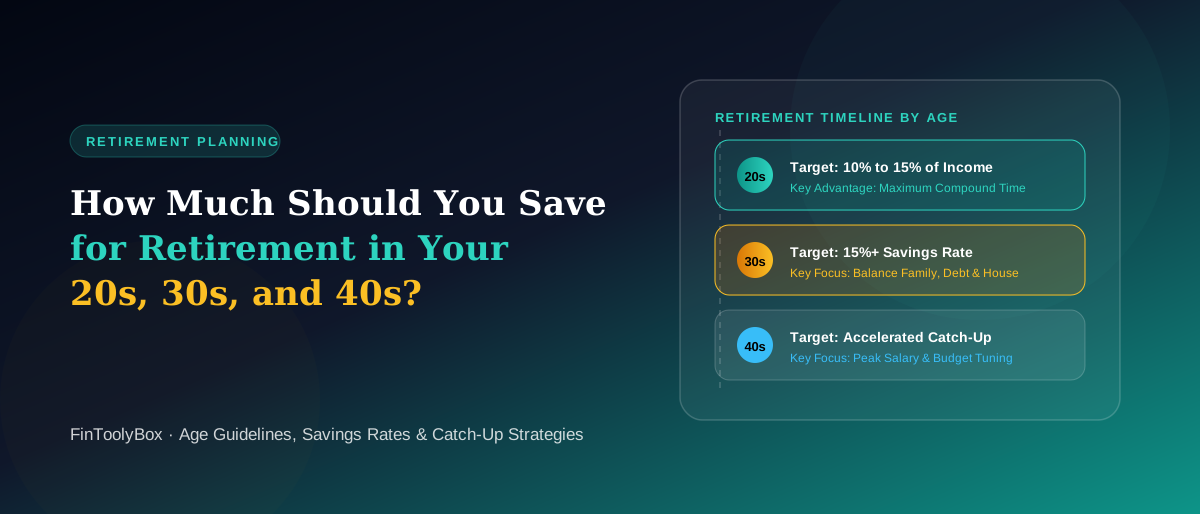
Retirement targets shift with each decade. Focus on establishing the 10-15% habit in your 20s, balancing family and housing in your 30s, and accelerating catch-up contributions in your 40s. Consistent habits beat chasing a magic paper number.
Retirement can feel like something that is far away, especially when you're in your 20s or 30s. There are bills to pay, goals to fund, and plenty of things competing for your money right now.
But the earlier you start putting money aside for retirement, the more time your savings potentially have to grow. That does not mean there is one perfect amount everyone should save. Your income, age, lifestyle, debt, family situation, and retirement goals all matter.
So how much should you actually be saving in your 20s, 30s, and 40s? The answer is less about hitting a magic number and more about building a consistent habit that grows with you.
Why Your Age Matters for Retirement Savings
Time can be one of your biggest advantages when saving for retirement.
Money saved earlier has more years to potentially earn returns and benefit from compound growth. This means someone who starts investing at 25 may have a significant advantage over someone who waits until 40, even if the older saver eventually contributes much larger amounts.
This is one reason retirement planning should not be postponed simply because you cannot afford to save a large amount right now. Starting small is still starting.
| Age Decade | Recommended Target Savings Rate | Primary Financial Focus |
|---|---|---|
| In Your 20s | 10% to 15% of Income | Build savings habit, claim employer 401(k) match, maximize time. |
| In Your 30s | 15%+ of Income | Balance retirement with home buying, debt & childcare expenses. |
| In Your 40s | 15% to 25%+ of Income | Accelerate catch-up savings, tune retirement budget & peak earnings. |
How Much Should You Save in Your 20s?
Your 20s are often a great time to establish the foundation for retirement savings.
You may not be earning your peak income yet, and you may have student loans, rent, transportation costs, or other financial responsibilities. That is completely normal.
A common starting goal is to save around 10% to 15% of your income for retirement if your budget allows. This is a guideline, not a rule that everyone must follow.
If 10% feels impossible, start with 3%, 5%, or whatever amount you can consistently manage. You can increase the percentage as your income grows (using the 50/30/20 budgeting rule).
For example, receiving a raise does not have to mean increasing your lifestyle by the entire amount. You could direct part of the increase toward retirement instead.
What Should You Focus on in Your 20s?
Rather than worrying about having a huge retirement balance immediately, focus on building good financial habits:
- Start contributing regularly to a retirement or investment account.
- Take advantage of any employer retirement contribution or matching program available to you.
- Build an emergency fund so unexpected expenses do not constantly interrupt your retirement contributions.
- Pay attention to high-interest debt (see pay off debt vs invest guide).
- Increase your retirement contribution when your income increases.
Your biggest advantage at this stage is time.
How Much Should You Save in Your 30s?
Your 30s can be a complicated financial decade. Your income may be increasing, but so can your responsibilities.
You might be buying a home (see how much house you can afford), raising children, paying for childcare, supporting family members, or dealing with larger everyday expenses.
If you did not save much in your 20s, don't assume you are permanently behind. Instead, focus on increasing your savings rate and making retirement a regular part of your financial plan.
A target of 15% or more of income may be appropriate for some people, especially if they are starting later or want a more comfortable retirement. However, the right percentage depends heavily on when you started, when you plan to retire, and how much you expect to spend.
What Should You Focus on in Your 30s?
This is often the stage when it becomes important to balance several financial goals at once.
You may want to save for retirement while also paying down debt and building savings for a home or other major expenses.
Try not to treat these goals as completely separate. A strong financial plan can give each goal a place in your budget.
If your income rises significantly during your 30s, consider increasing your retirement contributions rather than allowing your lifestyle expenses to grow at the same pace.
How Much Should You Save in Your 40s?
By your 40s, retirement may begin to feel much more real. You may have 15 to 25 years before your planned retirement, depending on your goals.
If you have been saving consistently, you can focus on maintaining that progress and adjusting your strategy as your retirement date gets closer (see our retirement planning guide).
If you have little or no retirement savings, however, this is a good time to take action rather than panic.
You may need to save a larger percentage of your income than someone who started in their 20s. That could mean reviewing your spending, increasing contributions, working longer, or adjusting your expected retirement lifestyle.
What If You're Behind?
There is no benefit to feeling guilty about money you did not save in the past. Instead, find out where you stand today.
Calculate your current retirement balance, estimate how much you can contribute each month, and think realistically about when you would like to retire.
Then identify the biggest change you can make right now. Maybe you can increase your contribution by 2%. Maybe you can redirect a portion of your next raise. Maybe you can reduce a recurring expense (see how to lower monthly expenses) and put the difference toward retirement.
Small improvements can become meaningful when repeated for years.
Don't Forget About Your Retirement Lifestyle
The amount you need for retirement depends heavily on how you expect to live.
Someone planning a simple retirement with low housing costs may need considerably less than someone who wants to travel frequently, maintain an expensive lifestyle, or retire very early (see FIRE movement guide).
Retirement Budget Checklist
- Housing (Mortgage payoff vs Rent)
- Food & everyday living costs
- Healthcare & supplemental insurance
- Transportation & travel
- Taxes & inflation adjustments
Creating an estimated retirement budget can make your savings target much more realistic.
Use a Retirement Calculator
Retirement planning involves many variables, which is why a retirement calculator can be useful.
You can experiment with different savings rates, retirement ages, starting balances, and hypothetical rates of return to see how your plan might change.
Remember that calculator results are estimates rather than promises. Investment returns, inflation, taxes, fees, and your future income can all affect the actual outcome.
The Bottom Line
There is no single retirement savings number that is perfect for every person in their 20s, 30s, or 40s.
If you're in your 20s, your biggest advantage is time. In your 30s, focus on increasing your savings while balancing other financial responsibilities. In your 40s, take a close look at your progress and make adjustments if you need to catch up.
Most importantly, don't wait for the perfect financial situation before starting.
The best retirement plan is one you can realistically follow for years—not one that looks perfect on paper but is impossible to maintain.
Sources & References
This retirement guide relies on verified investor education standards. For official guidance, visit:
- U.S. Securities and Exchange Commission (SEC) Retirement Planning
- Consumer Financial Protection Bureau (CFPB) Retirement Resources
- FINRA Retirement Savings Education
Frequently asked questions
How much should I save for retirement in my 20s?
Aiming for 10% to 15% of your income is a solid benchmark. If that is too high initially, start with 3% to 5% to claim employer 401(k) matches and increase the rate as your salary grows.
What if I haven't saved much for retirement by my 40s?
Don't panic. Increase your savings rate aggressively (aim for 15% to 25%+), redirect salary raises to retirement accounts, take advantage of catch-up contributions, and adjust expected retirement lifestyle timelines.
Why is starting early in your 20s so powerful for retirement?
Because of compound growth, dollars saved in your 20s have 30 to 40 years to earn interest on interest. A 25-year-old saving smaller amounts can easily surpass a 40-year-old saving much larger monthly amounts.
Helpful resources
Internal resources
- Retirement Planning Guide
- Tax-Advantaged Retirement Accounts
- How Compound Interest Changes Savings Over 10 Years
- Understanding the FIRE Movement
- Browse all articles