A headline salary raise rarely translates dollar-for-dollar into bank account growth. Payroll taxes, inflation, automatic retirement contributions, and lifestyle inflation silently absorb much of your pay increase. To keep your raise, calculate your net take-home increment and automate savings before the money is spent.
Getting a salary increase should feel exciting. You see a higher number on your paycheck, and naturally, you expect to have more money left over at the end of the month.
But sometimes that doesn't happen.
You earn more than you did before, yet somehow your bank account doesn't seem much healthier. You may even wonder where the extra money went.
This is surprisingly common. A raise can improve your financial situation, but several things can quietly reduce how much of that increase you actually feel.
Your Raise Isn't the Same as Your Take-Home Increase
The first thing to understand is that a salary increase usually isn't added dollar-for-dollar to your take-home pay.
When your gross salary increases, more money may go toward income taxes, retirement contributions, social insurance, or other payroll deductions depending on where you live and how you're paid.
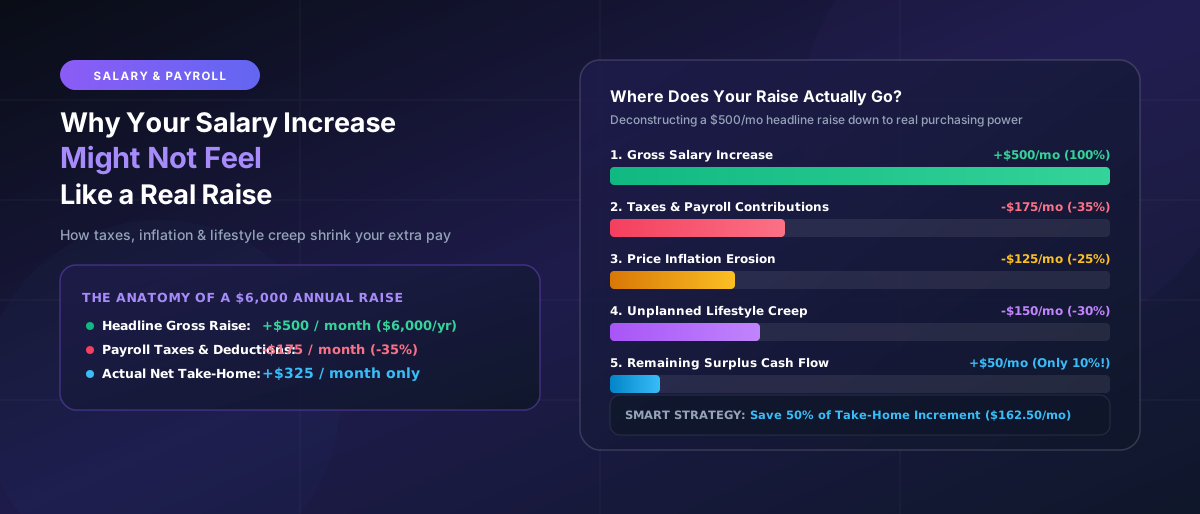
For example, imagine your salary increases by $6,000 per year. That sounds like an extra $500 per month, but you may receive considerably less than $500 in additional take-home pay after deductions.
This doesn't mean the raise wasn't valuable. It simply means you should judge the increase based on your net income, not just the headline salary figure.
Headline Salary Increase vs. Actual Cash Flow Example
Suppose you receive a headline salary raise of $6,000 / year ($500 / month):
Gross Raise: +$500/mo → Taxes & Deductions (-$175/mo) → Net Take-Home: +$325/mo
Out of a headline $500 monthly raise, your liquid cash flow only increases by $325. If inflation adds $125 in costs, your real gain shrinks to just $200 per month.
| Annual Gross Raise | Monthly Gross Increase | Est. Taxes & Payroll (-30% to -35%) | Actual Net Monthly Cash | Recommended 50% Auto-Savings |
|---|---|---|---|---|
| $3,000 / year | $250 / month | -$80 / month | +$170 / month | $85 / month |
| $6,000 / year | $500 / month | -$175 / month | +$325 / month | $162.50 / month |
| $10,000 / year | $833 / month | -$290 / month | +$543 / month | $271.50 / month |
| $15,000 / year | $1,250 / month | -$440 / month | +$810 / month | $405.00 / month |
Inflation Can Eat Away at Your Raise
Another reason a raise may not feel like much is inflation (see how inflation reduces your savings purchasing power).
If your salary rises by 5% but the cost of many things you buy also rises, your purchasing power may not increase by very much.
Think about everyday expenses such as groceries, transportation, housing, utilities, insurance, and services. If those costs become more expensive, part of your raise may simply be covering higher prices.
That's why it's useful to think about your raise in real terms: how much more can your new income actually buy?
Lifestyle Inflation Is Often the Biggest Culprit
One of the easiest ways for a raise to disappear is to increase your spending at the same time your income increases.
Maybe you start eating at restaurants more often. You upgrade your phone. You move into a more expensive apartment. You take more expensive vacations or start buying things you previously considered unnecessary.
None of these choices are automatically bad. The problem happens when your expenses rise almost as quickly as your income.
This is called lifestyle inflation (learn how to build a monthly budget you can stick to).
Before long, your new salary can start feeling like your old salary because you've adjusted your lifestyle to match it.
The Best Time to Increase Your Savings Is After a Raise
A raise creates an opportunity that you may not get every year.
Instead of immediately spending the entire increase, consider dividing it between your current lifestyle and your future goals.
For example, you could decide that half of your additional take-home pay goes toward savings or investing while the other half improves your lifestyle.
If your raise gives you an extra $300 per month after deductions, putting $150 toward savings means you still get to enjoy $150 of additional spending money.
You get some lifestyle improvement without allowing the entire raise to disappear (see where to store your emergency fund savings).
Your Retirement Contributions May Change
If you contribute a percentage of your income to a retirement plan, your contribution may automatically increase when your salary increases.
At first, this can make your paycheck appear smaller than expected.
Don't automatically view this as a negative. More retirement contributions can mean you're putting more money toward your future. What feels like less cash today could help strengthen your long-term financial position.
The key is to understand your deductions so you know exactly where your additional earnings are going.
Higher Income Can Also Change Other Costs
A higher salary can sometimes affect more than your paycheck.
Depending on your country and circumstances, earning more could change your eligibility for certain tax benefits, credits, assistance programs, or other income-based benefits.
That means the financial impact of a raise isn't always as simple as adding the extra salary to your previous income.
If your raise is substantial, it can be worth reviewing your overall tax and benefits situation.
You're Comparing Your New Income to Your Old Spending
There's also a psychological reason a raise may not feel significant.
People often adapt quickly to a higher income. What felt like a comfortable salary a year ago can start feeling normal after you've earned it for a while.
Then, when you receive another increase, the extra money may feel less exciting because your expectations have changed too.
This is another reason setting specific financial goals can help. Instead of simply asking, "Do I feel richer?", ask whether your raise is helping you build savings, reduce debt, invest, or achieve another goal.
What to Do When You Get a Raise
You don't have to avoid spending more money just because you received a raise. A better approach is to give the additional income a purpose before it arrives.
Consider this simple strategy:
- Check your new take-home pay. Don't assume your gross raise equals your actual increase.
- Review your deductions. Understand taxes, retirement contributions, insurance, and other payroll deductions.
- Choose a savings percentage. Decide in advance how much of the increase you'll save or invest.
- Pay down expensive debt. Extra income can be useful for reducing high-interest balances.
- Allow yourself some lifestyle improvement. Enjoying part of your raise can make the plan easier to maintain.
- Automate the difference. Automatically transfer the amount you're saving so it doesn't get spent accidentally.
A Raise Should Improve Your Financial Position
A salary increase doesn't have to make you feel dramatically richer to be valuable.
If your income increases while your spending stays relatively controlled, you can gradually improve your financial position. You may be able to build a larger emergency fund, eliminate debt faster, increase investments, or work toward major goals such as buying a home.
The goal isn't necessarily to make every raise visible through bigger purchases. Sometimes the best raise is the one that quietly makes your future more secure.
Final Thoughts
A salary increase can feel surprisingly small because of taxes and deductions, inflation, lifestyle inflation, increased contributions, and changes in spending habits.
The good news is that you have some control over what happens next. You can decide how much of your increased income goes toward spending and how much goes toward your future.
Before your next raise arrives, make a simple plan. Even directing a portion of the increase toward savings or debt repayment can make a meaningful difference over time.
Disclaimer: This article is for educational purposes only and does not provide personalized financial, tax, or investment advice. Tax rules, deductions, benefits, and payroll systems vary by country and individual circumstances.
Related Articles
Finance
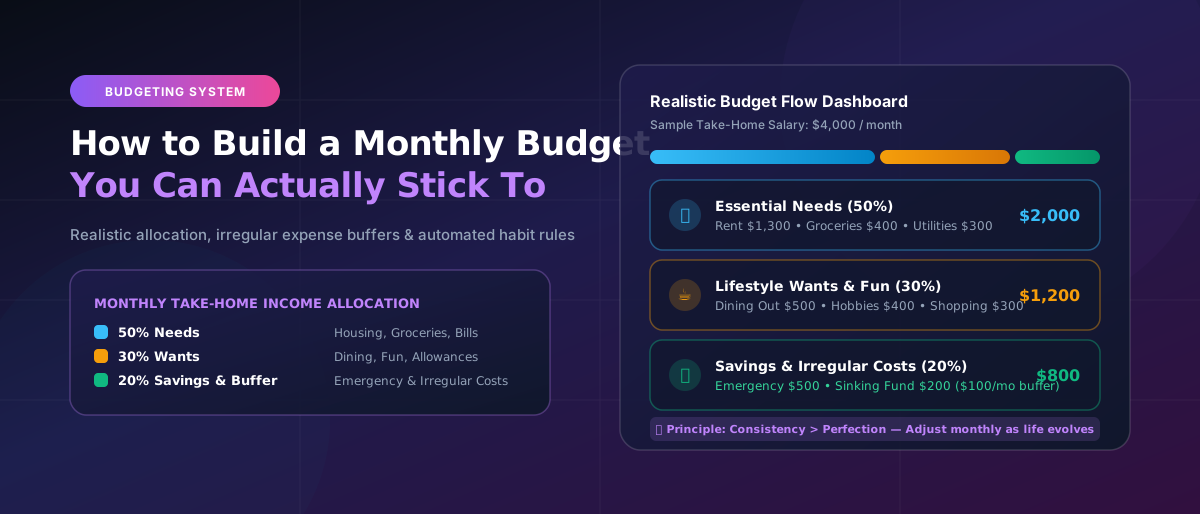
How to Build a Monthly Budget You Can Actually Stick To
Learn step-by-step how to create a practical, realistic monthly budget using fixed costs, flexible spending caps, and automated savings buffers.
Finance
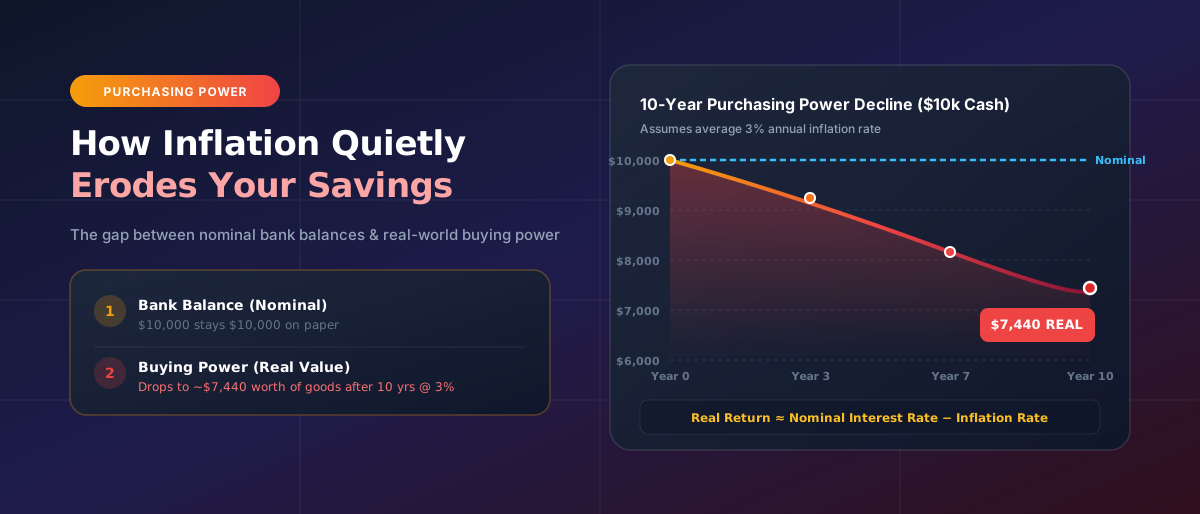
How Inflation Reduces the Value of Your Savings Over Time
Understand purchasing power erosion, real returns vs nominal interest, and practical strategies to protect your cash reserves against rising prices.
Finance
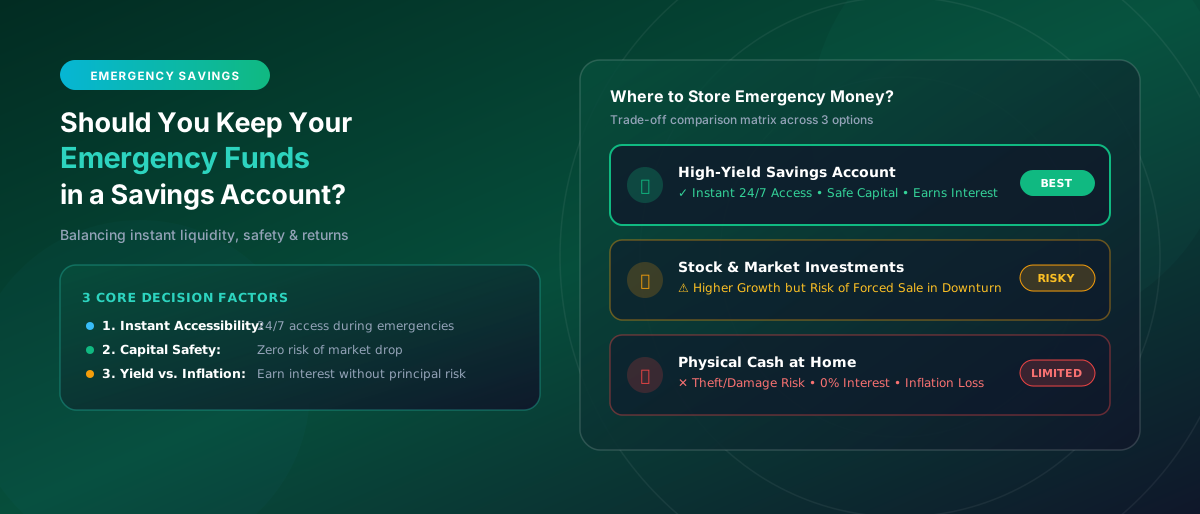
Should You Keep Your Emergency Fund in a Savings Account?
Explore liquidity, capital preservation, high-yield savings accounts, and money market options to store emergency cash reserves safely.