Inflation doesn't reduce the dollar amount in your bank account, but it quietly erodes your purchasing power. If your interest rate is lower than the inflation rate, your savings are losing real value over time.
Saving money feels like one of the safest things you can do with your finances. You put money aside, watch the balance grow, and feel a little more secure about the future. But there is something working quietly in the background that can reduce what those savings are actually worth: inflation.
Inflation doesn't normally take money directly out of your bank account. Instead, it gradually reduces your money's purchasing power. In other words, the same amount of money may buy fewer goods and services in the future than it does today.
Understanding this doesn't mean you should stop saving. Quite the opposite. It means you should understand where you keep your money and whether it has a chance of keeping up with rising prices.
What Is Inflation?
Inflation is the general increase in the prices of goods and services over time. When prices rise, the purchasing power of your money falls.
Imagine you have $100 today and it is enough to buy a particular basket of groceries. If those same groceries become more expensive over the next few years, that $100 may no longer be enough to buy everything you could previously afford.
You still have $100. The number in your account hasn't changed. What has changed is what that $100 can buy.
That's why inflation can be easy to overlook. Your bank balance might look exactly the same while its real-world value is gradually changing.
Why Your Savings Can Lose Purchasing Power
Suppose you keep $10,000 in cash for several years. If prices rise during that period, the $10,000 will eventually buy less than it could when you first saved it.
This doesn't mean you have technically lost $10,000. You still have the same amount of money. The issue is that your real value has changed.
For example, imagine inflation averages 3% per year. An item that costs $100 today would cost roughly $134 after 10 years if prices increased at that rate every year. The exact future price will depend on actual inflation, but the example shows why purchasing power matters.
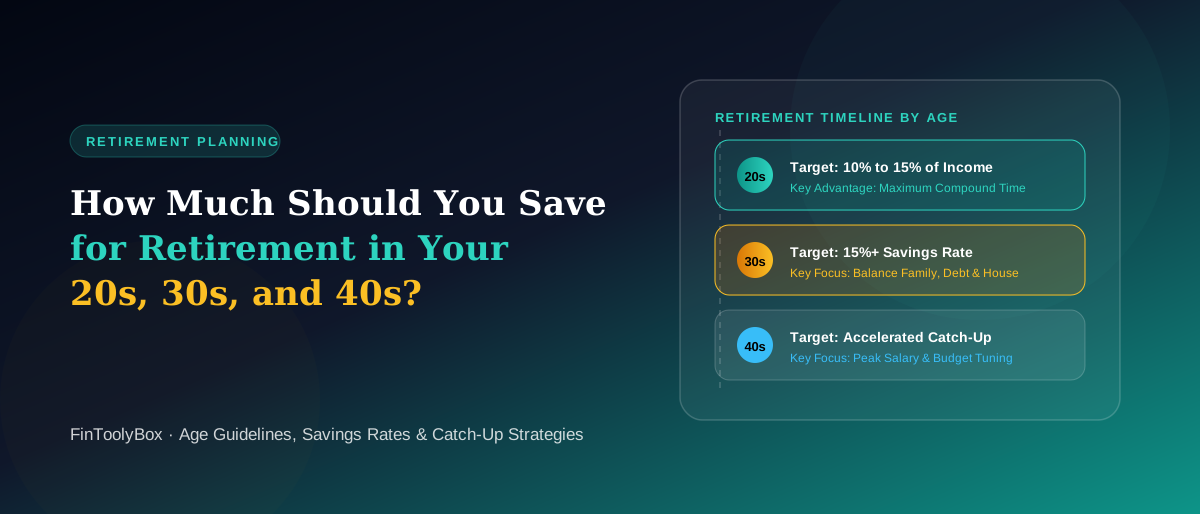
This is particularly important when you're saving for goals that are many years away, such as retirement (see how much to save for retirement by age), buying a home, or paying for education.
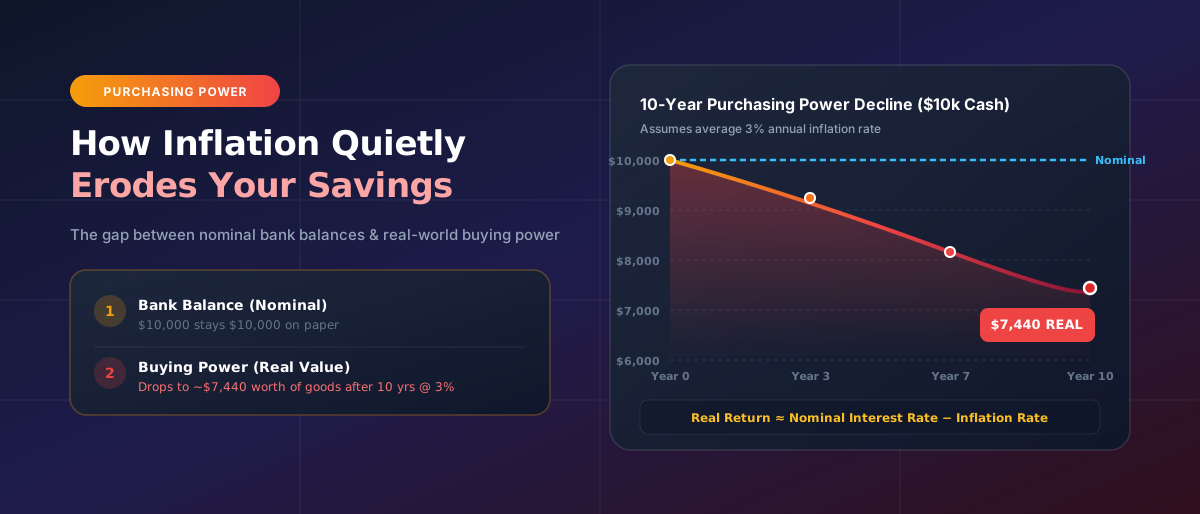
10-Year Purchasing Power Erosion Example ($10,000 Cash)
Assuming a steady 3% annual inflation rate and 0% interest:
- Today (Year 0): $10,000 buys 100% of target goods.
- Year 3: Purchasing power drops to ~$9,150 in today's dollars.
- Year 7: Purchasing power drops to ~$8,130 in today's dollars.
- Year 10: Purchasing power drops to ~$7,440 in today's dollars.
Result: On paper you still have $10,000, but it buys ~25.6% less than when you started.
Interest Can Help—But It Depends on the Rate
Keeping money in an interest-bearing savings account can help reduce the impact of inflation because your balance earns interest.
But earning interest doesn't automatically mean your savings are keeping up with inflation.
Consider a simple example. If your savings account earns 2% per year while inflation averages 3%, your money is growing in dollar terms but losing purchasing power in real terms.
This is the difference between a nominal return and a real return.
| Concept | Definition | Example (2% Interest, 3% Inflation) |
|---|---|---|
| Nominal Return | How much your money grows before considering inflation. | +2.0% annual increase in dollar balance |
| Real Return | How much your purchasing power grows after accounting for inflation. | −1.0% annual net loss in real buying power |
A rough way to think about it is:
Real return ≈ interest rate − inflation rate
The actual calculation can be slightly different when rates are higher, but this simple version is useful for understanding the basic idea.
Not All Savings Should Be Invested
Learning about inflation doesn't mean you should put every dollar you have into investments.
Some money needs to remain easily accessible. Your emergency fund, for example, may need to be available when your car breaks down, you lose income, or an unexpected bill arrives.
For money you may need soon, stability and accessibility can be more important than trying to earn the highest possible return.
The bigger question is what you're doing with money that you won't need for many years.
Long-Term Money May Need a Different Strategy
Long-term savings have more time to potentially grow and recover from short-term market movements. Depending on your goals, risk tolerance, and financial situation, diversified investments may provide a better opportunity for long-term growth than keeping everything in cash.
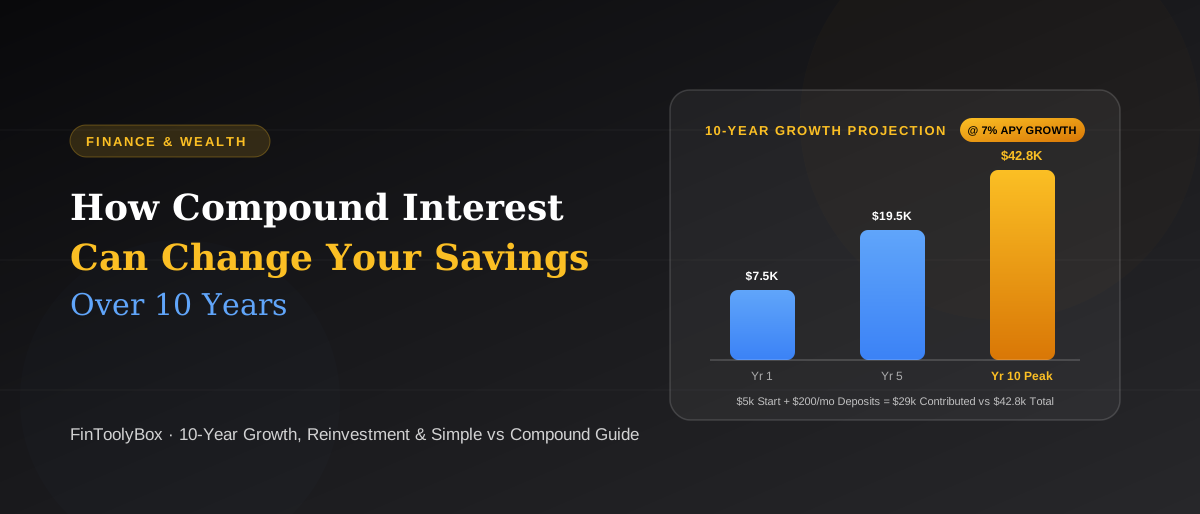
Investments can potentially outpace inflation over long periods (see how compound interest changes savings over 10 years), but they also come with risk. Their value can fall, sometimes significantly, and there is no guaranteed return.
That's why the right approach usually isn't about choosing between “cash” and “investments.” It is about giving each dollar a job.
Money you need soon can focus on safety and accessibility. Money intended for long-term goals can potentially be positioned for growth.
Ways to Reduce Inflation's Impact
You don't need a complicated financial strategy to start protecting your purchasing power. A few practical habits can make a meaningful difference.
1. Don't Keep More Cash Than You Need
Cash is useful, but keeping excessive amounts sitting idle for many years can expose your savings to inflation. Keep enough for emergencies and near-term goals, then consider whether the rest has a better long-term purpose.
2. Look at the Interest Your Savings Earn
Different savings products can offer very different interest rates. Periodically check what your account is paying and compare it with other appropriate options available to you.
3. Invest for Long-Term Goals When Appropriate
If you have money you won't need for many years, consider whether a diversified investment strategy fits your goals and risk tolerance. The goal isn't to chase the highest return. It's to give long-term money a reasonable opportunity to grow.
4. Increase Your Contributions Over Time
Inflation doesn't only affect your existing savings. It can also affect future expenses. Increasing the amount you save as your income grows can help you keep moving toward your goals (see how to lower expenses without feeling broke).
5. Avoid Chasing Inflation-Proof Promises
Whenever inflation becomes a concern, you'll see people promoting investments that supposedly guarantee enormous returns. Be careful. Higher potential returns generally come with higher risk, and promises of easy, guaranteed profits deserve serious skepticism.
Think About Inflation When Setting Financial Goals
One common mistake is setting a future savings goal using today's prices.
Suppose you believe you'll need $50,000 for a future goal. If that goal is many years away, the actual amount you'll need may be higher because prices could increase before you reach it.
This is why financial planning isn't simply about asking, “How much money do I need?” You also need to ask, “How much will that amount need to be worth when I actually use it?”
Using an inflation calculator can help you estimate how the purchasing power of money may change over time. You can then build a more realistic savings target.
Inflation Is One Reason Starting Early Matters
The earlier you start preparing for long-term financial goals, the more time you have to adjust your savings strategy.
You can increase contributions, review your investments, improve your income, and make changes when your circumstances change. Waiting until prices have risen significantly can make long-term goals harder to reach.
You don't need to predict exactly what inflation will be in the future. Nobody can do that with certainty. Instead, build a plan that gives your finances room to adapt.
Final Thoughts
Inflation is easy to ignore because you usually don't see it as a charge on your bank statement. But over time, rising prices can quietly reduce what your savings can buy.
The answer isn't to panic or take unnecessary investment risks. It's to understand the difference between the amount of money you have and the purchasing power that money represents.
Keep appropriate cash reserves for emergencies and short-term needs. Look for sensible ways to earn interest on money that needs to stay accessible. For long-term goals, consider whether a diversified investment strategy makes sense for you. And remember that increasing your savings contributions can be just as important as trying to earn a higher return.
The goal isn't simply to have more money in the future. It's to have money that can still do what you need it to do.
Disclaimer: This article is for general educational purposes only and does not constitute financial, investment, or tax advice. Inflation rates, interest rates, investment returns, and individual circumstances vary. Consider your own financial situation and risk tolerance before making financial decisions.