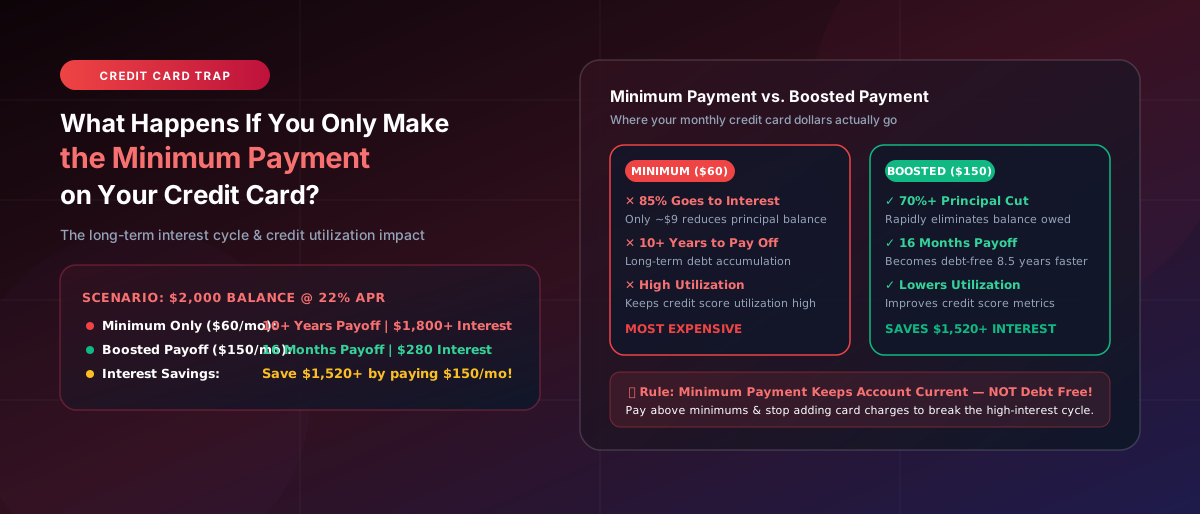
The minimum payment is designed to keep your credit account current—not to help you become debt-free quickly. Paying only the minimum on high-interest credit card debt can trap your balance in a 10-year interest cycle and harm your credit utilization ratio.
Credit cards can be useful when you need flexibility, but there is one habit that can quietly make your debt much more expensive: making only the minimum payment every month.
The minimum payment can make your monthly bill look manageable. You might owe $2,000 and only be required to pay a relatively small amount that month. The problem is that the remaining balance doesn't disappear. If you're carrying a balance, interest can continue to accumulate according to the terms of your card.
Understanding what happens when you make only minimum payments can help you avoid turning a manageable balance into a long-term financial burden.
What Is a Minimum Credit Card Payment?
The minimum payment is the smallest amount your credit card issuer requires you to pay by the due date to keep the account in good standing, subject to the terms of your card agreement.
The exact calculation varies between issuers and cards. It may be based on a percentage of your outstanding balance, a fixed amount, interest and fees, or a combination of factors.
Paying at least the required minimum can help you avoid being considered late on the account. However, it doesn't mean you've paid off the debt or avoided interest charges.
Why Minimum Payments Can Be Expensive
The biggest issue is that your balance can remain outstanding for a long time.
When you carry a credit card balance, interest may be charged based on the card's terms. If you make only small payments, a significant portion of each payment may go toward interest and other charges rather than reducing the principal balance quickly.
This can create a frustrating cycle: you make a payment every month, but the balance seems to move down very slowly.
A Simple Example
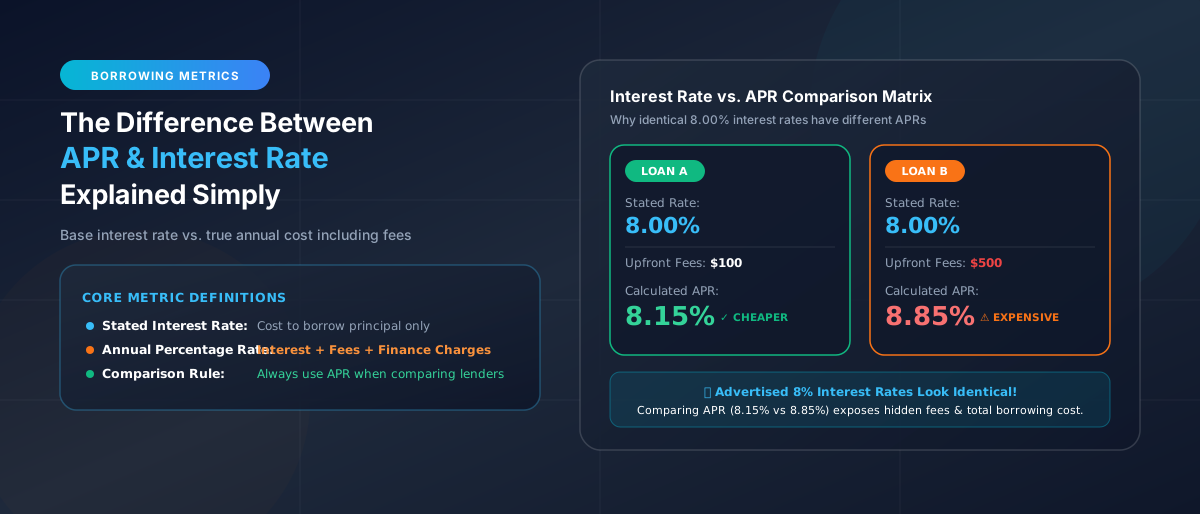
Imagine you have a hypothetical credit card balance of $2,000 with a relatively high annual percentage rate (e.g., 22% APR) (see the difference between APR and interest rate explained simply).
| Repayment Strategy | Monthly Payment | Time to Payoff | Total Interest Paid | Total Money Repaid |
|---|---|---|---|---|
| Minimum Payment Only | $60 (declining minimum) | 10+ Years (120+ mos) | $1,800+ | $3,800+ |
| Boosted Fixed Payment | $150 (fixed monthly) | 16 Months | $280 | $2,280 |
If you make only the minimum payment each month and don't add any new purchases, it could take much longer to eliminate the balance than you might expect. During that time, you could pay hundreds of dollars or more in interest, depending on the card's APR and payment calculation.
The exact result depends on your card's terms, so the best way to understand your situation is to check the statement's payoff information or use a credit card repayment calculator.
Minimum Payment vs. Paying More
Suppose your minimum payment is $60, but you can comfortably afford to pay $150.
Paying $150 instead of $60 can reduce your balance much faster. As the balance falls, the amount of interest that can accumulate may also decrease.
You don't necessarily need to double your payment overnight. Even consistently paying more than the minimum can make a meaningful difference over time.
The key is to make sure the additional payment is affordable and doesn't cause you to fall behind on essential expenses or other important debts (see how to build a monthly budget you can stick to).
Interest Can Work Against You
Credit card interest can be particularly expensive compared with some other forms of borrowing.
When you carry a balance from month to month, the cost of that debt can add up. If you continue making new purchases while paying only the minimum, the balance may stay high or even increase.
This is why simply making the minimum payment isn't a complete debt-repayment strategy.
What If You Keep Using the Card?
This is where the situation can become even more difficult.
Imagine you owe $2,000 and are making minimum payments. Then you continue using the card for groceries, entertainment, subscriptions, and other purchases.
You may be paying down part of the old balance while adding new debt at the same time.
If your new purchases are greater than the amount you're paying down, your balance can continue rising.
If you're trying to get out of credit card debt, consider limiting new charges on the card while you focus on reducing the existing balance.
Minimum Payments Can Affect Your Credit Utilization
Your credit card balance can also affect your credit utilization ratio, which compares your revolving credit balances with your available credit (see what is a good credit score).
For example, if you have a $5,000 credit limit and a $4,000 balance, you're using a large portion of the available limit (80% utilization).
Paying down the balance can lower your utilization. Credit scoring models can consider utilization as one factor when calculating credit scores, although scoring systems differ.
So reducing your credit card balance can potentially help both your finances and your credit profile.
Should You Ever Make Only the Minimum?
Sometimes life doesn't leave you with many choices.
If you're dealing with an unexpected expense, temporary loss of income, or another financial emergency (see should you keep your emergency fund in a savings account), making the minimum payment may be better than missing the payment entirely, assuming the minimum is affordable and you meet the payment deadline.
The important thing is not to let a temporary situation become a permanent habit.
Once your finances improve, you can increase your payments and start attacking the balance more aggressively.
5 Action Steps to Pay Off Credit Card Debt Faster
- Stop Adding Unnecessary Debt: Freeze or limit new purchases on cards carrying active balances.
- Pay Above the Minimum: Consistently add $25, $50, or $100 extra to your monthly transfer.
- Use Debt Avalanche: Prioritize paying off the highest interest rate card first to minimize interest cost.
- Use Debt Snowball: Prioritize paying off the smallest balance first for rapid psychological momentum.
- Automate Your Payments: Set up automatic transfers to avoid missed due dates and late payment penalties.
Check Your Credit Card Statement
Your statement can contain valuable information about your debt.
Look for your current balance, minimum payment, APR, due date, fees, and any estimated payoff information provided by the issuer.
Don't ignore this information simply because the minimum payment looks affordable. Understanding the numbers can show you what the debt is really costing you.
Use a Credit Card Payoff Calculator
A payoff calculator can help you see how different payment amounts affect your debt.
Enter your current balance, interest rate, and planned monthly payment. Then compare what happens if you increase the payment.
You may be surprised by how much time and interest you can potentially save by paying more than the minimum.
The Bottom Line
Making the minimum credit card payment can keep an account from becoming past due, but it can also leave you carrying debt for a long time.
If interest continues to accumulate and you keep adding new purchases, the balance can become increasingly difficult to eliminate.
Whenever your budget allows, try to pay more than the minimum. Focus on reducing the balance, avoid unnecessary new debt, and create a repayment strategy that you can maintain.
The minimum payment is there to help you meet the required payment—not necessarily to help you become debt-free quickly.
Disclaimer: This article is for general educational purposes only and does not constitute financial advice. Credit card interest, minimum-payment calculations, fees, and terms vary by issuer and card. Review your card agreement and statement for the terms that apply to your account.