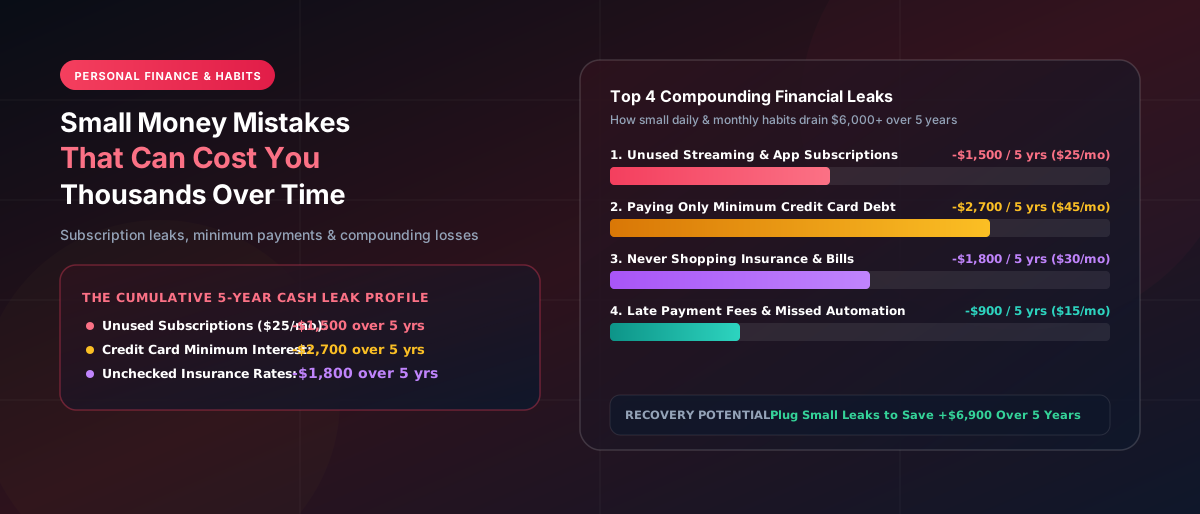
Major financial catastrophes are rare, but small recurring money leaks compound continuously. Unused $15 subscriptions, minimum credit card interest, un-shopped insurance rates, and late fees quietly erode thousands in wealth. Periodically auditing recurring transactions recovers lost cash effortlessly.
When people think about major financial problems, they usually imagine big decisions: taking out a huge loan, losing a job, making a bad investment, or buying a home they cannot afford.
But sometimes, your finances can take a hit from much smaller mistakes. A few dollars here, a forgotten subscription there, a slightly higher interest rate, or a habit of spending without checking where your money goes can quietly add up to thousands over the years.
The good news is that these mistakes are often easier to fix than major financial problems. You do not necessarily need to completely change your lifestyle. You just need to notice the leaks and make better decisions consistently.
The Compounding Cost of 4 Small Monthly Leaks
Consider the cumulative 5-year cost of four tiny unexamined habits:
- Unused streaming & cloud apps: -$25 / month ($1,500 over 5 yrs)
- Credit card minimum interest charges: -$45 / month ($2,700 over 5 yrs)
- Un-shopped auto/home insurance premiums: -$30 / month ($1,800 over 5 yrs)
- Occasional late fees & penalties: -$15 / month ($900 over 5 yrs)
Total Compound 5-Year Loss: -$6,900 Drained from Wealth!
Plugging these four leaks recovers nearly $7,000 without requiring any sacrifice in quality of life.
| Money Leak Category | Average Monthly Drain | 1-Year Total Cost | 5-Year Total Cost | Quick Action Fix |
|---|---|---|---|---|
| Unused Subscriptions & Apps | $25 / month | $300 / year | $1,500 | Perform quarterly bank statement audit |
| Credit Card Minimum Interest | $45 / month | $540 / year | $2,700 | Automate full statement balance paydown |
| Un-shopped Insurance & Bills | $30 / month | $360 / year | $1,800 | Request annual rate quotes from competitors |
| Late Fees & Missed Autopay | $15 / month | $180 / year | $900 | Enable automatic bill pay reminders |
| Unplanned Lifestyle Creep | $100 / month | $1,200 / year | $6,000 | Auto-transfer 50% of salary raises to savings |
1. Ignoring Small Recurring Expenses
A monthly expense of $10 or $20 may not seem important. But recurring expenses are different because they continue whether you are paying attention to them or not.
For example, spending $15 every month on something you rarely use adds up to $180 a year. Over five years, that is $900 before considering what the money could have earned if you had saved or invested it.
Review subscriptions, memberships, apps, cloud storage, streaming services, and other automatic payments regularly. Cancel anything that no longer provides enough value.
2. Paying Only the Minimum on Credit Cards
Making the minimum payment can keep your account current, but it may also leave you paying interest for a long time (read what happens when you only make the minimum credit card payment).
If you carry a balance month after month, interest can make an inexpensive purchase much more expensive. The longer the balance remains, the more opportunities there are for interest to accumulate.
Whenever possible, pay more than the minimum. Ideally, pay the full statement balance when you can. If you already have credit card debt, consider creating a specific payoff plan rather than simply making whatever minimum payment appears on the statement.
3. Choosing a Loan Based Only on the Monthly Payment
A low monthly payment can make a loan look affordable. The problem is that a smaller payment often comes with a longer repayment period.
Imagine two loans for the same amount. One has a higher monthly payment but is paid off quickly. The other has a lower payment but lasts several additional years. The second loan may ultimately cost much more because you are paying interest for longer.
Before borrowing, look at the total amount you will repay, the interest rate, APR, fees, and loan term—not just the monthly payment.
4. Letting Lifestyle Inflation Eat Every Raise
Getting a raise feels great, but it is surprisingly easy for your expenses to rise at the same time (see why your salary increase might not feel like a raise).
You might upgrade your phone, eat out more often, move into a more expensive apartment, or increase your entertainment spending. None of these decisions is automatically bad. The problem is when your entire raise disappears without improving your financial position.
Consider giving every raise a job before you start spending it. You could direct part toward savings, debt repayment, investing, or another important financial goal and use the rest to improve your lifestyle.
5. Waiting Too Long to Start Saving
One of the most expensive money mistakes is assuming you need to earn more before you can start saving.
Starting with a small amount is still starting. Saving $50 or $100 consistently can help build the habit and create a foundation for larger contributions later.
Time also matters because money saved or invested earlier may have more time to grow. You do not need to predict exactly what your future will look like. Starting with an amount you can realistically maintain is often more useful than waiting for the perfect moment.
6. Not Having an Emergency Fund
Without emergency savings, an unexpected expense can quickly turn into expensive debt.
A car repair, medical bill, urgent trip, job interruption, or major household expense can force you to use a credit card or take out a loan if you have no cash available.
Even a small emergency fund can provide a financial buffer. Over time, you can work toward having enough savings to cover several months of essential expenses, depending on your circumstances.
7. Paying Bills Late
A late payment may result in fees, interest charges, or other consequences. Depending on the type of account and situation, late payments can also affect your credit history.
The easiest solution is often automation. Set up automatic payments for bills you know you can cover, or use reminders if you prefer to review every payment manually.
A simple calendar or budgeting app can also help prevent small mistakes from becoming expensive ones.
8. Never Comparing Insurance or Service Costs
People often keep the same insurance, phone, internet, banking, or other service arrangements for years without checking whether better options are available.
You do not have to switch providers every few months. But reviewing major recurring expenses once or twice a year can reveal opportunities to reduce costs.
Even saving $30 a month on a recurring expense gives you $360 more each year.
9. Spending Without Knowing Where Your Money Goes
You do not need to track every single penny forever. But if you never look at your spending, it can be difficult to understand why you are struggling to save.
Small purchases can be particularly difficult to notice because each one feels harmless. The issue is the combined total.
Try reviewing one month of bank and card transactions. Look for patterns rather than judging yourself for individual purchases. You may discover that one or two categories are costing much more than you expected.
10. Focusing on Income Instead of Net Worth
A higher salary does not automatically mean stronger finances (learn how to calculate your net worth easily).
If your income increases but your debt, expenses, and lifestyle increase just as quickly, your financial position may not improve much.
Pay attention to what you keep, what you owe, and what you own. Building savings, reducing expensive debt, and gradually increasing your assets can be more important than simply earning a larger paycheck.
How Small Mistakes Become Big Numbers
The biggest lesson is that money habits compound too.
Saving $100 once is useful. Saving $100 every month is much more powerful. Paying $20 in unnecessary fees once may not matter much. Paying $20 in unnecessary costs every month for years is a different story.
This is why personal finance is often less about finding one perfect financial decision and more about making reasonable decisions repeatedly.
A Simple Way to Find Your Money Leaks
You can start with a simple 7-step review:
- Check transactions: Audit your last 3 months of bank and card statements.
- List recurring bills: Write down every active monthly and annual subscription.
- Cancel unused apps: Immediately stop payment on services providing little value.
- Audit debt rates: Review APRs on credit cards and personal loans.
- Check savings consistency: Ensure automated transfers happen on payday.
- Evaluate lifestyle cost: Notice discretionary expenses that crept up silently.
- Redirect savings: Transfer reclaimed cash into an emergency fund or index fund.
You do not have to eliminate everything you enjoy. The goal is to make sure your money is going toward things that genuinely matter to you.
Final Thoughts
Financial progress does not always require dramatic changes. Sometimes, the biggest improvement comes from fixing small problems that repeat month after month.
Canceling an unused subscription, paying extra toward debt, saving part of a raise, avoiding late fees, comparing major expenses, and tracking your spending may each seem insignificant on their own. Together, however, they can make a meaningful difference over several years.
The earlier you identify these small money mistakes, the easier they are to correct. Instead of trying to become perfect with money, focus on making fewer expensive mistakes and building habits that work for your situation.
Disclaimer: This article is for educational purposes only and does not constitute financial, investment, tax, or legal advice. Your financial situation is unique, and you should consider your own circumstances before making financial decisions.
Related Articles
Loan
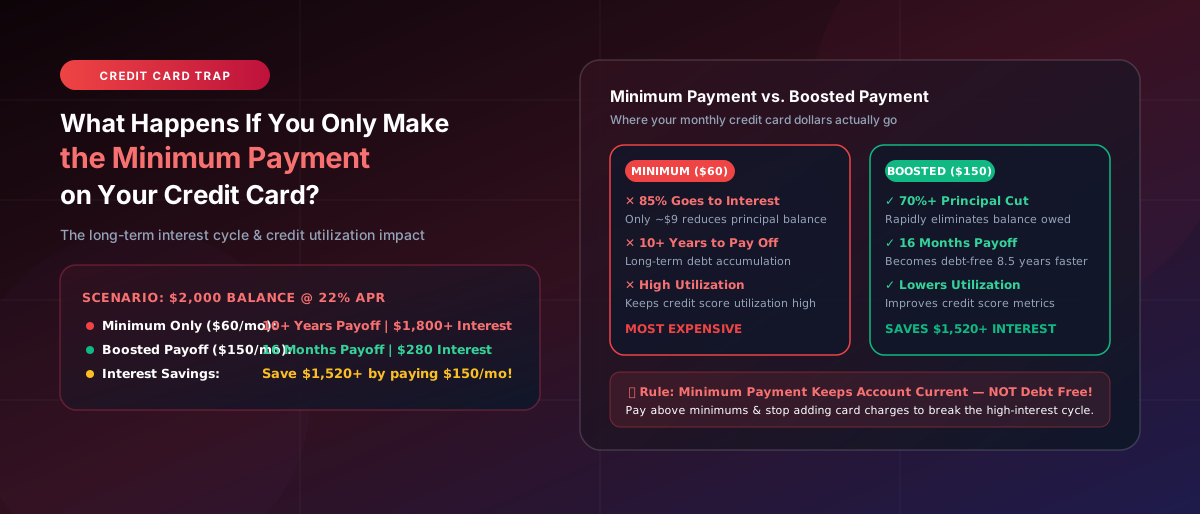
What Happens If You Only Make the Minimum Credit Card Payment?
Learn how minimum payments trap borrowers in long-term debt cycles and how to accelerate payoff timelines.
Finance
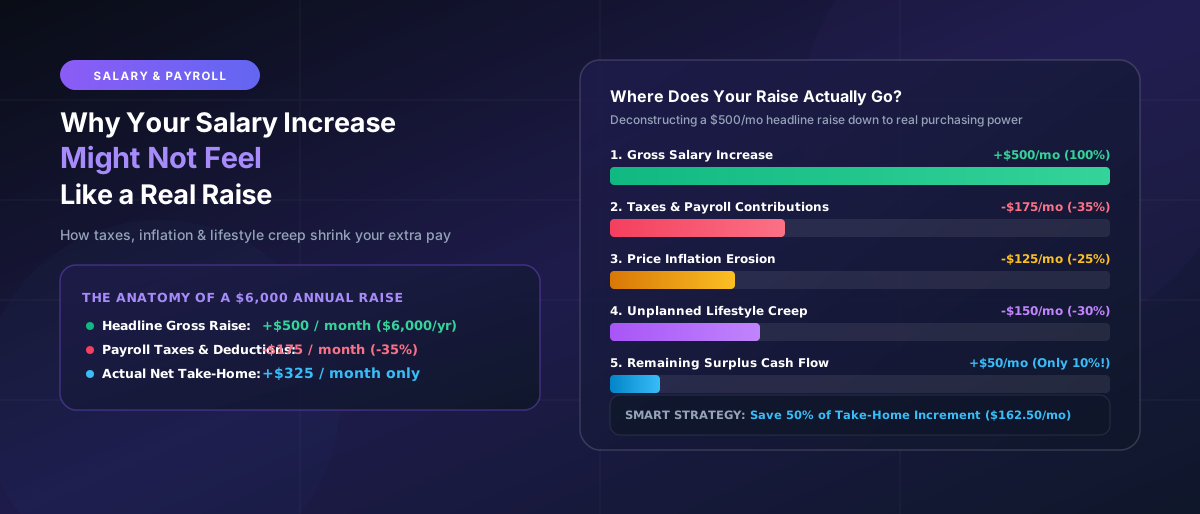
Why Your Salary Increase Might Not Feel Like a Raise
Explore why gross salary raises shrink after taxes, inflation, automatic retirement contributions, and lifestyle inflation.
Finance
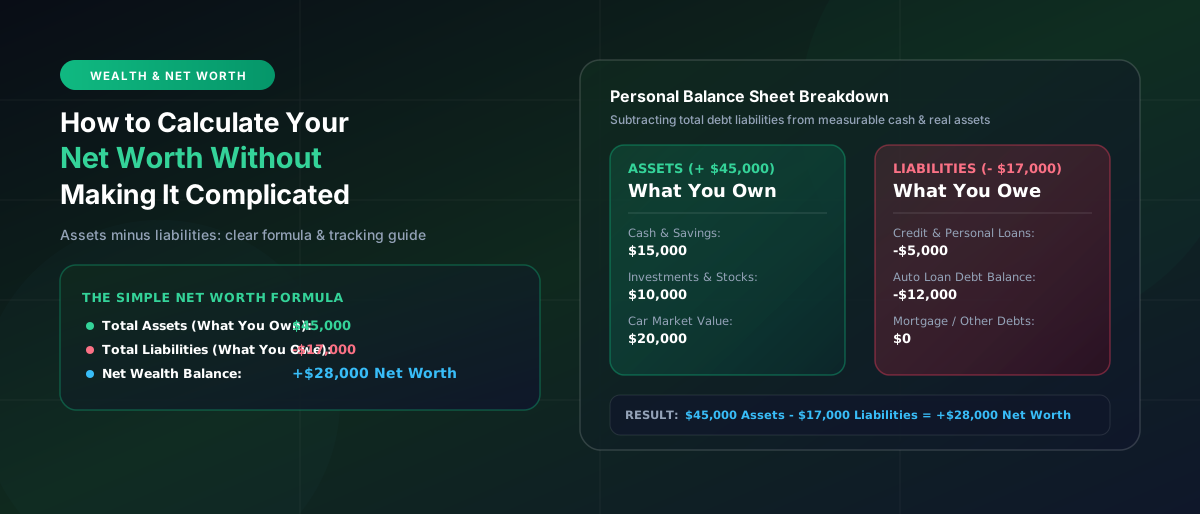
How to Calculate Your Net Worth Without Making It Complicated
Simple 4-step net worth formula: Assets minus Liabilities, personal balance sheet examples, and wealth tracking over time.