You don't need a fixed salary to build substantial savings. Base your monthly living budget on a conservative baseline income, save a percentage of every incoming payment, and deposit high-month surpluses into an income buffer account to cover lean months smoothly.
Saving money is much easier when you receive the same paycheck every month. You know roughly how much is coming in, you can plan your bills, and you can decide how much to put aside.
But what happens when your income changes from month to month?
If you're self-employed, freelance, working on commission, running a small business, doing contract work, or simply earning irregular income, creating a savings plan can feel difficult. One month might be excellent, while the next barely covers your regular expenses.
The good news is that you don't need a perfectly predictable income to build savings. You simply need a system that can handle both good and bad months.
Build Your Budget Around Your Lowest Normal Income
One of the safest ways to manage irregular income is to create your basic budget around a conservative income amount.
Instead of asking, "How much did I earn last month?", look at your income over several months and identify a realistic lower-end amount you can usually expect.
Use that amount to cover your essential expenses, such as:
- Housing or rent
- Food and groceries
- Utilities
- Transportation
- Insurance
- Debt payments
- Other essential bills
This approach can prevent you from building your lifestyle around an unusually good month.
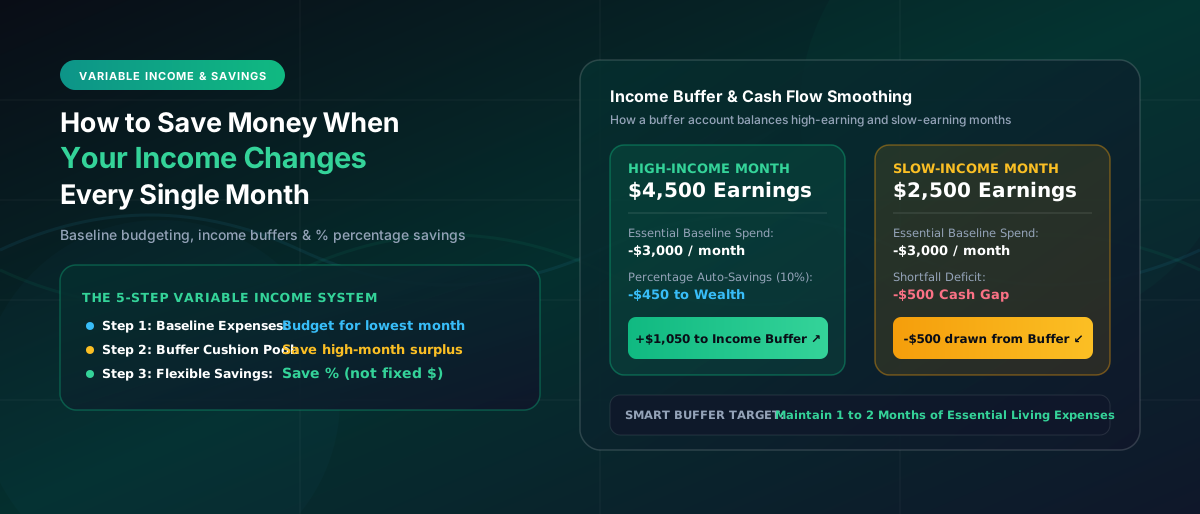
Income Buffer & Cash Flow Smoothing Example
Suppose your essential baseline expenses are $3,000 / month:
High Month ($4,500) → Pay $3,000 Expenses + $450 Savings + Deposit $1,050 into Income Buffer
Slow Month ($2,500) → Pay $2,500 Earnings + Draw $500 from Income Buffer = $3,000 Covered!
By depositing surplus cash in prosperous months and drawing down during slow months, your monthly living standard remains completely stable.
| Monthly Earnings | Percentage Savings (10%) | Baseline Living Budget | Buffer Pool Allocation | Financial Health Result |
|---|---|---|---|---|
| $2,000 (Slow) | $200 / month | $2,500 / month | -$700 (Draw Buffer) | Protected by Buffer Pool |
| $3,500 (Normal) | $350 / month | $2,500 / month | +$650 (Deposit Buffer) | Buffer Replenished |
| $5,000 (Strong) | $500 / month | $2,500 / month | +$2,000 (Deposit Buffer) | Buffer Full + Extra Investments |
| $7,000 (Peak) | $700 / month | $2,500 / month | +$3,800 (Wealth Acceleration) | Major Goals Funded |
Separate Your Money Into Different Buckets
When your income changes constantly, keeping everything in one account can make your finances difficult to understand.
Consider separating your money into different purposes. For example, you might have one account or category for everyday spending, another for bills, and another for savings.
This doesn't necessarily mean you need multiple bank accounts. Even simple budgeting categories can help you see what your money is supposed to do (learn how to build a monthly budget you can stick to).
The goal is to avoid spending money today that you'll need for a bill next month.
Create an Income Buffer
An income buffer can be especially useful when your earnings are unpredictable.
Instead of spending every dollar during a high-income month, keep some money available to help cover expenses during a slower month.
For example, imagine you earn $4,500 one month but only $2,500 the following month. If your essential expenses are $3,000, the extra money from the first month can help fill the gap.
Over time, you can build a larger buffer that makes your monthly finances feel much more stable.
Don't Set One Rigid Savings Amount
With a fixed salary, you might decide to save $500 every month.
That approach may not work when your income changes significantly.
Instead, consider saving a percentage of your income.
For example, you might decide to save 10% of every payment you receive. If you earn $2,000, that's $200. If you earn $5,000, that's $500.
This allows your savings contributions to rise and fall naturally with your income.
Give Extra Income a Job
When you have an unusually strong month, it can be tempting to spend the extra money immediately.
Instead, decide in advance what you will do with income above your normal budget (read why your salary increase might not feel like a raise).
You could divide it between:
- Emergency savings
- Retirement or long-term investing
- Debt repayment
- Upcoming annual expenses
- Business expenses
- A personal spending allowance
You don't have to put every extra dollar into savings. The important part is having a plan so that a good month doesn't automatically turn into a spending month.
Build a Larger Emergency Fund
People with irregular income may benefit from having a larger emergency reserve than someone with a highly predictable paycheck (see where to store your emergency fund savings).
Why? You may need your savings to cover two different problems: an unexpected expense and a temporary drop in income.
A conventional emergency fund might be based on several months of essential expenses, but your personal target should reflect how predictable your income is, how stable your work is, and how quickly you could replace lost income.
The more unpredictable your earnings, the more valuable a financial cushion can become.
Plan for Expenses That Don't Happen Every Month
Irregular income often gets all the attention, but irregular expenses can cause just as many problems.
Car repairs, insurance payments, annual subscriptions, school expenses, holidays, property costs, and other bills may not appear every month.
Instead of being surprised when these expenses arrive, estimate how much they cost over a year and set aside money regularly.
For example, if you expect $1,200 of annual expenses that aren't monthly bills, you could think of that as roughly $100 per month that needs to be reserved.
Pay Yourself a Consistent Amount
If you're self-employed or run a business, one useful strategy is to separate business income from personal spending.
Rather than treating every payment that comes into the business as personal spending money, you can set aside amounts for taxes, business expenses, savings, and your personal income.
This can make irregular earnings feel more like a regular paycheck.
The exact structure depends on your situation and local tax rules, but the basic principle is simple: don't confuse money coming in with money you can safely spend.
Save Automatically When Possible
Automation can still work with variable income.
For example, you could automatically transfer a percentage of each payment into savings when money arrives. If your income comes through a platform or business account, you can also create a routine for moving money into separate categories as soon as you're paid.
The less you rely on remembering to save, the easier it can become to stay consistent.
What to Do During a Bad Month
A slow month doesn't mean your savings plan has failed.
If income falls, focus first on essential expenses. You may temporarily reduce discretionary spending and pause optional financial goals if necessary.
This is exactly why an income buffer and emergency fund are useful. They're there to help you handle periods when your income doesn't cooperate with your budget.
When income improves again, you can return to your normal savings plan.
A Simple System for Variable Income
If you want to keep things simple, try this five-step approach:
- Estimate your baseline income. Use several months of history rather than your best month.
- Calculate essential expenses. Know the minimum amount you need to survive each month.
- Save a percentage of every payment. Adjust the amount naturally as income changes.
- Build an income buffer. Keep some money available for slower months.
- Use extra income intentionally. Divide strong months between savings, debt, future expenses, and reasonable spending.
Final Thoughts
Having an unpredictable income doesn't mean you can't save consistently. It simply means your savings strategy needs to be flexible.
Instead of trying to force your finances into a fixed monthly system, create a plan that adjusts with your earnings. Build your essential budget around a conservative income level, save a percentage when money comes in, prepare for irregular expenses, and build a financial buffer for slower periods.
You may not be able to control exactly how much you earn each month, but you can control what you do with the money when it arrives.
Disclaimer: This article is for educational purposes only and does not provide personalized financial, tax, or investment advice. Your ideal savings strategy depends on your income, expenses, financial goals, location, and individual circumstances.
Related Articles
Finance
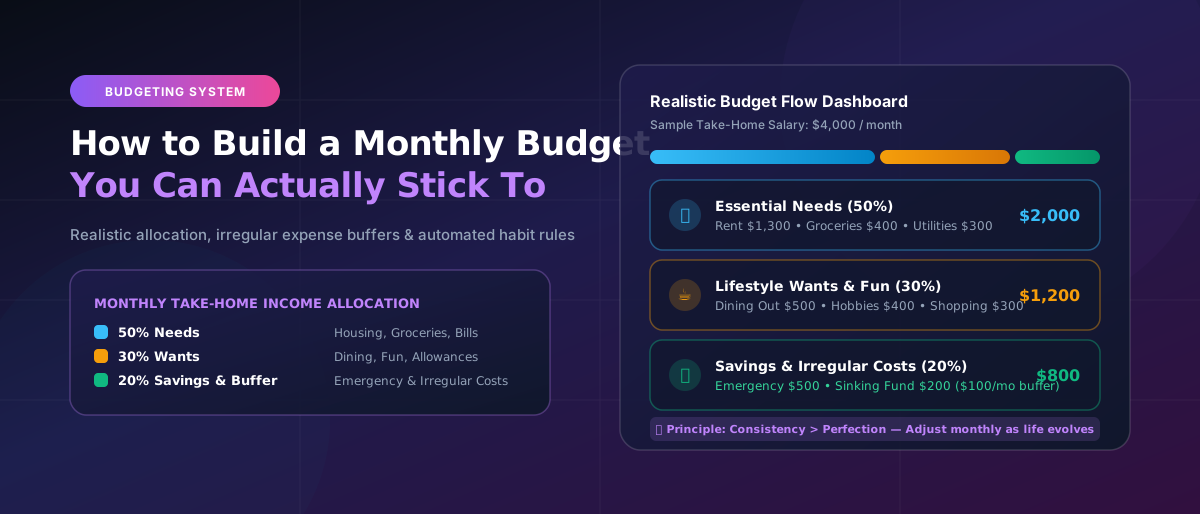
How to Build a Monthly Budget You Can Actually Stick To
Learn step-by-step how to create a practical, realistic monthly budget using fixed costs, flexible spending caps, and automated savings buffers.
Finance
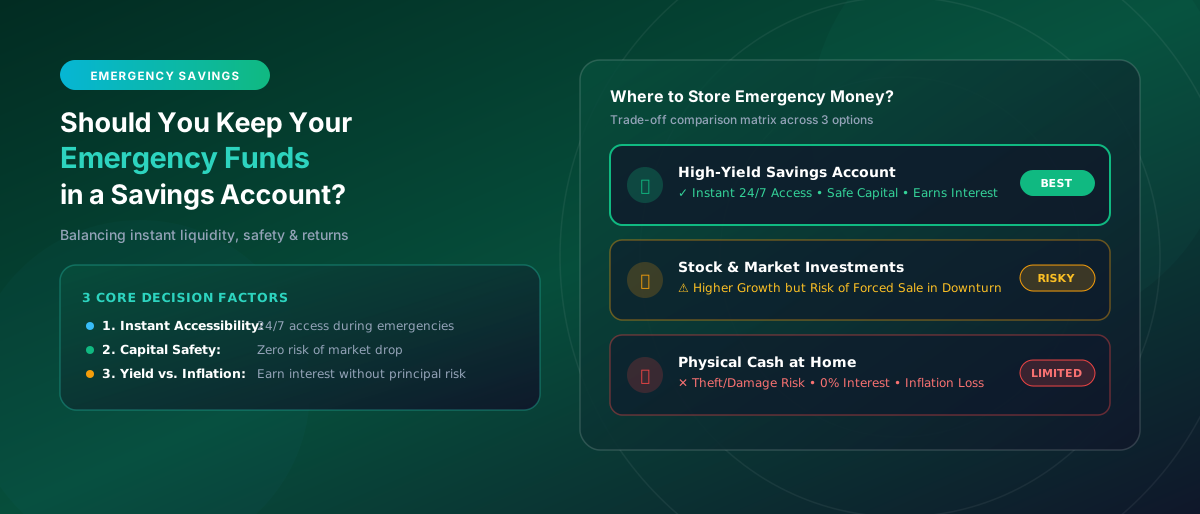
Should You Keep Your Emergency Fund in a Savings Account?
Explore liquidity, capital preservation, high-yield savings accounts, and money market options to store emergency cash reserves safely.
Finance
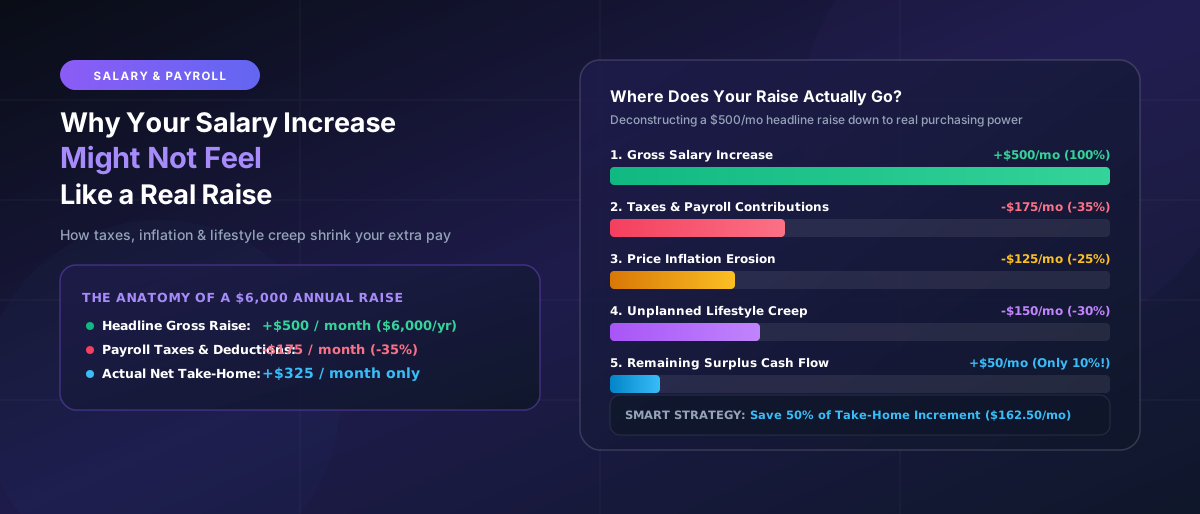
Why Your Salary Increase Might Not Feel Like a Raise
Explore why gross salary raises shrink after taxes, inflation, automatic retirement contributions, and lifestyle inflation.