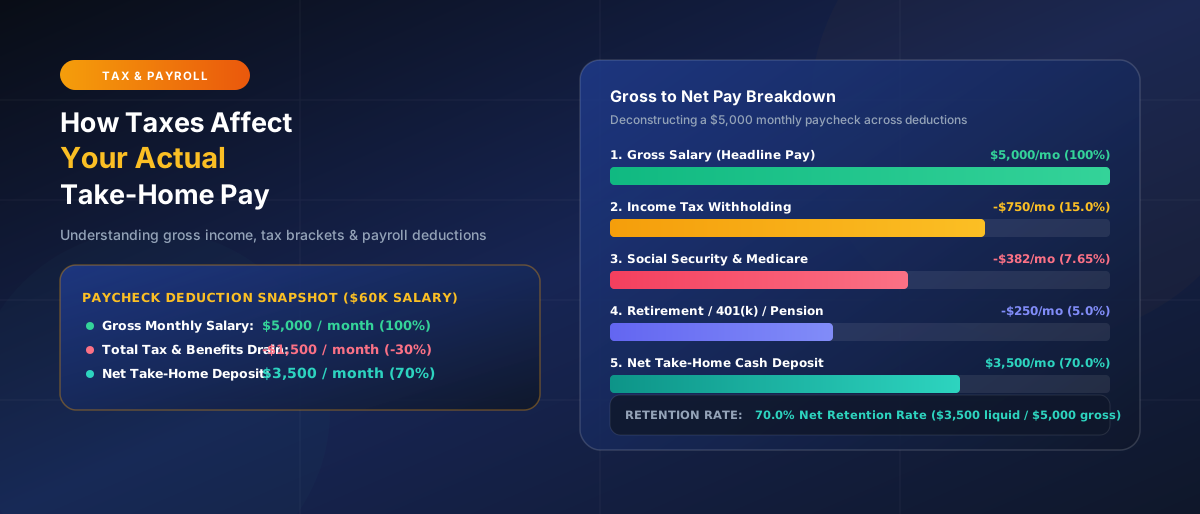
Your advertised salary is gross earnings before taxes and benefits. Income tax withholding, social security contributions, retirement savings, and insurance premiums reduce gross pay into your actual net take-home deposit. Always build your budget around net pay rather than gross salary figures.
When you get paid, the amount that lands in your bank account is often lower than the salary or wage you were expecting. The difference can be confusing, especially when you see a job advertised with a specific annual salary but your actual paycheck is much smaller.
The reason is simple: your gross income is not the same as your take-home pay.
Taxes and other deductions can reduce the amount you actually receive. Understanding how this works can make it easier to budget, compare job offers, and plan your finances.
Gross Pay vs. Take-Home Pay
Your gross pay is the amount you earn before taxes and other deductions are taken out.
Your take-home pay, sometimes called net pay, is the amount that remains after deductions have been taken from your earnings.
For example, suppose your annual salary is $60,000. That doesn't necessarily mean you'll receive $5,000 in your bank account every month.
Your paycheck may be reduced by income taxes, social insurance contributions, retirement contributions, health insurance, and other deductions depending on your country, employer, and personal circumstances.
Paycheck Calculation Example ($60,000 Annual Salary)
Assume an annual gross salary of $60,000 ($5,000 per month):
$5,000 Gross - $750 Income Tax - $382 Social Security/FICA - $368 Benefits/401k = $3,500 Net Take-Home
While headline gross pay is $5,000/month, the actual liquid deposit reaching your bank account is $3,500/month (a 70% retention rate).
| Annual Gross Salary | Monthly Gross Earnings | Est. Income Tax (12%-22%) | Social Insurance (FICA ~7.65%) | Est. Net Take-Home Pay | Pay Retention Rate |
|---|---|---|---|---|---|
| $40,000 / year | $3,333 / month | -$380 / month | -$255 / month | $2,450 / month | 73.5% |
| $60,000 / year | $5,000 / month | -$750 / month | -$382 / month | $3,500 / month | 70.0% |
| $80,000 / year | $6,666 / month | -$1,220 / month | -$510 / month | $4,520 / month | 67.8% |
| $100,000 / year | $8,333 / month | -$1,780 / month | -$637 / month | $5,450 / month | 65.4% |
Income Tax Is One of the Main Deductions
Income tax is generally calculated based on your taxable income, but the exact rules vary depending on where you live (see understanding marginal vs. effective tax rates).
Some tax systems use different tax rates for different portions of your income. This means earning more does not necessarily mean that your entire salary is taxed at the highest rate that applies to you.
This is an important point because people sometimes hear that moving into a higher tax bracket means all of their income will suddenly be taxed at the higher rate. In many progressive tax systems, that's not how it works.
Only the portion of income that falls within the higher bracket is generally subject to that higher rate.
Taxes Can Be Different From Other Payroll Deductions
Not everything removed from your paycheck is necessarily an income tax.
Your employer may also deduct money for things such as:
- Retirement or pension contributions (e.g., 401(k), Superannuation)
- Health, dental, and vision insurance premiums
- Social security or national insurance contributions
- Employment-related disability insurance
- Other optional employee benefits and flexible spending accounts
These deductions can make a significant difference between your gross salary and your actual take-home pay.
That's why it's useful to look at your entire pay statement rather than focusing only on the tax line.
Your Taxable Income May Not Be the Same as Your Salary
Another reason taxes can be confusing is that your taxable income may differ from your total earnings.
Depending on the tax system you're subject to, certain deductions, allowances, exemptions, or pre-tax contributions may reduce the amount of income that is subject to tax.
For example, if you earn $60,000 but contribute $5,000 to a pre-tax retirement plan or HSA, your taxable income drops to $55,000.
The exact treatment depends on your location and circumstances, so it's important to understand the rules that apply where you live.
Why Your Paycheck Can Change From Month to Month
It's easy to assume that every paycheck should be exactly the same. Sometimes that's true, but not always.
Your take-home pay can change because of bonuses, overtime, commissions, unpaid leave, changes in benefits, tax adjustments, or changes in your deductions.
A bonus, for example, may increase your gross pay for a particular pay period. The additional amount can also result in different withholding or deductions (read why your salary increase might not feel like a raise).
If your paycheck suddenly looks different, check the pay statement and compare it with a previous one. Look for changes in earnings, taxes, and other deductions.
A Higher Salary Doesn't Mean Your Take-Home Pay Rises by the Same Amount
This is especially important when comparing job offers.
Imagine one job offers a salary of $55,000 while another offers $60,000. The second job has the higher salary, but that doesn't automatically mean you'll have an extra $5,000 available to spend.
Taxes and other deductions reduce the difference.
There may also be differences in health insurance costs, retirement benefits, bonuses, commuting expenses, and other employment benefits.
When comparing jobs, look beyond the advertised salary and estimate what each position could actually add to your financial situation.
How Taxes Affect Your Budget
One of the most common budgeting mistakes is creating a budget based on gross income instead of take-home income (learn how to build a monthly budget you can actually stick to).
If you earn $4,000 per month before deductions but only receive $3,200, planning your monthly expenses around $4,000 could quickly lead to financial problems.
Your regular budget should generally be based on the money you actually have available after payroll deductions.
This makes your spending plan much more realistic.
How to Find Out Where Your Money Is Going
If you're unsure how much you're actually paying in taxes and deductions, start with your payslip or payroll statement.
Look for sections showing:
- Gross earnings: Total salary before deductions
- Taxable income: Gross earnings minus pre-tax exemptions
- Income tax withheld: Federal, state, or local tax withholding
- Social insurance: Social Security, Medicare, or pension contributions
- Retirement contributions: 401(k), IRA, or employer scheme contributions
- Insurance deductions: Health, dental, and disability premiums
- Net pay: Final deposit amount reaching your account
Once you understand these numbers, it becomes much easier to see why your final paycheck is different from your advertised salary.
Ways to Make Your Take-Home Pay Work Better
You may not be able to control your tax rates, but you can make better decisions with the money that reaches your account.
Start by building your budget around your actual take-home pay. Then prioritize essentials, debt payments, savings, and other important goals.
If your employer offers retirement or pension contributions, understand how they work and whether there are employer matching benefits available.
You can also review your deductions periodically to make sure they're accurate and that you're using available benefits appropriately.
Use a Tax Calculator for a Better Estimate
If you're planning a new job, considering a salary increase, or trying to understand your current paycheck, an income tax calculator can help estimate the difference between gross income and after-tax income.
Keep in mind that calculators provide estimates. Your actual tax bill or take-home pay can depend on factors such as your location, filing status, deductions, benefits, and other sources of income.
Final Thoughts
Your salary is only one part of the picture. What really matters for your monthly budget is the amount of money you have available after taxes and other deductions.
Understanding the difference between gross pay and take-home pay can help you avoid unrealistic budgets and make better financial decisions. It can also help you compare job offers based on what you may actually keep rather than simply looking at the headline salary.
The next time you receive a paycheck, take a few minutes to look at the numbers. Once you understand where your money is going, managing it becomes much easier.
Disclaimer: This article is for educational purposes only and does not provide personalized tax or financial advice. Tax rates, deductions, allowances, payroll rules, and filing requirements vary by country and individual circumstances.
Related Articles

Tax
The Difference Between Marginal and Effective Tax Rates
Learn how progressive tax brackets work, why your top marginal rate isn't your total tax burden, and how effective tax rates determine actual payments.
Finance
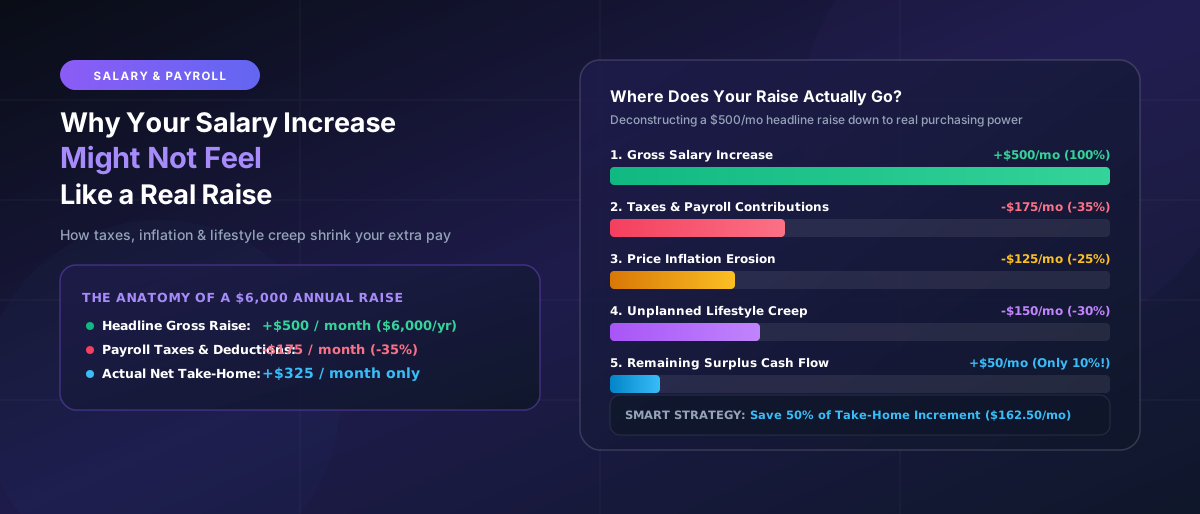
Why Your Salary Increase Might Not Feel Like a Raise
Explore why gross salary raises shrink after taxes, inflation, automatic retirement contributions, and lifestyle inflation.
Finance
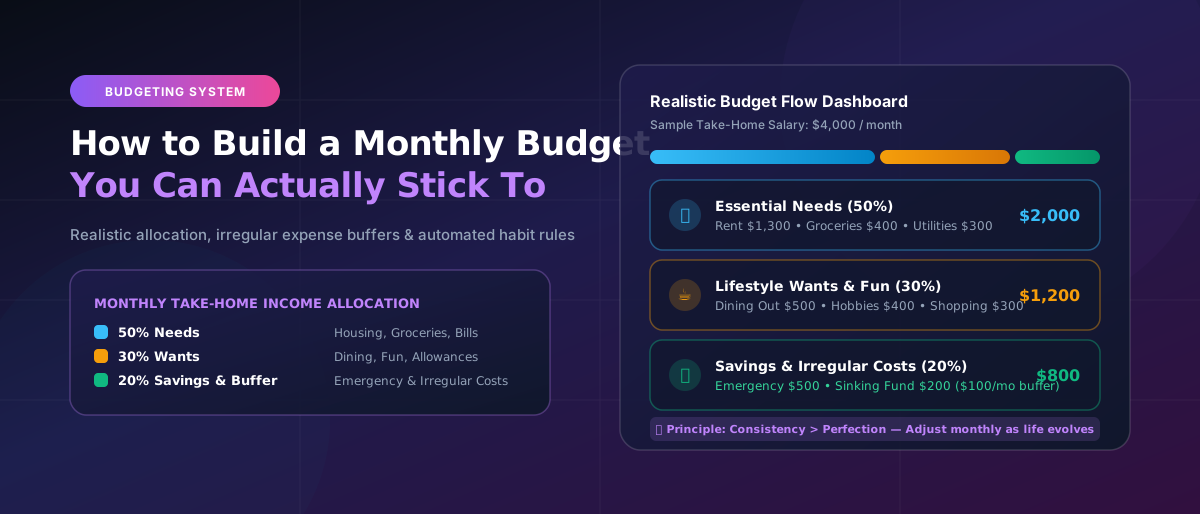
How to Build a Monthly Budget You Can Actually Stick To
Learn step-by-step how to create a practical, realistic monthly budget using fixed costs, flexible spending caps, and automated savings buffers.