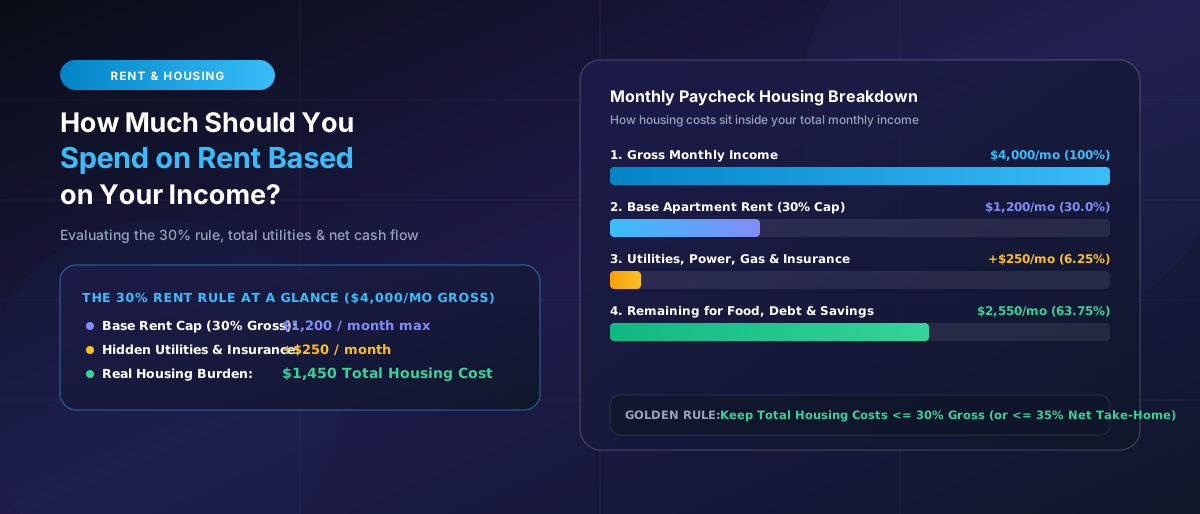
The traditional 30% rent rule suggests capping base rent at 30% of gross monthly income. For a realistic budget, calculate your total housing burden (rent + utilities + parking + insurance) against your net take-home pay, ensuring enough cash remains for savings, food, and debt obligations.
Rent is one of the biggest expenses most people deal with every month. If it takes up too much of your income, you may find yourself struggling to save, pay off debt, or handle unexpected expenses.
So how much should you actually spend on rent?
A common starting point is to keep rent around 30% of your gross monthly income. But that number isn't a perfect rule for everyone. Your income, location, debt, transportation costs, family situation, and financial goals all matter.
What Is the 30% Rent Rule?
The 30% rule suggests that your monthly rent should generally be no more than about 30% of your gross monthly income.
For example, if you earn $4,000 per month before taxes:
$4,000 Gross Income × 30% = $1,200 Monthly Rent Target
It's important to remember that this is a guideline, not a requirement. Someone earning $4,000 a month might comfortably afford $1,400 in rent if they have very few other expenses. Someone else might struggle with $1,200 because of significant debt or other financial responsibilities.
Gross Income vs. Take-Home Pay
One reason rent calculations can be confusing is that there are different ways to measure income (see how taxes affect your take-home pay).
Gross income is what you earn before taxes and other deductions.
Take-home pay is what actually reaches your bank account after taxes and other deductions.
The traditional 30% guideline is generally based on gross income. However, when deciding what you can personally afford, looking at your take-home pay can give you a more realistic picture of your monthly cash flow.
For example, $1,200 of rent may sound reasonable based on a $4,000 gross salary, but you still need to consider how much money you actually have available after taxes.
Rent Affordability Breakdown ($4,000 Gross Salary Example)
Suppose your gross salary is $4,000/month, resulting in $3,000 net take-home pay after taxes:
30% Gross Rent Target: $1,200 Base Rent + $250 Utilities = $1,450 Total Housing
Net Take-Home Remaining: $3,000 Net - $1,450 Housing = $1,550 for Food, Debt & Savings
$1,450 total housing represents 48% of your net $3,000 take-home pay. Ensure your remaining $1,550 covers debt and living comfortably.
| Gross Monthly Income | Est. Net Take-Home Pay | 30% Gross Rent Cap | Est. Utilities & Insurance | Total Housing Burden | Housing % of Net Pay |
|---|---|---|---|---|---|
| $3,000 / month | $2,300 / month | $900 / month | +$200 / month | $1,100 / month | 47.8% |
| $4,500 / month | $3,350 / month | $1,350 / month | +$250 / month | $1,600 / month | 47.7% |
| $6,000 / month | $4,350 / month | $1,800 / month | +$300 / month | $2,100 / month | 48.2% |
| $8,000 / month | $5,650 / month | $2,400 / month | +$350 / month | $2,750 / month | 48.6% |
Don't Forget the Other Costs of Renting
Rent isn't always your complete housing cost.
You may also have to pay for:
- Electricity
- Water and sewer
- High-speed internet
- Gas and heating
- Reserved parking space fees
- Renter's insurance premiums
- Maintenance-related costs not covered by the landlord
Some apartments include utilities in the rent, while others don't. That's why it's better to consider your total housing cost rather than looking at the advertised rent alone.
Example: Two People With the Same Income
Imagine two people each take home $3,500 per month.
Person A pays $1,000 in rent and has very little debt. Person B pays $1,400 in rent and also has a $500 monthly loan payment.
Although both people earn the same amount, their financial situations are very different.
Person B has considerably less money available after fixed expenses. A rent amount that looks affordable on its own may become difficult once all the other bills are included.
This is why rent should never be evaluated in isolation.
Look at Your Entire Monthly Budget
Before signing a lease, list your expected monthly expenses (see how to build a monthly budget you can stick to).
Include:
- Base rent
- Utilities (power, gas, water, internet)
- Food and groceries
- Transportation and transit
- Insurance premiums
- Debt payments
- Subscriptions
- Personal discretionary spending
- Savings reserves (see where to keep emergency savings)
- Other regular expenses
Then see how much money remains after paying everything.
If your proposed rent leaves almost nothing for savings or emergencies, the apartment may be too expensive even if you technically qualify for it.
Why High Rent Can Become a Problem
A high rent payment doesn't just affect your housing budget. It can affect almost everything else.
If $2,000 of a $4,000 take-home income goes toward rent, you have already committed half of your available money before paying for food, transportation, insurance, debt, or savings.
That can make it difficult to build an emergency fund or prepare for larger financial goals.
It can also make unexpected expenses more stressful because there is less room in the monthly budget.
When Spending More on Rent Might Be Reasonable
There are situations where spending more than 30% may be a reasonable choice.
For example, you might choose a more expensive apartment because it significantly reduces your transportation costs. You may also value living closer to work, family, or essential services.
In some expensive housing markets, finding a decent home below 30% of gross income may simply be unrealistic.
If you choose higher rent, the important thing is to understand what you're giving up elsewhere and make sure the overall budget still works.
Ways to Make Rent More Affordable
If your housing costs are taking up too much of your income, you don't necessarily have to move immediately.
You could consider:
- Finding a roommate to split costs
- Moving to a less expensive neighborhood
- Choosing a smaller apartment layout
- Negotiating rent upon lease renewal
- Reducing unnecessary housing-related add-on fees
- Considering locations with lower overall transportation costs
Sometimes paying slightly more for rent can actually save money if the location eliminates a long commute or expensive transportation costs. The key is to compare the total cost of each option.
Think About Your Financial Goals
Your ideal rent depends partly on what you're trying to accomplish with your money.
If you're aggressively saving for a house deposit, building an emergency fund, paying off debt, or investing for retirement, you may want to keep housing costs below the maximum amount you could technically afford.
On the other hand, if you have strong savings, low debt, and plenty of disposable income, you may have more flexibility.
Affordability isn't just about whether you can make the rent payment. It's about whether you can make the payment while still making progress toward your other goals.
Use a Rent Affordability Calculator
A rent affordability calculator can give you a quick estimate of how much housing you may be able to handle based on your income and expenses.
But don't treat the calculator's result as a guarantee. Your actual budget should always take priority.
Try different rent amounts and see how each one affects your ability to save, pay debt, and cover your regular expenses.
Questions to Ask Before Signing a Lease
Before committing to a rental, ask yourself these 8 key questions:
- Total Cost: How much will my total monthly housing cost be including base rent, utilities, and parking?
- Cash Surplus: How much money will I have left over after paying all essential monthly bills?
- Savings Rate: Can I still consistently put money into savings or retirement accounts?
- Emergency Buffer: Do I currently have an emergency fund to cover unexpected expenses?
- Income Stability: How stable is my monthly job income or commission cash flow?
- Lease Escalation: Will the rent increase significantly upon lease renewal next year?
- Included Utilities: Which utilities, trash fees, or parking costs are included in the base rent?
- Goal Alignment: Does this housing expenditure support my long-term wealth goals?
Final Thoughts
The 30% rent guideline is a useful starting point, but it isn't a magic number.
The right rent payment is one that fits comfortably into your entire financial picture. Don't simply ask how much rent a landlord will approve you for. Ask how much you can afford while still saving, handling emergencies, paying your debts, and enjoying your life.
If your rent is consuming too much of your income, even a small reduction can create meaningful breathing room each month. Over time, that extra money can go toward savings, investments, debt repayment, or other goals.
Disclaimer: This article is for educational purposes only and does not constitute financial advice. Housing costs, income, taxes, and personal financial circumstances vary.
Related Articles
Tax
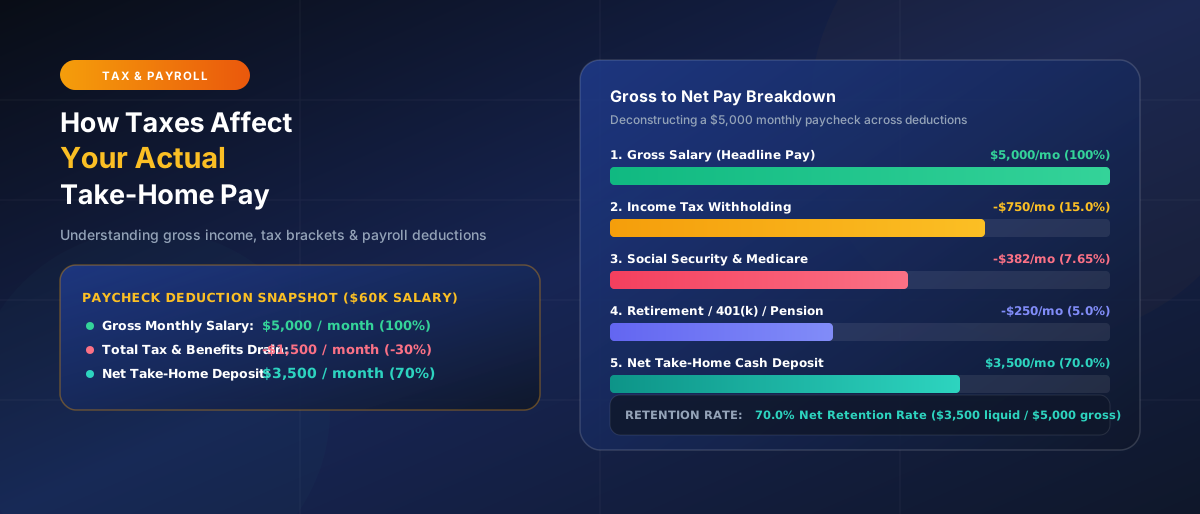
How Taxes Affect Your Take-Home Pay
Understand gross vs net pay, payroll tax withholding, social security, and non-tax payroll deductions.
Finance
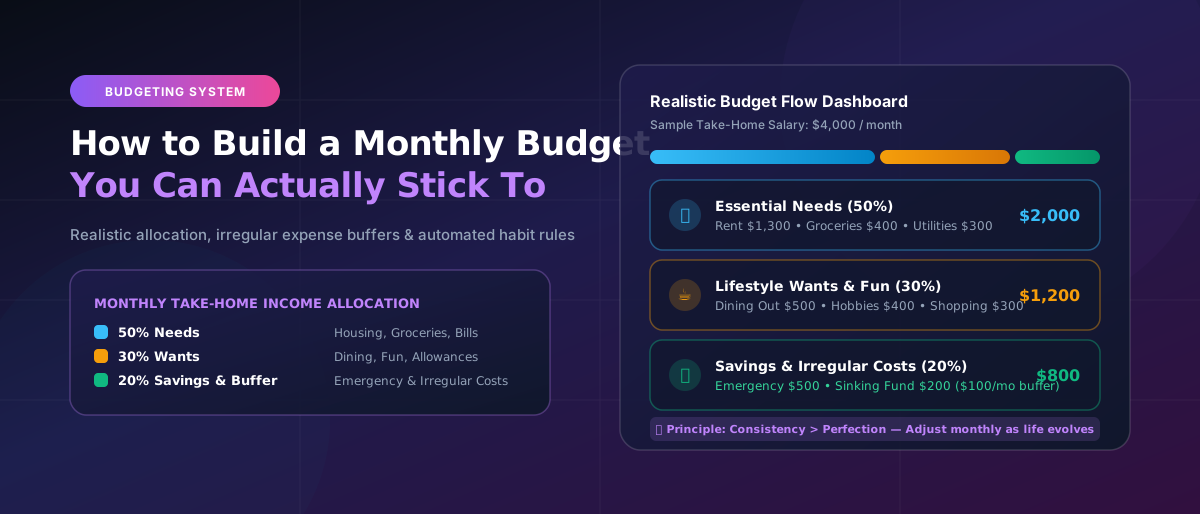
How to Build a Monthly Budget You Can Actually Stick To
Learn step-by-step how to create a practical, realistic monthly budget using fixed costs, flexible spending caps, and automated savings buffers.
Finance
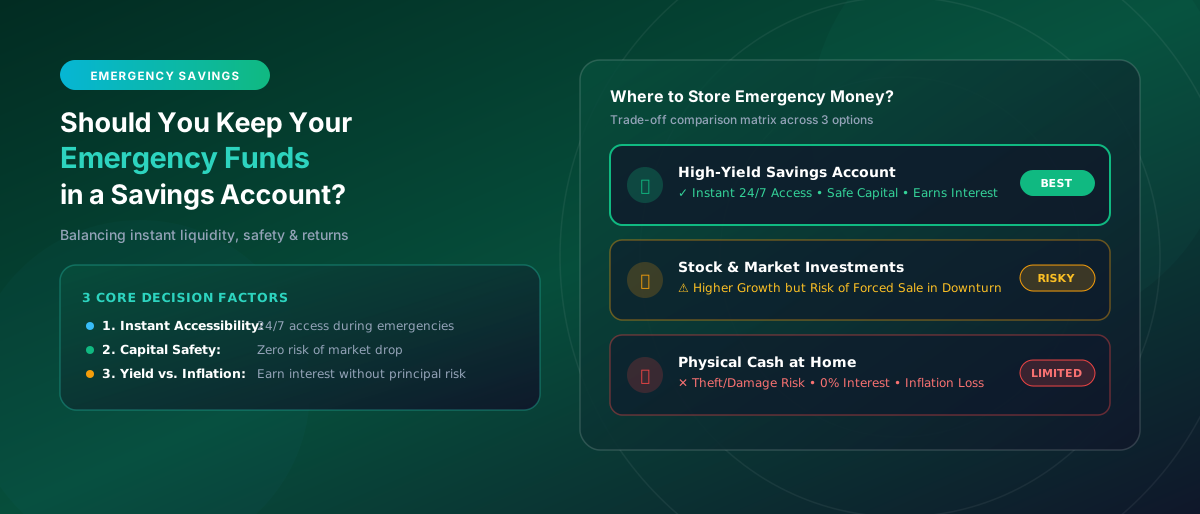
Should You Keep Your Emergency Fund in a Savings Account?
Explore liquidity, capital preservation, high-yield savings accounts, and money market options to store emergency cash reserves safely.