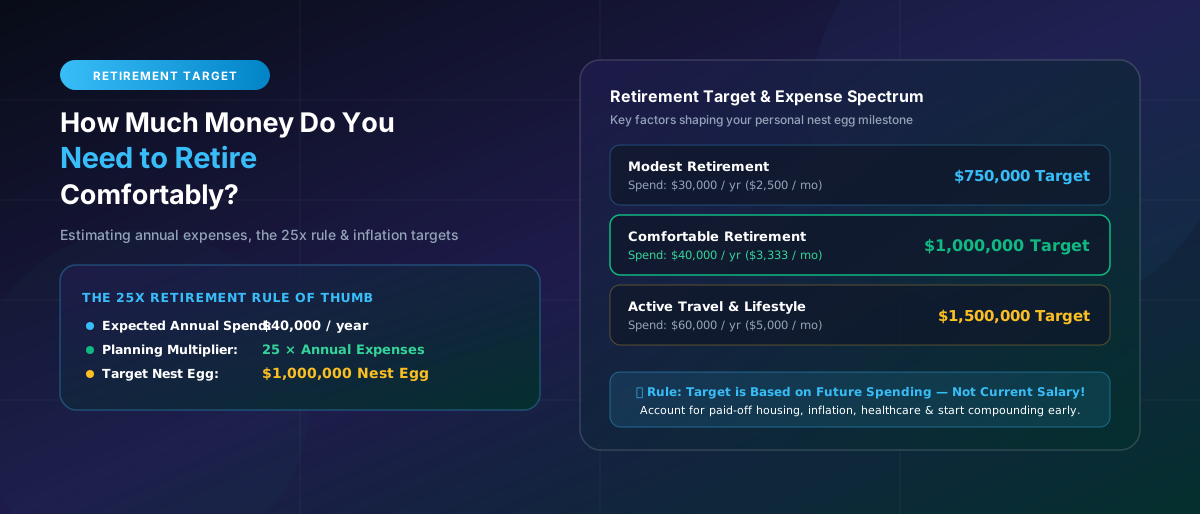
Your retirement target should be based on your expected future spending rather than your current gross salary. Using the 25x rule (25 × annual living costs) gives a realistic target milestone, which can be adjusted based on housing, healthcare, and planned retirement age.
One of the biggest questions people have about retirement is surprisingly simple: How much money do I actually need?
The honest answer is that there is no single number that works for everyone. Someone who wants to travel several times a year will need a different retirement fund from someone who plans to live a quiet life close to home. Your income, lifestyle, location, health, housing costs, and retirement age all matter.
Still, you can get a realistic idea of your retirement target by looking at your expected expenses and building a plan around them.
Start With How Much You Expect to Spend
Your retirement number should be based more on your future spending than your current salary.
For example, imagine you currently earn $5,000 per month but spend around $3,500. You may not need enough retirement income to replace the entire $5,000. Your target may be closer to the amount you actually expect to spend.
Make a list of expenses such as:
- Housing or rent
- Food and groceries
- Utilities
- Transportation
- Healthcare
- Insurance
- Travel and entertainment
- Family support
- Taxes
- Unexpected expenses
Some costs may decrease after you retire, while others could increase. For example, you may no longer have commuting expenses, but you may spend more on healthcare, hobbies, or travel.
A Common Rule of Thumb: 25 Times Your Annual Expenses
One popular starting point is the 25x rule. The basic idea is to estimate your annual retirement expenses and multiply that amount by 25.
The 25x Rule Calculation Example
Suppose you expect to spend $40,000 per year in retirement:
$40,000 annual spend × 25 = $1,000,000 Nest Egg Target
This milestone assumes a ~4% annual portfolio withdrawal rate designed to sustain income over 25 to 30 years.
| Expected Annual Spending | Monthly Budget Equivalent | 25x Nest Egg Target | 4% Safe Annual Withdrawal |
|---|---|---|---|
| $30,000 / year | $2,500 / month | $750,000 | $30,000 / year |
| $40,000 / year | $3,333 / month | $1,000,000 | $40,000 / year |
| $60,000 / year | $5,000 / month | $1,500,000 | $60,000 / year |
| $80,000 / year | $6,666 / month | $2,000,000 | $80,000 / year |
This is only a planning guideline, not a guarantee. Investment returns, inflation, taxes, healthcare costs, how long you live, and the amount you withdraw each year can all affect whether your savings last (see smart savings strategies for long-term wealth).
Your Retirement Age Makes a Difference
Retiring at 60 and retiring at 45 are very different financial goals (see how much to save for retirement by age).
If you retire earlier, your savings may need to support you for a much longer period. You may also have fewer years to contribute to your retirement investments.
On the other hand, working a few additional years can give you more time to save while reducing the number of years your retirement portfolio needs to provide income.
Even a small change in your planned retirement age can significantly affect the amount you need to save.
Don't Forget Inflation
A retirement target that looks large today may not have the same purchasing power decades from now (see how inflation quietly reduces the value of your savings).
For example, if something costs $40,000 per year today, it could cost considerably more in the future because prices generally rise over time.
That's why retirement planning should account for inflation rather than simply assuming that today's expenses will remain unchanged.
Housing Can Completely Change the Number
Housing is one of the biggest factors in retirement planning.
Someone who enters retirement with a paid-off home may have much lower monthly expenses than someone who is still paying a large mortgage or rent.
Before setting your retirement target, ask yourself what your housing situation is likely to look like. Will you own your home? Rent? Move somewhere cheaper? Downsize?
These decisions can make a major difference in how much income you need every month.
Healthcare Is Another Major Consideration
Healthcare expenses are difficult to predict, but they should not be ignored.
As people get older, medical expenses can become a larger part of the household budget. Insurance premiums, prescriptions, treatments, long-term care, and other costs may need to be considered depending on your country and circumstances.
Instead of trying to predict every medical bill, build some flexibility into your retirement plan. Having a separate emergency reserve (see should you keep your emergency fund in a savings account) can also help prevent one large expense from forcing you to sell investments at an inconvenient time.
What If You Don't Have Millions Saved?
Don't assume you're automatically behind just because your retirement target sounds large.
Retirement income can potentially come from several sources, including personal savings, investment accounts, pensions, government benefits, rental income, or part-time work.
The important question is not simply, "How much have I saved?" It's "How much income can my overall financial plan provide compared with what I expect to spend?"
Someone with $700,000 in savings and relatively low expenses may be in a stronger position than someone with $1 million and extremely high spending.
Start Saving Before You Know the Exact Number
You don't need a perfect retirement calculation before you start.
If you're young, the most valuable thing you can do is give your savings time to grow. Regular contributions can add up significantly over several decades, especially when investment returns are reinvested (see how compound interest changes savings over 10 years).
If you're closer to retirement, don't panic if your current savings aren't where you want them to be. You can review your expected expenses, increase contributions where possible, reduce unnecessary spending, adjust your retirement age, or consider other sources of income.
Use a Retirement Calculator
A retirement calculator can make this process much easier. Instead of guessing, you can enter information such as your current savings, monthly contributions, expected retirement age, estimated return, inflation assumptions, and desired retirement income.
The result can give you a useful estimate of whether you're on track and how much you may need to adjust your savings.
8 Questions to Ask When Setting Your Retirement Goal
- How much do I expect to spend each month in retirement?
- Will I still have a mortgage or rent payment?
- When do I realistically want to stop working?
- How much have I already saved in investment & retirement accounts?
- How much can I comfortably contribute each month?
- What other sources of retirement income might I have (pensions, social benefits)?
- Have I accounted for inflation and healthcare costs?
- What kind of lifestyle do I actually want in retirement?
Final Thoughts
There isn't a magic retirement number that guarantees a comfortable future. A realistic target depends on your lifestyle, spending, retirement age, housing situation, savings, investments, inflation, and other sources of income.
As a starting point, estimating your annual retirement expenses and using a guideline such as 25 times those expenses can help you understand the size of the goal. From there, a retirement calculator can help you create a more personalized estimate.
The most important thing is to start planning before retirement gets close. Even if your first estimate isn't perfect, having a target gives you something you can work toward—and adjust as your life changes.
Disclaimer: This article is for educational purposes only and does not provide personalized financial or investment advice. Retirement needs vary from person to person, and actual investment returns, inflation, taxes, healthcare costs, and other factors can affect your results.