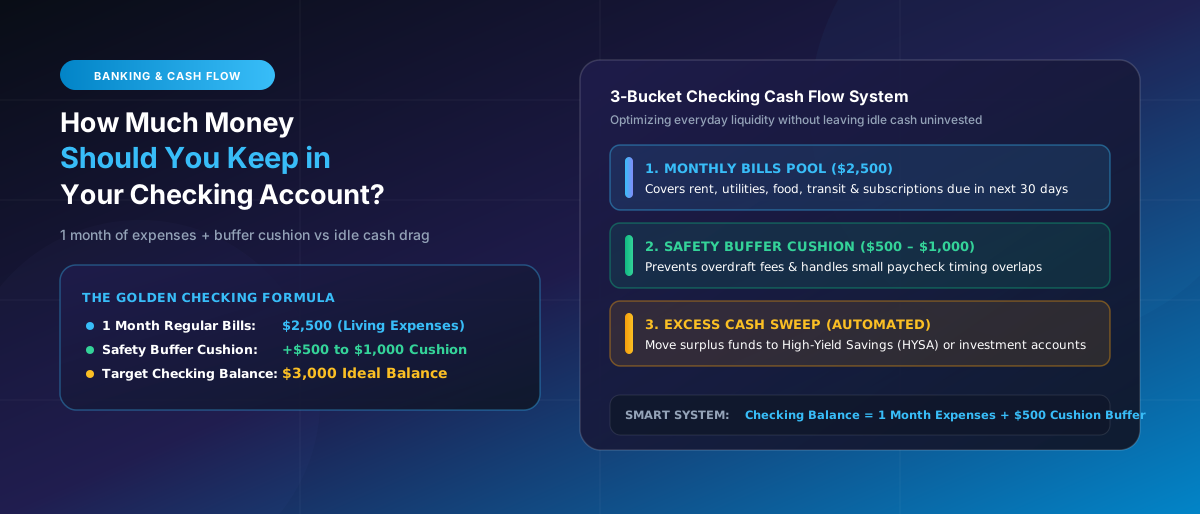
Your checking account is a short-term transaction hub, not a long-term savings vault. Aim to keep roughly 1 month of essential living expenses plus a $500 to $1,000 overdraft buffer cushion in checking. Automatically transfer excess cash to a High-Yield Savings Account (HYSA) to avoid cash drag.
Your checking account is where everyday money usually lives. Your salary may arrive there, bills are paid from it, and you may use the account for groceries, transportation, subscriptions, and other regular expenses.
But how much money should actually stay in your checking account?
Keeping too little can leave you scrambling when several bills arrive at once. Keeping too much may mean money sits idle when it could be working toward savings, debt repayment, or other financial goals.
There is no single amount that works for everyone. The right balance depends on your monthly expenses, income schedule, spending habits, and how much cash you keep in other accounts.
What Is a Checking Account Supposed to Do?
A checking account is primarily designed for everyday transactions. It gives you easy access to money when you need to pay bills, make purchases, withdraw cash, or transfer funds.
Because of that, you generally do not need to keep your entire savings balance in checking. Instead, think of your checking account as your short-term spending account.
Your emergency fund and long-term savings can usually be kept separately, while your checking account handles the money you expect to spend soon.
A Simple Starting Point: One Month of Expenses
For many people, keeping around one month of essential expenses in checking can be a useful starting point.
For example, imagine your regular monthly expenses look like this:
- Rent or housing: $1,200
- Utilities: $200
- Food and groceries: $400
- Transportation: $250
- Phone and internet: $100
- Other regular expenses: $350
Your monthly spending would be about $2,500. Having roughly that amount available in checking could give you enough room to handle normal bills without constantly worrying about the account balance.
However, this is only a starting point. Someone with highly predictable expenses might keep less, while someone with irregular income may prefer a larger checking buffer.
Target Checking Balance Calculation Example
Assume monthly essential living expenses of $2,500 / month:
1 Month Essential Expenses ($2,500) + Overdraft Buffer Cushion ($500) = $3,000 Target Balance
Any cash remaining in checking above $3,000 is automatically swept into a High-Yield Savings Account (HYSA) earning 4%+ APY.
| Earner Profile | Monthly Essential Bills | Recommended Checking Buffer | Total Ideal Checking Balance | Action for Excess Funds |
|---|---|---|---|---|
| Bi-Weekly W2 Employee | $2,500 / month | +$500 cushion | $3,000 balance | Sweep excess to HYSA / IRA |
| Freelance / Variable Income | $3,500 / month | +$1,500 cushion | $5,000 balance | Deposit surplus to Income Buffer |
| Dual-Income Household | $5,000 / month | +$1,000 cushion | $6,000 balance | Automate joint investment goals |
| Minimalist Single Earner | $1,800 / month | +$300 cushion | $2,100 balance | Transfer extra to debt or savings |
Consider Your Pay Schedule
When you get paid can make a big difference.
If you receive a regular paycheck every two weeks, you may not need to keep several months of spending in your checking account. Money is regularly replenished.
On the other hand, if you are self-employed, work on commission, or receive income at irregular intervals, keeping a larger cash buffer may make sense (read how to save money with irregular income).
For example, if your income can vary significantly from month to month, you may want enough money in checking to cover upcoming bills even when your next payment is smaller than expected.
Don't Confuse Checking Money With an Emergency Fund
One common mistake is treating the checking account balance as an emergency fund.
Your checking account should generally cover normal, near-term expenses. Your emergency fund is meant for unexpected financial problems, such as a major repair, sudden loss of income, or another serious expense (see where to store your emergency fund savings).
Keeping these purposes separate can make your finances easier to manage.
For example, you might have $3,000 available for upcoming expenses in checking and another $8,000 in a separate emergency savings account. The checking balance pays the bills, while the emergency fund remains available if something unexpected happens.
What Happens If You Keep Too Little?
A checking balance that is too low can create unnecessary stress.
If several bills are scheduled close together, you could accidentally overdraw the account or have a payment declined. Depending on your bank and account, this can potentially result in fees or other problems.
You may also find yourself constantly moving money between accounts just to cover everyday expenses.
A small cash cushion can help prevent this. Even keeping a few hundred dollars above your expected expenses can provide useful breathing room.
What Happens If You Keep Too Much?
There is also such a thing as keeping more cash in checking than you actually need.
Money sitting in a checking account may earn little or no interest, depending on the account. If you have a large balance that you do not expect to use for months, you may want to consider whether another appropriate savings or investment option makes more sense for that portion of your money.
This does not mean you should move every extra dollar immediately. Accessibility and safety matter. The goal is simply to give each dollar a purpose.
Create a Checking Account Buffer
One simple strategy is to establish a minimum balance that you try not to go below.
For example, you might decide that $500 is your checking account buffer. If your balance falls below that amount, you know it is time to slow discretionary spending or transfer money in.
As your finances improve, you can increase the buffer. Someone with variable income might eventually decide that a $1,000 or $2,000 cushion provides more peace of mind.
Think About Your Upcoming Bills
Your account balance alone does not tell you how much money is actually available to spend (learn how to build a monthly budget you can stick to).
If you have $4,000 in checking but $2,500 in bills scheduled for the next two weeks, your truly available spending money is much lower than $4,000.
Before making a large purchase, look at your upcoming obligations. Consider rent, loan payments, utilities, subscriptions, insurance, and other bills that have not yet been paid.
A Simple System You Can Use
You can make checking account management easier by dividing your money into three basic categories:
- Upcoming expenses: Money needed for bills and normal monthly spending.
- Checking buffer: Extra cash kept for unexpected timing issues or small surprises.
- Money with another purpose: Emergency savings, investments, debt payments, or longer-term goals.
This approach helps prevent your checking account from becoming one large pool of money where it is difficult to tell what you can actually spend.
Should You Keep a Week, Month, or More?
There is no universal rule.
If your income is stable and your bills are predictable, keeping around one month of expenses plus a modest buffer may be enough.
If your income is irregular, you have large upcoming expenses, or your pay schedule makes cash flow difficult, you may prefer a larger balance.
The key is to keep enough to comfortably handle normal expenses without leaving excessive amounts of idle cash in the account.
Final Thoughts
The right checking account balance is less about hitting a magic number and more about making sure your cash flow works smoothly.
Start by calculating your normal monthly expenses. Add a reasonable buffer based on your income stability and spending habits. Then keep emergency savings and long-term money separate so your checking balance has a clear purpose.
As your income and expenses change, review the amount you keep in checking. A system that works today may need to change later.
Disclaimer: Personal finance is not one-size-fits-all. Use these ideas as general educational guidance and adjust them to your own financial situation.
Related Articles
Finance
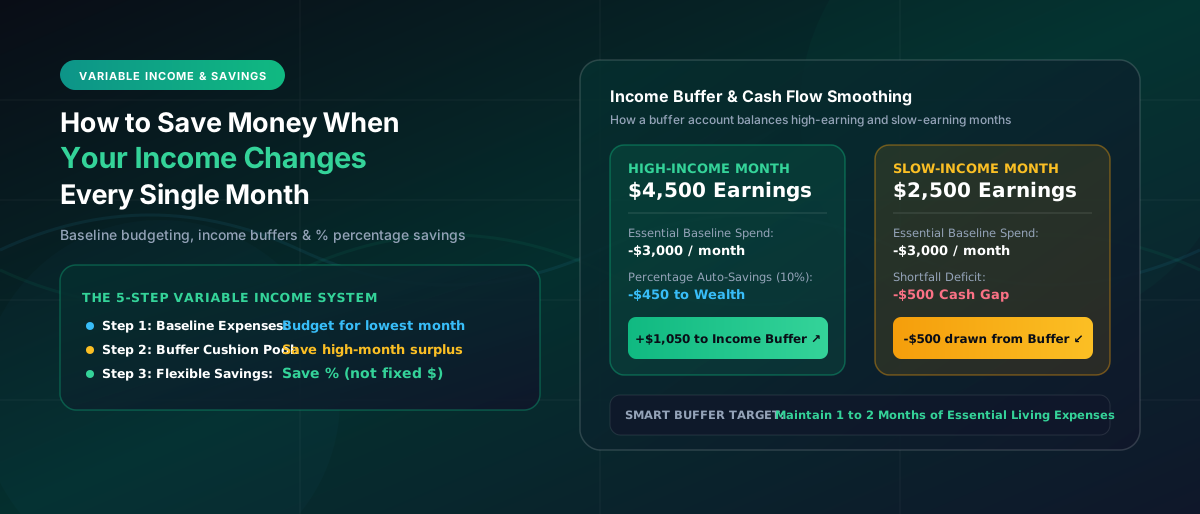
How to Save Money When Your Income Changes Every Month
Variable income budgeting for freelancers: baseline living budgets, percentage savings, and income buffer pools.
Finance
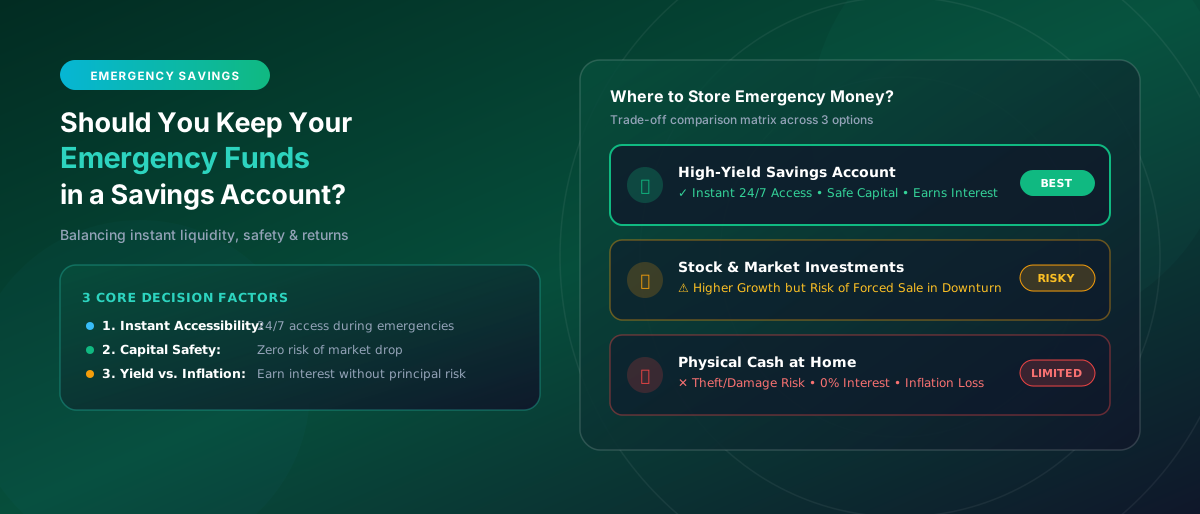
Should You Keep Your Emergency Fund in a Savings Account?
Explore liquidity, capital preservation, high-yield savings accounts, and money market options to store emergency cash reserves safely.
Finance
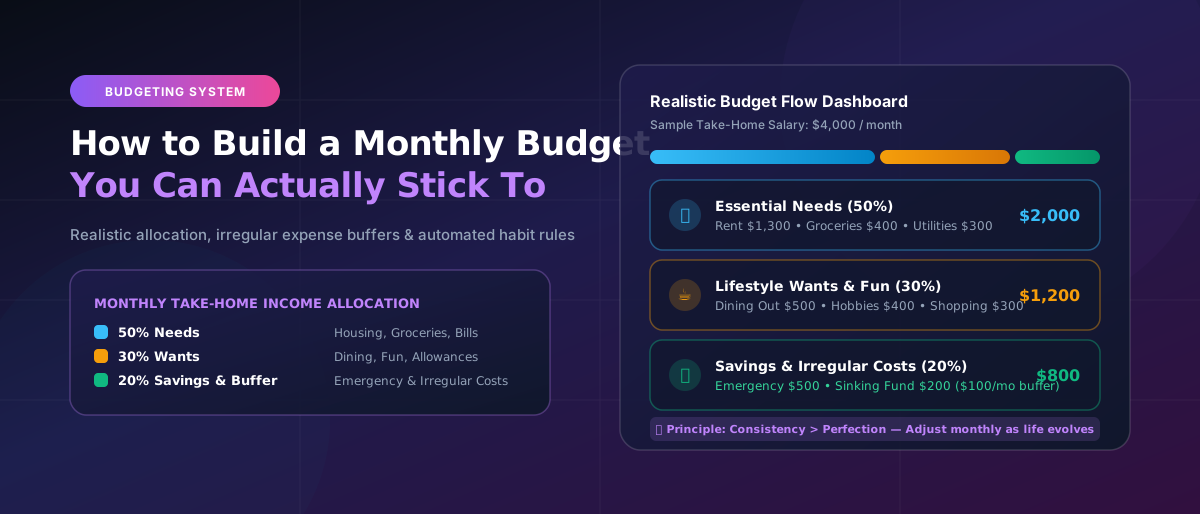
How to Build a Monthly Budget You Can Actually Stick To
Learn step-by-step how to create a practical, realistic monthly budget using fixed costs, flexible spending caps, and automated savings buffers.