An emergency fund's main job is financial breathing room—not maximum investment growth. A savings account is ideal because it provides instant liquidity, capital protection during market crashes, and interest earning potential without principal risk.
An emergency fund is supposed to be there when life doesn't go according to plan. Your car needs an unexpected repair. Your income suddenly drops. A medical or household bill appears out of nowhere. Having money set aside can turn a stressful situation into something much more manageable (see how to build an emergency fund step by step).
But once you've built your emergency fund, another question comes up: Where should you keep it?
A savings account is one of the most common choices, and for many people, it can make sense. However, the best place for your emergency money depends on three important things: accessibility, safety, and the interest you can earn.
What Is an Emergency Fund?
An emergency fund is money reserved for unexpected and necessary expenses.
It is different from money you've saved for a vacation, a new phone, a car upgrade, or another planned purchase. The purpose of an emergency fund is to give you a financial cushion when something unexpected happens.
A common starting point is to build enough savings to cover several months of essential expenses. The right amount depends on your income stability, household responsibilities, debt, insurance coverage, and personal circumstances.
Someone with a very stable income may need a different emergency reserve from someone whose income changes significantly from month to month.
Why a Savings Account Can Make Sense
The biggest advantage of keeping an emergency fund in a savings account is accessibility.
If your washing machine breaks or you suddenly need to pay an important bill, you don't want to wait weeks to access your money. You also don't want to be forced to sell an investment at an inconvenient time.
A savings account can provide a relatively simple place to keep money separate from your everyday spending while still allowing you to access it when necessary.
Another advantage is that many savings accounts pay interest. The rate may not completely protect your money from inflation, but earning some interest is generally better than leaving large amounts of cash completely unproductive.
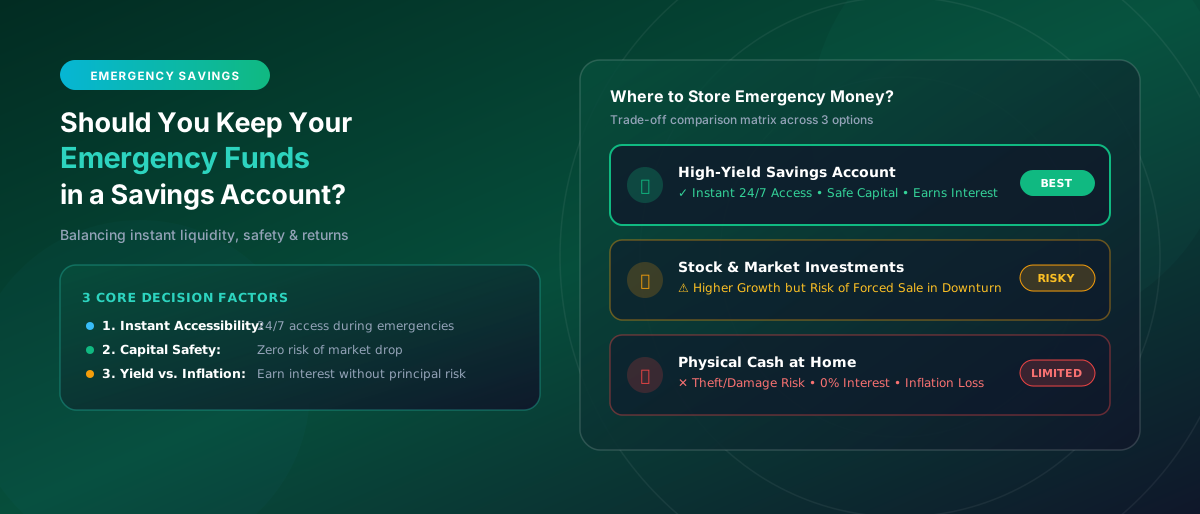
| Storage Location | Instant Accessibility | Capital Safety (Principal Protection) | Yield vs. Inflation Risk |
|---|---|---|---|
| Savings Account (High-Yield) | High (Instant / 24hr transfer) | 100% Guaranteed (No market loss) | Earning moderate interest; low liquidity risk |
| Stock / Bond Investments | Low (2-5 business days) | Volatile (Risk of forced sale at loss) | Higher long-term growth potential |
| Physical Cash at Home | Immediate (Handheld) | At Risk (Theft, damage, fire) | 0% Interest (Fully eroded by inflation) |
Keep Your Emergency Fund Separate
One useful strategy is to keep your emergency fund separate from the account you use for everyday spending.
If your emergency money sits alongside your regular spending money, it can be tempting to treat the entire balance as available cash.
For example, imagine you have $8,000 in your checking account. You might feel comfortable spending more because the balance looks large. But if $5,000 of that money is actually your emergency fund, your available spending money is much lower than it appears.
A separate savings account can create a psychological barrier between money meant for emergencies and money meant for everyday expenses.
Should You Choose the Highest Interest Rate?
Interest matters, but it shouldn't be the only factor.
It can be tempting to move your emergency fund to whichever account offers the highest advertised rate. But you should also consider fees, withdrawal rules, minimum balance requirements, access to your money, and whether the account is offered by a trustworthy and appropriately regulated financial institution.
An account that pays slightly more interest isn't necessarily better if accessing your money becomes difficult when you actually need it.
For emergency savings, reliability and accessibility should come before squeezing out every last bit of interest.
What About Keeping Emergency Money in Investments?
This is where caution is important.
Investments can potentially earn higher returns over the long term, but their values can also fall. If you need your emergency fund during a market downturn, you could be forced to sell investments for less than you originally paid.
Imagine you have $10,000 invested and the market falls significantly. At the same time, you lose your income and suddenly need the money. Selling at that moment could lock in a loss.
That's one reason emergency funds are generally better suited to stable, accessible forms of savings rather than investments designed primarily for long-term growth (see pay off debt vs investing guide).
What About Keeping Cash at Home?
Keeping a small amount of physical cash at home can be useful for certain situations, particularly if you need money for a short-term emergency or temporary payment problem.
However, keeping your entire emergency fund as physical cash comes with risks. It can be lost, stolen, damaged, or difficult to replace.
For most people, a financial account designed for savings offers more practical protection and convenience than storing a large emergency reserve at home.
Consider Inflation Too
There is another issue that shouldn't be ignored: inflation.
If your savings account earns less than the rate at which prices are increasing, your money may lose purchasing power over time (see how inflation quietly reduces the value of your savings).
For example, suppose you keep $10,000 in an account earning 1% interest while prices rise by 3% annually. Your account balance may increase, but your money's purchasing power could still decline.
This doesn't mean you should take unnecessary risks with your emergency fund. It simply means you should periodically review where your emergency savings are held and whether the account remains competitive and appropriate for your needs.
You Don't Have to Build the Whole Fund at Once
If you're starting from zero, seeing a goal such as several months of expenses can feel overwhelming.
Instead, build your emergency fund in stages.
You might begin with a small starter fund that can handle a minor unexpected expense. Once you've reached that milestone, continue building until you have a larger reserve that better matches your circumstances.
Even setting aside a small amount from each paycheck can gradually create a useful financial cushion.
Automate Your Emergency Savings
One of the easiest ways to build an emergency fund is to make saving automatic (see how to build a monthly budget you can stick to).
For example, you could arrange for a fixed amount to move from your main account into your savings account after each paycheck.
Automated Emergency Fund Build Example
Assuming $3,000 monthly net take-home pay:
- Monthly Automated Transfer: $200 / month
- 1-Year Total Saved: $2,400 + interest earned
- 2-Year Total Saved: $4,800 + compound interest
Result: Automatic transfers remove willpower friction and steadily construct a multi-month safety net.
The 3-Question Emergency Withdrawal Filter
Before withdrawing money from your emergency fund, ask:
- Is this expense unexpected? (Not a planned purchase or predictable bill)
- Is this expense necessary? (Required for health, shelter, work, or safety)
- Is this expense difficult to cover with normal income?
If all three answers are YES, your emergency fund is performing its exact intended job.
When Should You Use Your Emergency Fund?
Having an emergency fund doesn't mean you're never allowed to touch it.
The money is there for genuine financial emergencies and necessary unexpected expenses. If you use part of it, the next step is to rebuild the balance when your finances stabilize.
How Much Should You Keep in the Account?
There isn't one perfect emergency-fund amount for everyone.
Start by calculating your essential monthly expenses. Include important costs such as housing, food, utilities, transportation, insurance, minimum debt payments, and other necessities.
Then consider how many months of those expenses you would want your emergency fund to cover.
A financial calculator can help you estimate your target based on your monthly expenses and desired number of months.
Final Thoughts
For many people, a savings account is a sensible home for an emergency fund because it combines accessibility with relative stability and the potential to earn interest.
The goal isn't to maximize returns at all costs. Your emergency fund has a different job from your long-term investments. It needs to be available when you need it, including during periods when markets may be falling.
Look for an appropriate savings account with reasonable fees, useful access, and a competitive interest rate. Keep the money separate from everyday spending, automate contributions when possible, and review your target as your financial circumstances change.
Most importantly, remember what your emergency fund is really buying you: financial breathing room.
Disclaimer: This article is for general educational purposes only and does not constitute financial, investment, banking, tax, or legal advice. Savings products, interest rates, account protections, withdrawal rules, and regulations vary by country and financial institution.