Compound interest turns time into your strongest financial asset. Over a 10-year period, earning returns on your previous interest earnings enables modest regular contributions to grow into significant wealth reserves.
Saving money is one thing. Watching that money grow over time is another. One of the biggest reasons savings and investments can grow significantly over the years is compound interest.
Compound interest may sound like a complicated financial term, but the basic idea is simple: you can earn returns on the money you originally saved and on the returns that money has already generated.
Over a few months, the difference may not seem impressive. Over 10 years, however, compounding can make a noticeable difference. That is why starting early and contributing consistently can be more important than trying to find the perfect time to save.
What Is Compound Interest?
Imagine you put $5,000 into an account that earns interest. If the account earns $250 during the first year, you now have $5,250.
If the next year's interest is calculated on the new balance, you are no longer earning interest only on your original $5,000. You are also earning interest on some of the interest you previously received.
That is the basic power of compounding (see our detailed compound interest guide).
The longer your money remains invested or saved, the more opportunities it has to compound. The effect can become especially noticeable when you continue adding money along the way.
Why 10 Years Can Make a Big Difference
Time is one of the most important ingredients in compound growth. You do not necessarily need to make huge contributions every month to benefit from it.
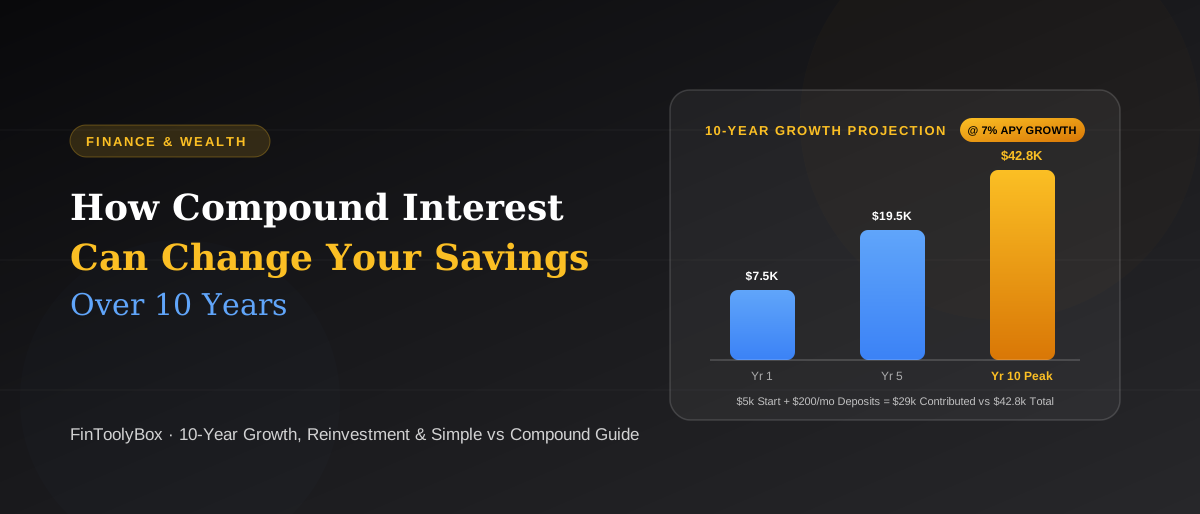
10-Year Hypothetical Growth Scenario (7% APY)
- Initial Starting Deposit: $5,000
- Monthly Contribution: $200 / month
- Total Personal Contributions (10 Yrs): $29,000
- Estimated Compounded Total Value: ~$42,800
- Earned Compound Interest: +$13,800 free growth!
After 10 years, your total contributions would be $29,000. With the hypothetical growth included, the account could be worth considerably more than the amount you personally put in.
The important point is not the exact final number. Real investment returns are not guaranteed, and actual results can be higher or lower. The important lesson is that your money can potentially earn returns, and those returns can then participate in future growth.
Compound Interest vs. Simple Interest
With simple interest, returns are generally calculated only on the original amount of money.
With compound interest, previous earnings can become part of the balance used to calculate future earnings.
| Interest Type | Calculation Basis | 10-Year Growth Trajectory |
|---|---|---|
| Simple Interest | Original principal only | Linear (constant addition) |
| Compound Interest | Principal + Accumulated Interest | Exponential (accelerating curve) |
This difference may look small at first. But when repeated year after year, it can become much more significant.
Your Contributions Still Matter
Compound growth is powerful, but it does not mean you can simply deposit money once and forget about your finances.
Regular contributions can make a major difference.
Consider someone who saves $200 every month. That is $2,400 contributed over a year. After five years, they have personally contributed $12,000. After 10 years, the contributions reach $24,000, before considering any growth or the effect of the initial deposit (see SIP wealth growth guide).
Increasing your monthly contribution when your income rises can potentially accelerate your progress even further.
Starting Earlier Can Be More Valuable Than Starting Bigger
One of the most important lessons about compound growth is that time matters.
Someone who starts saving at 25 may have decades for their money to potentially grow. Someone who waits until 35 may need to contribute significantly more to reach a similar target.
This does not mean you have missed your opportunity if you are already older. Starting today is still better than waiting another five or ten years.
Instead of focusing on how much you should have saved by now, focus on what you can reasonably save from this point forward.
Compounding Frequency Can Also Matter
Interest can be compounded at different frequencies depending on the account or investment. It may be compounded daily, monthly, quarterly, annually, or according to another schedule.
When other factors are equal, more frequent compounding can produce slightly higher effective returns. However, the stated interest rate, fees, account rules, and whether earnings are actually reinvested can be just as important.
That is why it is a good idea to look beyond a headline interest rate when comparing financial products.
Fees Can Reduce Your Growth
Compounding can work in your favor, but costs can work against it.
Suppose an investment charges ongoing fees. Those fees reduce the amount of money that remains invested and available to generate future returns.
A small fee may not feel important when your balance is small. But over many years, the cost can add up.
When comparing savings or investment options, look at the complete cost structure rather than focusing only on the potential return.
Inflation Is Another Piece of the Puzzle
A growing account balance does not automatically mean your purchasing power is growing at the same rate.
As detailed in our inflation guide, inflation causes the prices of goods and services to rise over time. If your money grows more slowly than inflation, its purchasing power may decline even though the number on your account statement is increasing.
For long-term financial planning, it can therefore be useful to think about both nominal growth and real purchasing power.
How to Make Compound Growth Work for You
You do not need a complicated strategy to take advantage of compounding. A few simple habits can help:
- Start as soon as you reasonably can. More time gives compounding more opportunity to work.
- Contribute consistently. Regular deposits can add substantially to your balance.
- Reinvest your earnings when appropriate. This allows previous returns to potentially generate future returns.
- Pay attention to fees. Costs can reduce the amount available for growth.
- Avoid chasing unrealistic returns. Higher potential returns generally come with higher risk.
- Review your progress regularly. Adjust your contributions as your income and goals change.
Use a Compound Interest Calculator
Sometimes the easiest way to understand compounding is to see the numbers for yourself.
A compound interest calculator can help you estimate how an initial amount, regular contributions, time period, and hypothetical rate of return could affect your future balance.
Try different scenarios. What happens if you save $100 a month instead of $200? What if you increase your contribution every year? What happens if you leave the money invested for 15 or 20 years instead of 10?
These comparisons can make long-term saving feel much more tangible.
The Bottom Line
Compound interest is not a shortcut to becoming wealthy. It is a long-term process that rewards time, consistency, and patience.
Over 10 years, even relatively modest savings can potentially grow substantially when returns are reinvested and additional contributions are made along the way. The exact result will depend on the account, investment performance, fees, taxes, contribution schedule, and other factors.
The biggest takeaway is simple: give your money time to work. Starting with an amount you can afford, contributing consistently, and allowing your earnings to compound can put you in a much stronger position over the long term.
Sources & References
This compound interest guide relies on investor education standards. For official guidance, visit:
- U.S. Securities and Exchange Commission (SEC) Investor.gov Compounding Guide
- FINRA Foundation Savings and Investment Math
- Federal Reserve Economic Data (FRED)
Frequently asked questions
What is the difference between simple interest and compound interest?
Simple interest calculates returns strictly on your initial principal. Compound interest calculates returns on both your principal AND all previously accumulated interest earnings.
How much difference does 10 years of compounding make?
Over 10 years, reinvested returns accelerate significantly. For example, $5,000 initial plus $200/month at 7% APY yields over $42,000—where compounding accounts for over $13,000 of earned growth beyond your personal deposits.
Does compounding frequency matter?
Yes. Accounts that compound daily or monthly yield slightly higher effective returns than accounts compounding annually, though interest rate and fees remain the primary factors.
Helpful resources
Internal resources
- How Compound Interest Works
- How SIP Grows Wealth
- 5 Smart Savings Strategies Guide
- Inflation Explained for Everyday Budgets
- Browse all articles