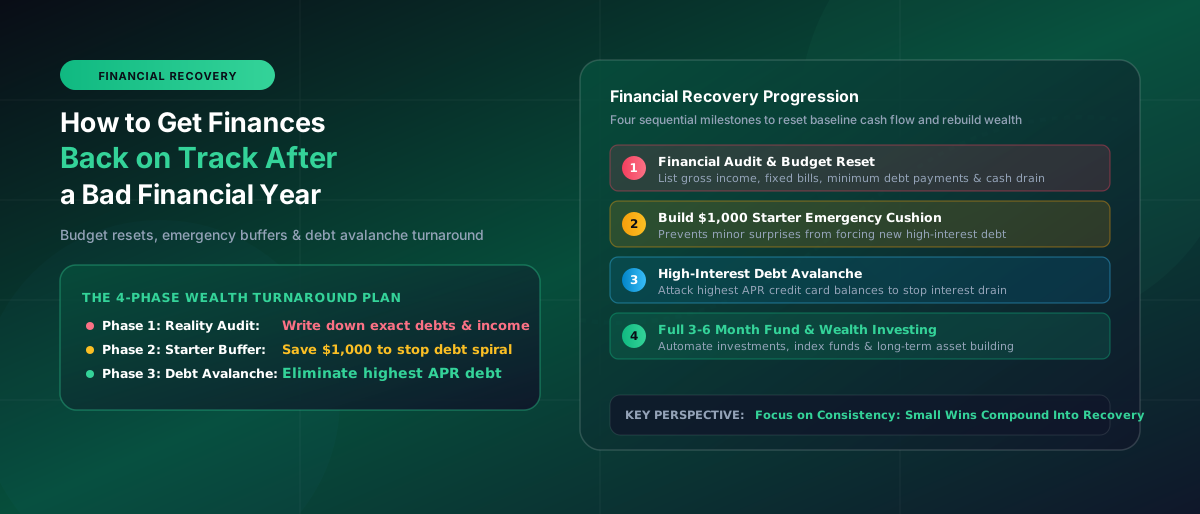
A setback year doesn't define your financial future. Audit your exact current income and debts, build a realistic baseline budget, establish a $1,000 starter emergency buffer, and use the debt avalanche method to eliminate high-interest balances systematically.
Sometimes, despite your best efforts, a financial year simply doesn't go as planned.
You may have taken on unexpected debt, spent more than you earned, dealt with a major emergency, lost income, or simply struggled to keep up with your financial goals. When that happens, it's easy to feel like you've fallen too far behind to recover.
But one difficult financial year doesn't have to define your future.
The important thing is to stop looking backward with regret and start looking forward with a clear plan. Getting your finances back on track is usually less about making one dramatic change and more about taking a series of practical steps.
The 4-Phase Financial Turnaround Roadmap
Rather than attempting an extreme, unmaintainable overhaul, follow this structured progression:
Phase 1: Reality Audit & Budget Reset (Uncover exact numbers)
Phase 2: $1,000 Starter Emergency Buffer (Stop taking new debt)
Phase 3: High-APR Debt Avalanche (Eliminate interest drain)
Phase 4: Full 3-6 Month Fund & Wealth Investing (Automate growth)
| Recovery Phase | Target Timeline | Primary Action Item | Expected Financial Impact |
|---|---|---|---|
| Phase 1: Audit & Reset | Month 1 | List all debts, income, & fixed expenses | Clear visibility; stops panic guessing |
| Phase 2: Starter Buffer | Months 1 – 2 | Save $1,000 liquid emergency fund | Prevents minor surprises from adding debt |
| Phase 3: Debt Avalanche | Months 3 – 12 | Pay off highest APR credit cards first | Saves thousands in interest costs |
| Phase 4: Full Wealth Rebuild | Months 12+ | Expand buffer to 3-6 months & invest | Establishes permanent wealth stability |
Start by Understanding What Went Wrong
Before changing your financial habits, figure out what actually caused the problem.
Was your income lower than expected? Did your expenses increase? Did you rely heavily on credit cards? Were there unexpected medical, housing, transportation, or family expenses?
Look through your bank statements, bills, loan balances, and other financial records. Try to identify the biggest reasons your finances became difficult.
This isn't about blaming yourself. It's about finding the problem so you can address it.
Take a Clear Look at Your Current Numbers
After a difficult year, avoiding your financial accounts can feel tempting. Unfortunately, not knowing the numbers usually makes the situation harder to fix.
Write down:
- Your current net monthly income
- Your mandatory essential monthly expenses
- Your current cash savings balance
- Your outstanding debt balances and interest rates
- Your minimum monthly debt payments
- Your major upcoming annual expenses
Once everything is visible, you can make decisions based on facts instead of guesses.
Build a Realistic Budget Again
If your previous budget stopped working, don't simply recreate it and hope things improve (learn how to build a monthly budget you can stick to).
Build a budget based on your current reality.
Start with essential expenses such as housing, food, utilities, transportation, insurance, and minimum debt payments. Then determine how much remains for savings, debt repayment, and discretionary spending.
If your income changes from month to month, consider building your budget around a conservative estimate rather than your best month.
Focus on Your Most Expensive Debt
High-interest debt can make financial recovery much slower because a significant portion of your payments may go toward interest.
Make at least the required payments on all debts, then consider directing extra money toward the debt with the highest interest rate. This is commonly known as the debt avalanche method (see snowball vs. avalanche debt payoff guide).
Another option is the debt snowball method, where you focus on the smallest balance first. It may not always minimize interest as efficiently, but some people find the quick wins motivating.
The best approach is one you can realistically maintain.
Rebuild Your Emergency Fund
If an emergency forced you to use your savings, don't consider the setback a failure. That's exactly what emergency savings are designed for (see storing emergency cash safely).
Once the immediate crisis has passed, start rebuilding the fund.
You don't necessarily need to replace the entire balance immediately. Start with a small target and gradually work toward having enough to cover several months of essential expenses, depending on your circumstances.
Even a modest cash buffer can help prevent the next unexpected expense from turning into new debt.
Cut Expenses Without Making Your Life Miserable
When finances are tight, it can be tempting to eliminate every enjoyable expense.
That approach may work temporarily, but an extremely restrictive budget can be difficult to maintain.
Instead, look for expenses that provide little value. Cancel unused subscriptions, compare service providers, reduce unnecessary convenience spending, cook at home more often, and reconsider expensive recurring commitments.
Focus first on expenses that can be reduced without significantly affecting your quality of life.
Don't Ignore Your Income
Reducing expenses is only one side of financial recovery.
If your expenses are already close to the minimum you can reasonably maintain, increasing income may have a much bigger impact.
Depending on your situation, this could mean asking for additional hours, taking on freelance work, selling unused items, developing a new skill, or looking for a higher-paying opportunity.
You don't necessarily need to increase your income permanently. Even temporary additional income can help you pay down debt or rebuild savings faster.
Give Every Extra Dollar a Purpose
When you receive unexpected money—a bonus, refund, gift, side-income payment, or other extra cash—decide what it should accomplish before spending it.
For someone recovering financially, consider this priority order:
- Cover overdue bills: Eliminate immediate late fees or utility disconnection notices.
- Build $1,000 buffer: Create a starter emergency reserve to prevent new debt.
- Attack high-APR debt: Put extra funds toward credit cards with high interest.
- Rebuild full savings: Expand your cash buffer to 3 to 6 months of living expenses.
- Invest for future: Allocate surplus funds into long-term retirement index funds.
You can still enjoy some of the money if your situation allows. The key is to avoid letting unexpected income disappear without improving your financial position.
Review Your Financial Goals
A bad financial year may mean your previous goals are no longer realistic.
Maybe you planned to save for a large purchase, invest a certain amount, or pay off a loan by a specific date. Instead of abandoning the goal completely, adjust the timeline.
Financial setbacks don't necessarily mean the goal is gone. They may simply mean you need more time to reach it.
Avoid Trying to Recover Too Quickly
One of the biggest mistakes after a financial setback is trying to fix everything at once.
You might decide to cut your spending dramatically, invest aggressively, work constantly, and pay off every debt immediately.
While motivation is valuable, an unrealistic plan can quickly lead to burnout.
Instead, choose a few priorities. For example, you might focus on building a starter emergency fund while paying down high-interest debt. Once that becomes manageable, increase your savings or investment contributions.
Create a Monthly Financial Check-In
You don't need to spend hours analyzing your finances every day.
Set aside some time once a month to review your progress.
Check your income, spending, debt balances, savings, upcoming bills, and progress toward your goals. If something isn't working, adjust the plan instead of abandoning it.
Regular check-ins can help prevent a small financial problem from becoming another major setback.
Use Financial Calculators to Plan Your Recovery
Financial calculators can make it easier to understand the numbers behind your decisions.
A loan payoff calculator can show how additional payments could affect your debt. A budget calculator can help you organize your monthly income and expenses. A net worth calculator can help you track whether your overall financial position is improving.
The goal isn't to predict the future perfectly. It's to make better-informed decisions with the information you have today.
Measure Progress Beyond Your Bank Balance
Your recovery may not look dramatic at first.
You might pay down $500 of debt, save $300, or reduce your monthly expenses by $50. These numbers may seem small compared with your overall financial goals.
But progress is still progress.
Over time, lower debt, higher savings, better spending habits, and increased financial stability can create a much stronger position than where you started.
Final Thoughts
A bad financial year can be discouraging, but it doesn't have to become a permanent financial problem.
Start by understanding what went wrong. Then take an honest look at your current numbers, rebuild your budget, manage expensive debt, restore your emergency savings, control unnecessary expenses, and look for ways to strengthen your income.
Most importantly, give yourself time. Financial recovery is rarely instant.
You don't need to fix everything this month. You just need to make your next financial decision better than the last one.
With consistent effort, a difficult year can become a turning point rather than the beginning of a long-term financial struggle.
Disclaimer: This article is for educational purposes only and does not constitute financial, investment, tax, or legal advice. Your financial situation is unique, so consider your personal circumstances and goals before making financial decisions.
Related Articles

Loan
Debt Snowball vs. Debt Avalanche: Which Strategy Is Better?
Compare mathematical interest optimization vs psychological momentum to choose the ideal debt payoff strategy.
Finance
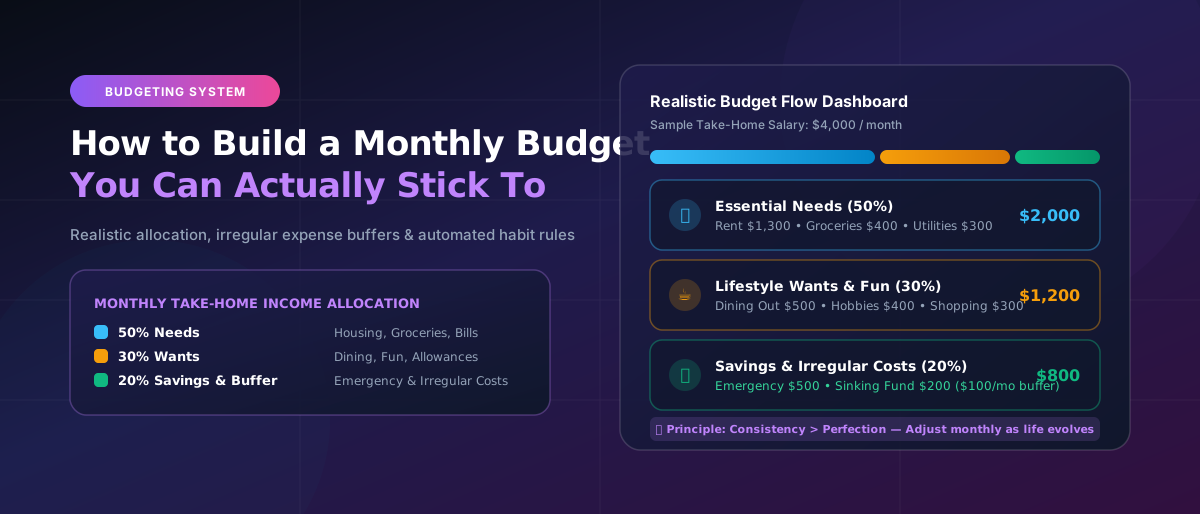
How to Build a Monthly Budget You Can Actually Stick To
Learn step-by-step how to create a practical, realistic monthly budget using fixed costs, flexible spending caps, and automated savings buffers.
Finance
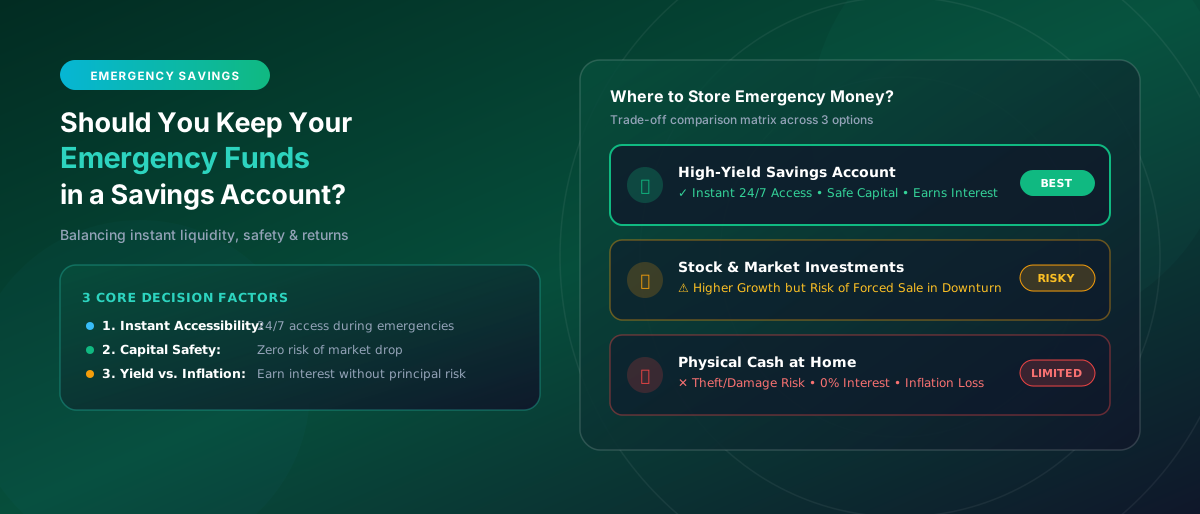
Should You Keep Your Emergency Fund in a Savings Account?
Explore liquidity, capital preservation, high-yield savings accounts, and money market options to store emergency cash reserves safely.