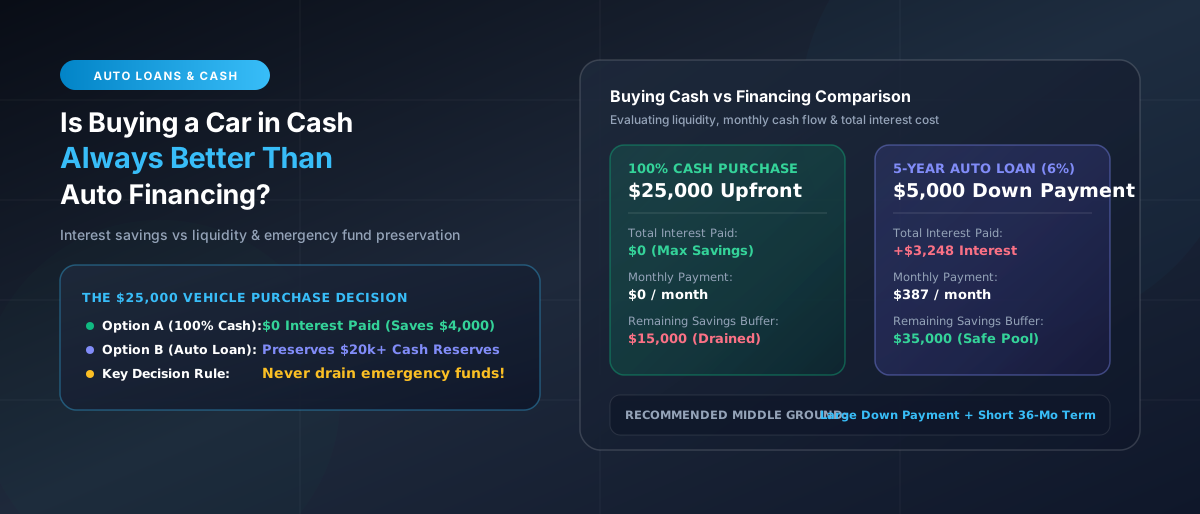
Paying cash for a vehicle completely eliminates interest charges and monthly loan payments. However, if paying 100% cash drains your emergency savings, financing part of the vehicle at a competitive interest rate protects your liquid financial cushion against unexpected life events.
Buying a car is one of those financial decisions where people often hear the same advice: if you can afford to pay cash, you should. It sounds simple. Avoid a car loan, avoid interest, and own the vehicle outright from day one.
But is paying cash always the smartest choice?
Not necessarily. Financing a car can sometimes make sense, especially when the interest rate is low and keeping your cash available serves a better purpose. The right decision depends on your savings, income, credit, loan terms, and what else you could do with the money.
What Does Buying a Car in Cash Really Mean?
Buying a car in cash means you pay the full purchase price without taking out an auto loan. If the car costs $25,000 and you pay $25,000 upfront, you have no monthly car payment and no loan interest.
That can be financially attractive because the cost of borrowing disappears. Once the purchase is complete, your main vehicle expenses are things such as insurance, fuel, maintenance, registration, and repairs.
The downside is that a large amount of money leaves your bank account at once.
The Biggest Advantage of Paying Cash
The most obvious benefit is avoiding interest.
Suppose you finance a $25,000 car and eventually pay $29,000 over the life of the loan. The extra $4,000 represents money that could have stayed in your pocket if you had paid cash.
There is also something valuable about not having another monthly bill. Without a car payment, more of your income can go toward savings, investing, housing, debt repayment, or other goals.
Paying cash can also make your monthly budget more predictable. You still have vehicle expenses, but you do not have a loan payment hanging over you for several years.
Car Cash vs. Financing Tradeoff Example ($25,000 Car)
Suppose you have $40,000 total savings and want to buy a $25,000 vehicle:
100% Cash: $0 Loan Interest Paid | Remaining Emergency Savings: $15,000
5-Yr Loan (6% APR, $5k Down): $3,248 Interest Paid | Remaining Emergency Savings: $35,000
If $15,000 is too thin for your household emergency reserve, preserving $35,000 in cash via financing can be a safer financial decision.
| Purchase Strategy | Down Payment | Monthly Payment | Est. Interest Paid | Post-Purchase Cash Cushion |
|---|---|---|---|---|
| 100% Cash Purchase | $25,000 upfront | $0 / month | $0 (Max Savings) | $15,000 remaining |
| 50% Down (36-Mo Loan @ 5%) | $12,500 upfront | $374 / month | +$975 interest | $27,500 remaining |
| 20% Down (60-Mo Loan @ 6.5%) | $5,000 upfront | $391 / month | +$3,485 interest | $35,000 remaining |
| Manufacturer 0.9% Promo Loan | $2,500 upfront | $383 / month | +$515 interest | $37,500 remaining |
But Cash Isn't Completely Free
This is where the decision becomes more interesting.
Imagine you have $40,000 saved and want to buy a $25,000 car. Paying cash would leave you with only $15,000.
If that $40,000 represents most of your savings, using $25,000 for a car could leave you financially vulnerable. A job loss, medical bill, major home repair, or other emergency could suddenly become much harder to handle (see where to store your emergency fund savings).
In that situation, financing part of the car might be reasonable if it allows you to keep a healthy emergency fund.
When Financing Can Make Sense
Financing isn't automatically a bad financial decision. The interest rate is one of the biggest factors to consider.
If a lender offers you a relatively low rate, you may decide that keeping your cash available is worth the cost of the loan (learn how to tell if a loan offer is actually a good deal).
For example, instead of spending $25,000 from your savings, you might make a substantial down payment and finance the remaining amount. This gives you a smaller loan while preserving some cash.
Financing can also make sense if your cash has an important job already. You might need it for an emergency fund, a business, a home purchase, education, or another financial priority.
The key is not simply asking, “Can I afford the monthly payment?” You should ask, “What is the total cost of this loan, and what am I giving up by paying cash?”
Don't Focus Only on the Monthly Payment
A common mistake when shopping for a car is focusing heavily on the monthly payment (see how much interest you pay on a 5-year loan).
A $400 monthly payment might sound manageable. But if the loan lasts six or seven years, you could end up paying significantly more for the vehicle.
Always look at:
- The vehicle's total purchase price
- Your down payment amount
- The principal amount financed
- The interest rate and APR
- The total loan duration (months)
- Total cumulative interest paid
- Any origination or loan documentation fees
- The total overall amount repaid
A longer loan can reduce the monthly payment while increasing the total amount you pay.
What About Investing the Money Instead?
This is one of the arguments people sometimes make for financing.
Someone might say, “Instead of spending $25,000 on the car, I'll keep the money invested and take the loan.”
That can work in certain circumstances, but it is not guaranteed.
Investment returns are uncertain, while the interest charged on your car loan is a real cost. Your investment could earn less than expected—or lose value—while your loan payments continue.
So don't assume that financing is automatically better because your money might earn more elsewhere.
Consider Your Emergency Fund First
Before deciding to pay cash, look at how much money you'll have left afterward.
If paying cash leaves you with a comfortable emergency fund and you have stable income, paying upfront may be attractive.
If paying cash would drain most of your savings, financing may provide more financial flexibility.
There is no universal number that works for everyone, but your emergency savings should be large enough to handle unexpected expenses without forcing you into expensive debt.
Could You Do a Combination of Both?
You don't always have to choose between paying 100% cash and financing 100% of the vehicle.
A middle-ground approach can be useful.
For example, you could make a large down payment and finance a smaller amount. This reduces the interest you pay while allowing you to keep some savings available.
Another option is to buy a less expensive car so that paying cash doesn't put too much pressure on your finances.
Use a Car Loan Calculator Before Deciding
Before accepting financing, run the numbers. A car loan calculator can show you how much your monthly payment could be and, more importantly, how much interest you may pay over the entire loan. If you're comparing financing offers, understanding how car loan interest rates work can also help you evaluate the true cost of borrowing.
Try different loan amounts, interest rates, and terms. You may discover that shortening the loan by a year or increasing your down payment makes a significant difference.
Questions to Ask Yourself
Before buying the car, ask yourself these 8 key questions:
- Remaining Savings: How much liquid savings will I have left if I pay 100% cash?
- Emergency Reserve: Do I already have a fully funded 3-to-6-month emergency fund intact?
- Borrowing Rates: What exact interest rate and APR am I being offered by lenders?
- Total Interest: How much total interest will I pay over the full loan term?
- Duration: How many months will I be obligated to make car payments?
- Income Stability: Could I comfortably handle the monthly payment if my income dropped?
- High-Interest Debt: Do I have credit card balances or high-interest loans that should be paid first?
- Vehicle Price: Could I buy a slightly less expensive vehicle to avoid stretching my budget?
So, Is Paying Cash Always Better?
No. Paying cash is often financially attractive because it eliminates loan interest and monthly payments, but it isn't automatically the best decision for every person.
If paying cash leaves you with plenty of savings and you want to avoid debt, it can be an excellent option. If paying cash would wipe out your emergency fund, a reasonably priced loan may give you better financial flexibility.
The smartest choice is usually the one that considers the total cost of the car, the cost of financing, and your overall financial situation rather than simply choosing cash or credit because someone says one is always better.
Final Thoughts
A car is a useful purchase, but it can also become a major financial commitment. The goal isn't just to get a vehicle you like. It's to make sure the purchase fits comfortably into the rest of your financial life.
Paying cash can save interest, while financing can help you preserve your savings. Compare both options carefully, understand the total cost, and make the decision based on your own numbers.
Disclaimer: This article is for educational purposes only and does not constitute financial advice. Loan rates, taxes, fees, and individual financial circumstances vary significantly by jurisdiction.
Related Articles
Loan
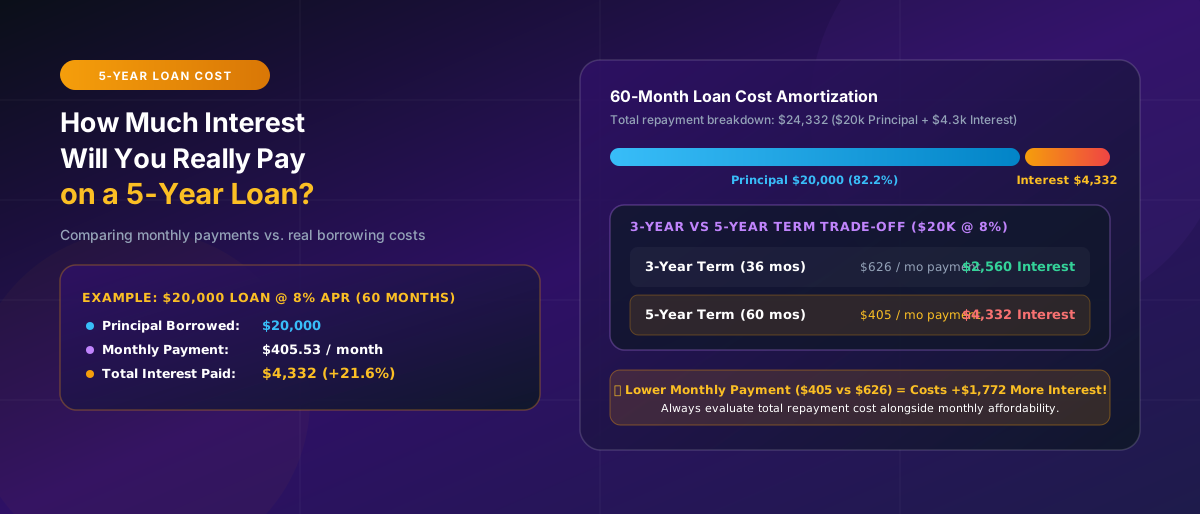
How Much Interest Will You Really Pay on a 5-Year Loan?
Learn how 60-month loan amortization works, principal vs interest splits, and how much a 5-year loan truly costs overall.
Loan
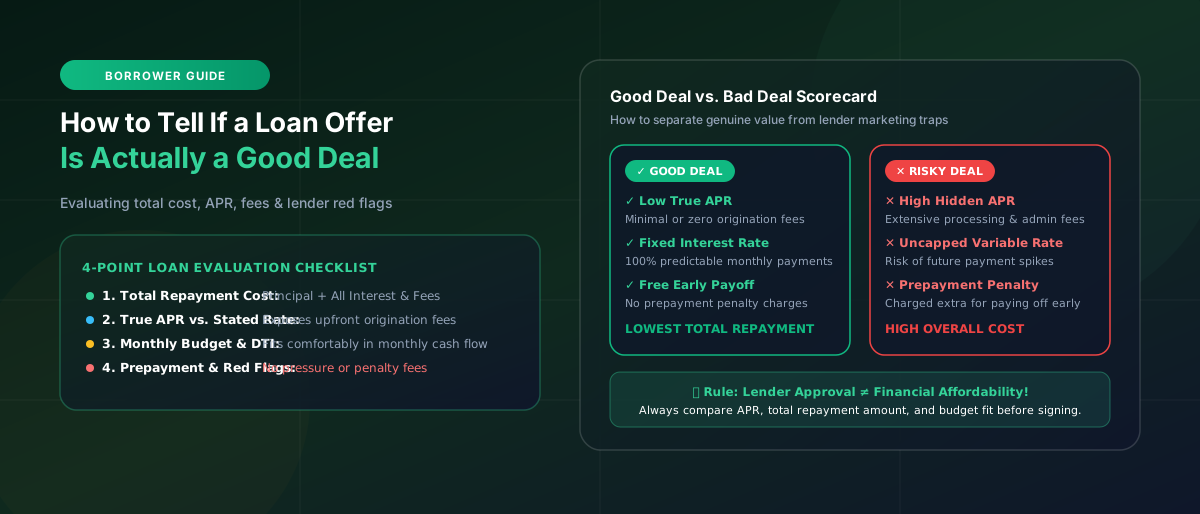
How to Tell If a Loan Offer Is Actually a Good Deal
Evaluate total loan cost, hidden fees, APR vs interest rate, prepayment penalties, and repayment flexibility before borrowing.
Finance
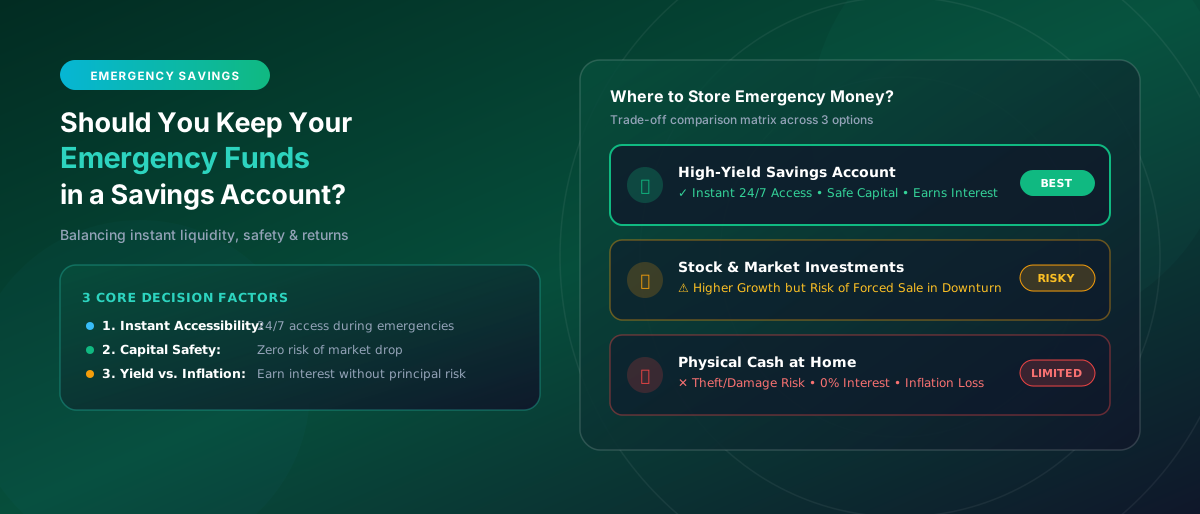
Should You Keep Your Emergency Fund in a Savings Account?
Explore liquidity, capital preservation, high-yield savings accounts, and money market options to store emergency cash reserves safely.